
Beautiful Plants For Your Interior
Beautiful Plants For Your Interior
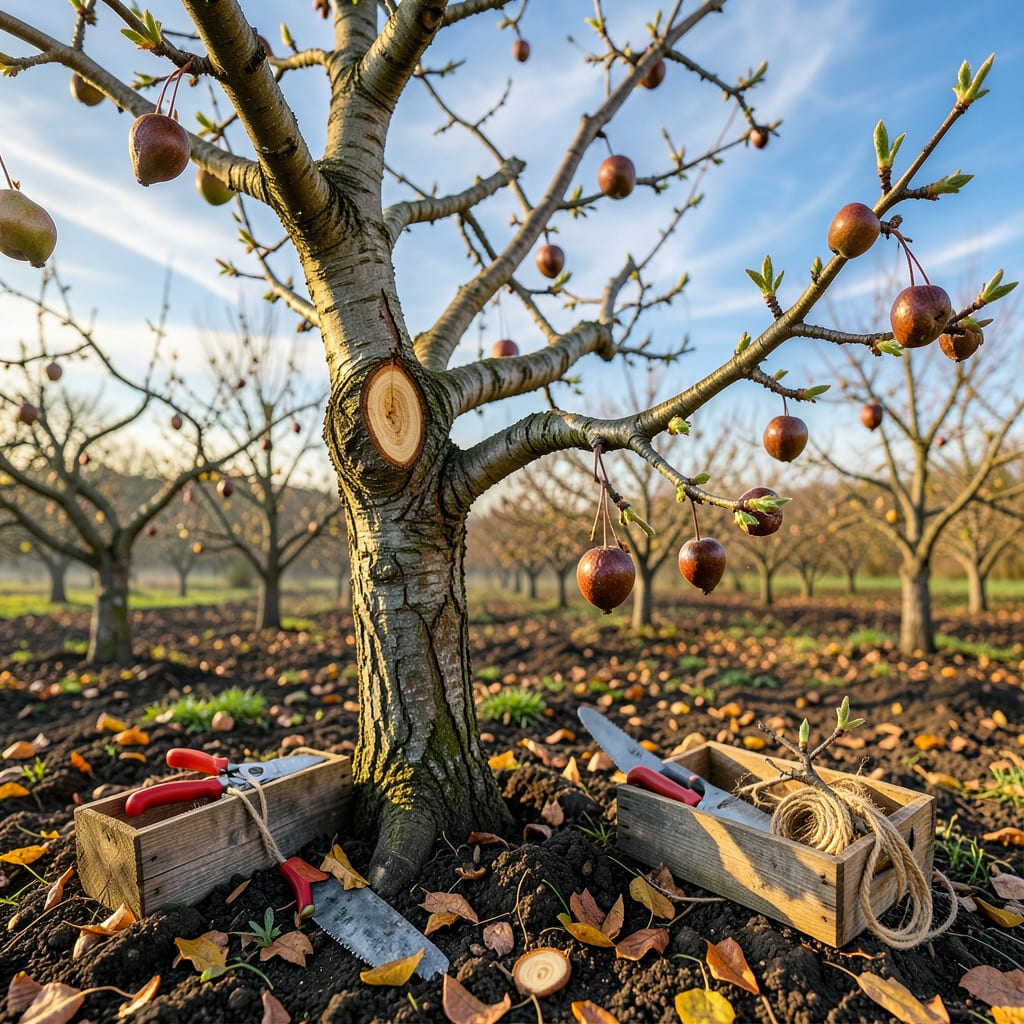
That first pear harvest changed everything for me. A well-pruned tree doesn’t just look better—it produces twice the fruit with half the disease problems. I learned the hard way that skipping this step means smaller pears, hidden pests, and branches that snap under heavy fruit.
Timing matters more than you’d think. Late winter, just before buds swell, is ideal for most regions. You’ll need sharp pruners, a sturdy ladder, and about two hours for a mature tree. The goal isn’t just cutting—it’s shaping for sunlight, airflow, and future growth. Trust me, your tree (and your harvest) will thank you.
📚 In This Guide
Pruning pear trees is simpler than you think—follow these steps for healthier trees and bigger harvests.
Late winter or early spring, just before new growth begins, is ideal for pruning pear trees. This timing minimizes stress on the tree while allowing wounds to heal quickly as the growing season starts. I always aim for a day when temperatures are above 40°F to avoid cold damage to freshly cut branches.
Avoid pruning in fall, as this can stimulate new growth that won’t harden off before winter. You’ll see the best results when pruning during dormancy—before buds swell but after the worst frost has passed. Check your local frost dates if you’re unsure about timing.
Start by cutting out any branches that are clearly dead (brittle, gray, or hollow-sounding when tapped). Next, remove diseased wood—look for cankers, discolored bark, or fungal growth. I use sharp bypass pruners for small branches and a pruning saw for anything thicker than ½ inch.
Don’t forget to sterilize your tools between cuts with rubbing alcohol to prevent spreading disease. Make clean cuts just outside the branch collar (the swollen area where the branch meets the trunk). Avoid leaving stubs, as they invite rot and pests.
Focus on removing branches that cross or rub against each other, as well as any growing inward toward the tree’s center. Aim to open up the canopy to allow sunlight and air circulation—this reduces disease risk and improves fruit quality. I like to step back frequently to assess the tree’s shape as I work.
Remove no more than 20-25% of the tree’s canopy in a single season to avoid stressing the tree. Prioritize cutting larger, older branches first, as they take more energy from the tree. Look for the “3 D’s” (dead, diseased, damaged) before moving to structural pruning.
Encourage a strong scaffold structure by keeping 3-5 main branches spaced evenly around the trunk. These should be at least 6-8 inches apart vertically and angled outward at about 45 degrees. Remove competing leaders (vertical branches) to maintain a single, dominant central stem.
Shorten last year’s growth by about one-third to stimulate fruiting spurs. Make cuts just above an outward-facing bud to direct new growth away from the tree’s center. You’ll notice pear trees respond well to this method, producing more fruit buds the following season.
Rake up and dispose of all pruned material to prevent disease spread. I recommend burning or bagging diseased wood rather than composting it. Apply a thin layer of mulch around the base (keeping it 6 inches away from the trunk) to protect roots and retain moisture.
Watch for new growth in spring—healthy pruning will result in vigorous shoots. If you see excessive suckers (fast-growing vertical shoots) at the base, remove them promptly. Your tree should show improved air circulation and sunlight penetration within a few weeks.
Pruning fruit trees can feel intimidating, but these practical insights will help you avoid common pitfalls and achieve better results.
Timing Precision: The 40°F temperature threshold mentioned in Step 1 is crucial—not just for the tree’s health, but for your tools too. Cold weather makes wood more brittle, increasing the risk of jagged cuts. I’ve found that pruning on sunny afternoons when temperatures are rising works best, as the tree’s metabolism is slightly more active, helping wounds seal faster. Always check your local frost dates rather than guessing based on calendar dates.
The Tool Factor: In Step 2, the recommendation to use bypass pruners for branches under ½ inch isn’t arbitrary. Anvil pruners can crush stems rather than making clean cuts, which slows healing. I keep a small spray bottle of rubbing alcohol handy to quickly sterilize tools between cuts—this prevents disease transmission better than wiping with a rag. For branches just over ½ inch, a fine-toothed pruning saw gives cleaner results than forcing pruners.
Canopy Management: The 20-25% canopy removal limit in Step 3 exists to prevent “sunburn” on exposed branches. Pear trees have thin bark that’s vulnerable to sudden sunlight exposure. When thinning, I focus first on removing entire branches rather than just trimming tips—this creates better airflow while maintaining the tree’s natural shape. Remember that removing a few large branches often achieves more than taking many small cuts.
Structural Integrity: Step 4’s guidance about maintaining 3-5 main branches spaced 6-8 inches apart isn’t just about aesthetics—it’s about preventing future problems. Trees with too many main branches develop weak crotches that can split under fruit load. I use the “clock face” method: imagine the trunk is the center of a clock, and space your main branches at roughly 2, 4, 8, and 10 o’clock positions for optimal balance.
The ideal time is late winter or early spring (before buds swell) when the tree is dormant. Avoid pruning in fall—it can encourage new growth vulnerable to frost. Light summer pruning (June/July) is okay for shaping, but avoid heavy cuts during active growth.
Yes, but only for light maintenance. Summer pruning (June–August) helps slow vigorous growth and improves sunlight penetration. Avoid major cuts—focus on removing water sprouts, suckers, or diseased branches. Heavy pruning in summer stresses the tree and reduces fruit production.
Skipping pruning leads to overcrowded branches, poor air circulation (hello, fungal diseases! ), and smaller, lower-quality fruit. The tree may also become structurally weak, increasing the risk of broken limbs. Regular pruning keeps it healthy, productive, and easy to harvest.
Never remove more than 20–25% of the tree’s canopy in a single year. Over-pruning shocks the tree, delaying fruit production. Focus on dead/diseased wood first, then thin out crowded areas. Spread major pruning over 2–3 years if the tree is heavily overgrown.
No! Research shows sealing wounds with tar or paint can trap moisture, slowing healing. Let cuts air-dry naturally. The tree will compartmentalize the wound. Only seal if you’re dealing with a disease-prone variety (like fire blight)—use a fungicide instead of sealant.
