
Beautiful Plants For Your Interior
Beautiful Plants For Your Interior
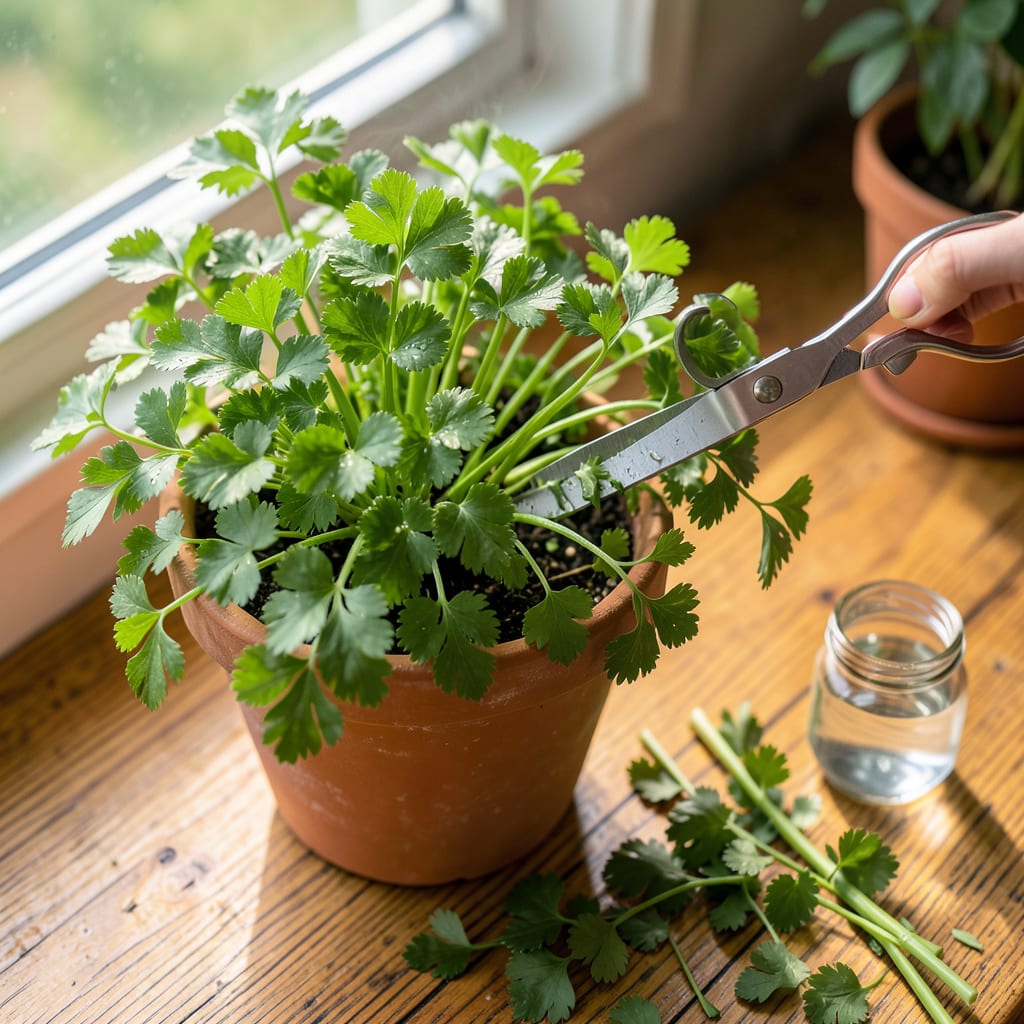
That first parsley plant taught me more about patience than any gardening book. Pruning isn’t about cutting back—it’s about directing growth so you get twice the harvest from the same plant. Left unpruned, parsley grows leggy and bolts fast. With a few strategic snips, you’ll keep it bushy, productive, and ready for harvest all season.
The secret lies in where and when you cut. I’ve ruined my share of parsley by hacking randomly—now I focus on outer stems first, always leaving the center intact. Done right, your plant responds by pushing out fresh, tender growth within days. No fancy tools required, just sharp scissors and 2 minutes of attention every few weeks.
📚 In This Guide
With just a few strategic cuts, you’ll transform leggy parsley into a full, productive plant that keeps giving.
Start by examining your parsley plant for the oldest, outermost stems. These are typically the longest and have the largest leaves. I always look for stems that are at least 6 inches tall—this ensures the plant has enough energy stored to recover quickly after pruning.
Never remove more than one-third of the plant at once. This prevents shock and allows the parsley to focus its energy on regrowing bushier stems. You’ll notice the center of the plant has younger, smaller stems—leave these untouched for now.
Using sharp scissors or pruning shears, cut the selected stems all the way down to the soil line. Don’t leave stubs, as they can rot and invite disease. I make my cuts at a slight angle to prevent water from pooling on the cut surface, which can lead to fungal issues.
You’ll feel a slight resistance as you cut through the stem—this is normal. A clean cut heals faster than a jagged tear. After pruning, you should see the plant’s center more clearly, with plenty of smaller stems ready to grow into the space you’ve created.
Repeat this process every 2-3 weeks throughout the growing season. You’ll notice new growth emerging from the center within 5-7 days after pruning. This is your sign that the plant is responding well to your cuts.
As the season progresses, you can gradually prune slightly more aggressively, but still never remove more than one-third of the plant at once. The goal is to create a balanced shape where light can reach all parts of the plant evenly.
The stems you remove are perfect for cooking—use them fresh or store them properly. I like to place cut stems in a glass of water in the refrigerator, where they’ll stay fresh for 3-5 days. You can also chop and freeze them in ice cube trays with a little water for longer storage.
Notice how the pruned stems have a cleaner cut at the base? This makes them easier to wash and prepare. The leaves near the cut end are often the most flavorful, so don’t discard them—use them in your cooking for maximum parsley flavor.
Pruning parsley properly makes all the difference between a scraggly plant and one that thrives all season. Here’s what I’ve learned through years of trial and error.
Selection Strategy: In Step 1, focus on the oldest stems that are at least 6 inches tall, but here’s the key—look for stems with yellowing leaves first. These are the ones draining the plant’s energy. By removing them, you’re actually helping the parsley redirect nutrients to healthier growth. I also check for any stems that are crossing or rubbing against each other, as these can create wounds that invite pests.
Cutting Technique: When making those base cuts in Step 2, use bypass pruners rather than anvil pruners if you have them. Bypass pruners make cleaner cuts that heal faster. I’ve found that cutting at a 45-degree angle (rather than straight across) helps water run off more effectively, reducing the risk of stem rot. Always sterilize your tools with rubbing alcohol between plants to prevent disease spread.
Growth Pattern Insight: The 2-3 week pruning schedule in Step 3 isn’t arbitrary—it matches parsley’s natural growth cycle. You’ll notice the most vigorous regrowth occurs when you prune just as the new center stems are about 3-4 inches tall. This is when the plant has maximum energy to recover. If you wait until stems are over 8 inches, you’ll get less bushy regrowth and more leggy stems.
Harvest Optimization: For the stems you remove in Step 4, don’t just use the leaves—those tender upper stems are packed with flavor too. I like to finely chop the entire stem (except the very woody base) and use it in dishes. The flavor is actually more concentrated in the stems than the leaves. When storing in water, change the water daily to maintain freshness for the full 3-5 days.
Yes, but act fast! Once parsley bolts (sends up flower stalks), its leaves turn bitter. Snip the flower stems at the base immediately to redirect energy to leaf growth. If the plant is heavily flowering, consider replacing it—parsley is biennial and declines after blooming.
Prune every 2–3 weeks during active growth (spring to fall). Regular trimming encourages bushier plants. Avoid cutting more than 1/3 of the plant at once to prevent stress. In winter, reduce pruning—growth slows, and over-trimming can weaken the plant.
Pruning focuses on shaping the plant (removing leggy stems or yellow leaves), while harvesting targets usable leaves. Use sharp scissors for both, but for harvesting, snip outer stems first. Pruning often includes harvesting—just prioritize the plant’s health over your kitchen needs!
Don’t panic! Parsley bounces back quickly if pruned correctly. If it looks bare, you may have cut too much at once. Ensure it gets 6+ hours of sunlight and consistent water. Feed with a balanced fertilizer (like 10-10-10) to boost regrowth. New leaves should appear in 1–2 weeks.
Both types follow the same rules: trim outer stems first, avoid cutting the crown, and prune regularly. Curly parsley may grow slower, so adjust frequency if needed. Bonus: Its dense leaves hide pruning mistakes better than flat-leaf varieties!
