
Beautiful Plants For Your Interior
Beautiful Plants For Your Interior
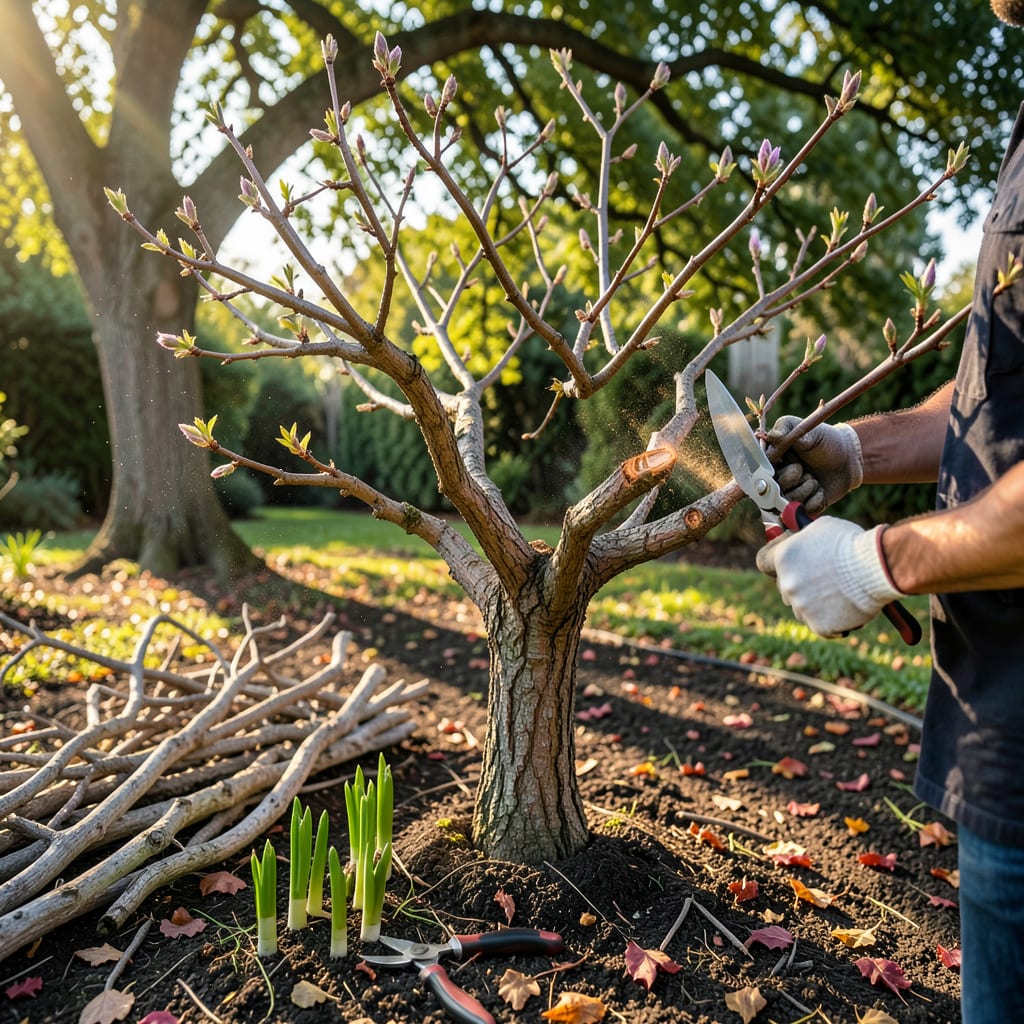
That overgrown crepe myrtle isn’t hopeless—it’s just waiting for the right cuts. I’ve rescued dozens of these trees from the “crepe murder” fate, and the transformation is shocking. Three strategic steps can turn a tangled mess into a plant that blooms harder than ever next season.
Timing and technique matter more than brute force here. Prune in late winter before new growth starts, and focus on opening the center for airflow. You’ll see fresh shoots within weeks and a fuller, healthier canopy by summer—no drastic hacking required. Let’s fix this the right way.
📚 In This Guide
This straightforward method will restore your tree’s shape and encourage vibrant blooms without overwhelming you.
Start by examining your crepe myrtle from all angles. Look for three types of branches: dead or diseased wood (brittle, discolored), crossing/rubbing branches (they create wounds), and suckers (thin shoots at the base). I always begin with dead wood first—it’s the easiest to identify and remove.
Stand back about 10 feet to visualize the tree’s natural shape. You’ll notice the main trunk and several large branches forming the canopy. Your goal is to open up the center so sunlight reaches inner branches. Don’t worry about making it perfect—crepe myrtles are forgiving.
Here’s the thing—never remove more than one-third of the tree’s total growth in a single season. Over-pruning stresses the plant and reduces flowering. Mark branches you plan to remove with landscape flags or chalk if it helps you visualize.
Begin with your pruning shears for small branches (under ½ inch thick) and loppers for medium branches (up to 1½ inches). For anything larger, you’ll need a pruning saw. Always cut just outside the branch collar—the slightly swollen area where the branch meets the trunk.
First remove all dead, diseased, or broken branches by cutting them back to healthy wood. You’ll recognize healthy wood by its green layer just under the bark. Next, thin out the center by removing one or two of the oldest, thickest branches at their base. This opens up airflow and light.
For height control, identify the tallest branches you want to shorten. Cut them back to a lateral branch that’s at least one-third the diameter of the branch you’re removing. This prevents stubs that won’t heal properly. I know it seems counterintuitive, but you’re actually encouraging more blooms by doing this.
After pruning, rake up all debris from around the tree. I like to spread a thin layer of the collected mulch (about 1-2 inches) around the base, keeping it 6 inches away from the trunk to prevent rot. This returns nutrients to the soil and helps retain moisture during recovery.
Water the tree deeply after pruning—about 1-2 inches of water spread over the root zone. You’ll see new growth emerging within 2-3 weeks in warm weather. Watch for small leaf clusters forming where you made cuts—this confirms the tree is responding well to your pruning.
Real talk: the tree might look sparse immediately after pruning. That’s normal. Within 6-8 weeks, you’ll notice a fuller canopy developing with improved air circulation. The real payoff comes next summer when you’ll see more abundant blooms than before—this is how crepe myrtles thank you for proper pruning.
Pruning can feel intimidating at first, but these practical insights will help you avoid common pitfalls and get the best results from your efforts.
Visual Assessment Tip: When you stand back those 10 feet in Step 1, take photos from different angles before making any cuts. I’ve found that comparing these photos during the process helps maintain perspective—what looks balanced up close can appear lopsided from a distance. This simple trick prevents over-pruning one side of the tree.
Tool Selection Matters: Don’t underestimate the importance of using the right tool for each branch size mentioned in Step 2. Using pruning shears on branches thicker than ½ inch creates jagged cuts that heal poorly, while loppers on anything under ½ inch can crush the stem. Clean your tools with rubbing alcohol between cuts when dealing with diseased wood to prevent spreading problems.
The One-Third Rule: That one-third limitation in Step 1 isn’t arbitrary—it’s based on how much foliage the tree needs to produce energy through photosynthesis. I learned this the hard way after over-pruning a young tree that then produced sparse blooms the following season. If you’re dealing with severe overgrowth, plan to spread the work over two seasons rather than removing too much at once.
Post-Pruning Care: The 1-2 inches of water mentioned in Step 3 is crucial for recovery, but how you water matters too. Use a slow drip method rather than a heavy stream to ensure deep penetration. I place a hose at the tree’s base and let it trickle for about 30 minutes—this encourages roots to grow downward rather than spreading outward, creating a more drought-resistant tree over time.
Late winter (January–February) is ideal—just before new growth starts! Avoid fall pruning, as it can stimulate tender growth vulnerable to frost. For light shaping, you can trim after the first summer bloom, but major cuts should wait for dormancy.
No, but over-pruning (removing more than 1/3 of the tree) can stress it! Stick to the “3 D’s”: remove only dead, diseased, or crossing branches first. Severe cuts (like “crepe murder”) weaken the tree and reduce blooms.
Patience is key! Over 1–2 years, selectively remove suckers and weak growth to encourage strong, natural branches. Avoid topping again—let it regrow its graceful shape. Fertilize lightly in spring to support recovery.
No! Use sharp bypass pruners (for branches under ½” thick) or a pruning saw (for thicker limbs). Hedge trimmers create jagged cuts that invite disease. Sterilize tools with rubbing alcohol between cuts to prevent spreading pathogens.
Over-pruning (especially late-season cuts) can remove flower buds. Check for:
