
Beautiful Plants For Your Interior
Beautiful Plants For Your Interior
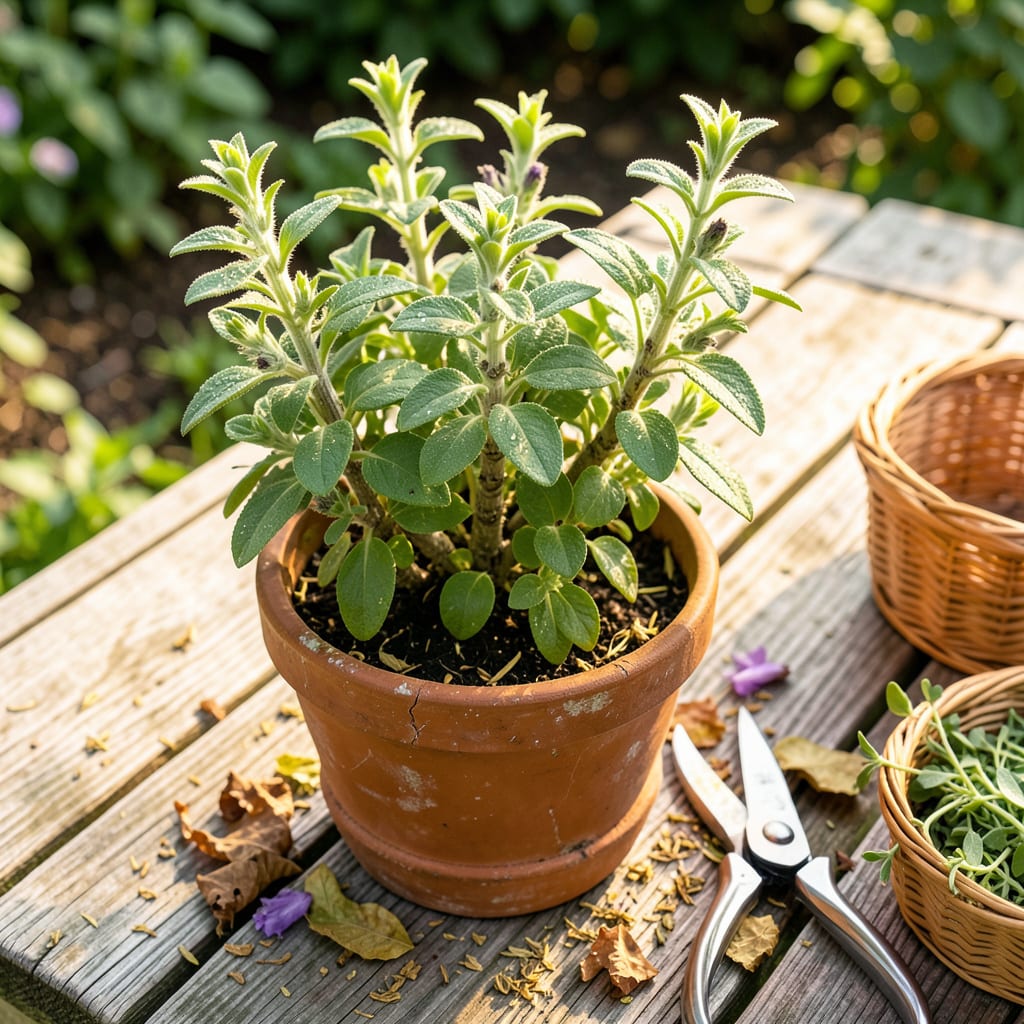
That first prune feels like giving your oregano a bad haircut—until you see how it explodes with new growth. I used to let mine get leggy and woody until I learned this simple technique that keeps plants compact, flavorful, and producing all season. The difference is shocking: pruned plants yield three times more harvestable stems than neglected ones.
Timing matters more than you’d think. Do it right in early spring or after flowering, and you’ll get bushier plants with tender new shoots. Do it wrong (like I did my first year), and you risk stunted growth or winter damage. The good news? Oregano forgives mistakes better than most herbs. Here’s exactly when and how to make those cuts.
📚 In This Guide
This simple technique will transform your oregano from leggy to lush in just minutes—no fancy tools required.
Oregano responds best to pruning in early spring when new growth first appears, or mid-summer after the first flush of flowers. I always check for fresh green shoots at the base of the plant—that’s your signal the plant is actively growing and ready for trimming. Avoid pruning in late fall or winter when the plant is dormant.
You’ll also want to prune if you notice the stems becoming woody at the base or the plant developing a bare center. These are signs your oregano needs rejuvenation. The ideal time is when the plant reaches about 6-8 inches tall—this gives you enough growth to work with while preventing the plant from getting too leggy.
Use clean, sharp pruning shears or scissors—dull blades crush stems instead of making clean cuts. I wipe my blades with rubbing alcohol first to prevent spreading disease. For small plants, kitchen scissors work fine. The key is making precise cuts without tearing the stems.
Before cutting, visualize the shape you want. Oregano grows in a mounding habit, so I aim to maintain that natural rounded form. Never remove more than one-third of the plant at once—this prevents shock and ensures quick recovery. Gather the stems in your hand to guide your cuts and create an even shape.
Cut just above a set of leaves or leaf nodes—this is where new growth will emerge. I make my cuts at a 45-degree angle about 1/4 inch above the node. This slight angle helps water run off instead of pooling on the cut surface, which can lead to rot.
Focus on removing the longest, leggiest stems first. You’ll feel the difference between soft green growth (perfect for pruning) and woody brown stems (leave these unless completely dead). After pruning, you should see the plant’s center opening up to light and air—this prevents disease and encourages fresh growth from the base.
After your initial pruning, pinch back the tips of new growth every 2-3 weeks during the growing season. This simple technique forces the plant to branch out, creating that dense, bushy form we all want. I use my fingernails to pinch just above a leaf pair—no tools needed for this light maintenance.
Watch for flower buds forming in summer. While oregano flowers are beautiful, they signal the plant is shifting energy from leaf production to reproduction. For the best flavor and bushiest plants, I snip off flower buds as they form. This redirects energy back into leaf growth and keeps your plant producing longer.
Remove all cut material from around the plant to prevent pest problems. Healthy oregano cuttings can be used fresh, dried, or even propagated. I bundle stems with twine and hang them upside down in a cool, dark place to dry. The cuttings will root easily in water if you want to create new plants.
After pruning, water your oregano lightly to help it recover. You’ll see new growth within 7-10 days—this is when you’ll really appreciate your efforts as the plant comes back fuller than ever. The more you prune, the more your oregano will reward you with abundant, flavorful leaves.
Pruning oregano is simpler than you might think, but a few key insights will help you avoid common pitfalls and get the best results.
Timing is Everything: The instructions mention pruning in early spring or mid-summer, and this timing is crucial. I’ve found that pruning in early spring—when new growth first appears—gives the plant the strongest start. If you wait too long, the stems become woody and less responsive. Mid-summer pruning after the first flush of flowers is equally important because it redirects the plant’s energy from flowering back into leaf production, which is what we want for a bushier plant.
Tool Preparation Matters: In Step 2, the instructions emphasize using clean, sharp tools, and I can’t stress this enough. Dull blades don’t just make messy cuts—they can actually damage the plant and slow down recovery. I always wipe my pruning shears with rubbing alcohol before and after use to prevent disease. If you don’t have pruning shears, kitchen scissors work just fine, as long as they’re sharp.
The One-Third Rule: One of the most common mistakes I see is over-pruning. The instructions warn against removing more than one-third of the plant at once, and for good reason. Removing too much foliage at once can shock the plant, stunting its growth instead of encouraging it. I like to visualize the plant’s natural mounding shape and trim just enough to maintain that form while removing the longest, leggiest stems first.
Follow-Up Care: After pruning, the instructions mention watering lightly to help the plant recover, and this step is often overlooked. I’ve noticed that oregano responds best when given a gentle drink immediately after pruning—it helps reduce stress and encourages new growth. Within 7-10 days, as mentioned in Step 5, you’ll start seeing fresh shoots emerging, which is always exciting!
It’s best to avoid heavy pruning in late fall or winter, as new growth may not harden off before cold weather. Light trimming is okay, but save major pruning for early spring or after the last frost. This protects the plant from frost damage and ensures healthy regrowth.
Never remove more than one-third of the plant at a time. Over-pruning stresses oregano and can stunt growth. For a major harvest or rejuvenation, trim in stages—first the top third, then wait 2-3 weeks before cutting more if needed.
Leggy growth often means the plant needs more sunlight or nutrients. After pruning, move it to a sunnier spot (6+ hours of light daily) and feed with a balanced fertilizer. Pinch back new tips regularly to encourage bushier growth—it’ll bounce back in 4-6 weeks!
Yes! Clean, sharp kitchen scissors work fine for small oregano plants. For thicker stems or larger patches, pruning shears give a cleaner cut. Always sanitize blades with rubbing alcohol before use to prevent disease spread.
Pruning actually enhances flavor! Regular trimming prevents woody stems and encourages tender, aromatic leaves. Harvest just before flowering for the most intense flavor—prune those buds off to keep the leaves tasty and mild.
