
Beautiful Plants For Your Interior
Beautiful Plants For Your Interior
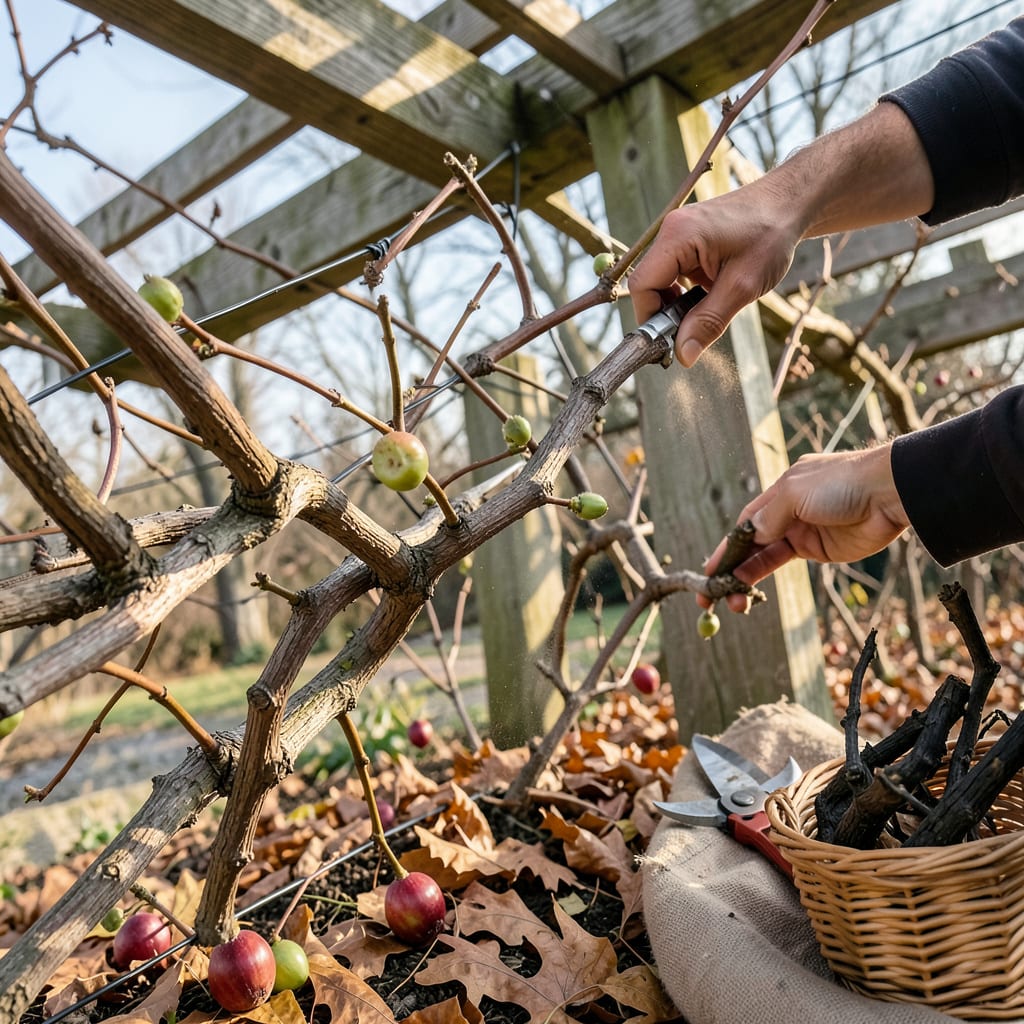
Muscadine vines left unpruned turn into tangled jungles with tiny, sour grapes. I learned this the hard way after my first season yielded more leaves than fruit. Pruning isn’t just maintenance—it’s how you coax those plump, sweet clusters from your vines year after year.
The secret lies in understanding how muscadines grow: they fruit on last year’s wood, so every cut you make now determines next summer’s harvest. Done right, you’ll see larger grapes, better air circulation (which means fewer diseases), and vines that stay productive for decades. Here’s exactly when and how to do it.
📚 In This Guide
Pruning these vigorous vines the right way ensures sweeter fruit and healthier plants for years to come.
Late winter—when the vines are fully dormant but before new buds swell—is ideal. I aim for February in most climates, but adjust based on your last frost date. Pruning too early (fall) invites winter damage; too late (spring) removes productive wood.
Look for pencil-thick canes with smooth, brown bark. These are last year’s growth and will bear this season’s fruit. Avoid pruning during freezing weather or when the vine is actively bleeding sap—wait for a dry, mild day.
Start by cutting out any blackened, cracked, or shriveled canes—these are dead and won’t recover. Next, remove thin, spindly shoots thinner than a pencil. They’ll never produce quality fruit and only drain the vine’s energy.
I also snip off any canes growing toward the ground or tangled in the trellis. These create shade and poor airflow, which invites fungal diseases. Make clean cuts at a 45-degree angle just above a healthy bud.
Muscadines fruit on current season’s growth from last year’s canes. Choose 4-6 of the strongest canes per vine, spaced evenly along the main trunk. Cut these back to 3-4 buds—this seems drastic, but it forces energy into fewer, higher-quality grape clusters.
The remaining canes (those not selected as fruiting spurs) should be cut back to 1-2 buds. These will become next year’s fruiting wood. I always leave a few extra as insurance against winter damage.
After pruning, you’ll see the vine’s basic structure. Select 1-2 vigorous canes to become new main arms for next year. Tie these loosely to your trellis with soft plant tape, leaving room for growth.
Remove any suckers growing from the base—they’ll never produce fruit and steal energy from the main vine. I check for these monthly during the growing season and snap them off while they’re still tender.
Rake up and destroy all pruned material—don’t compost it, as it may harbor pests or diseases. Sterilize your pruners with rubbing alcohol between vines to prevent spreading problems.
As new shoots emerge in spring, thin them to one per bud when they’re 6 inches long. This prevents overcrowding and ensures each remaining shoot gets maximum sunlight for sweet, plump grapes.
Pruning muscadines properly takes practice, but these insights will help you avoid common pitfalls and maximize your harvest.
Timing Precision: The February window mentioned in Step 1 is crucial—don’t prune during active freezing periods or when buds begin swelling. I’ve found that pruning during a mild, dry spell in late February gives the best results. If you’re in a warmer climate, adjust to January, but always avoid pruning when the vine is actively bleeding sap, as this stresses the plant.
Bud Selection Technique: When shortening canes to 3-4 buds in Step 3, choose buds that face outward from the vine’s center. This creates better airflow and sunlight exposure. I always select the plumpest, healthiest-looking buds for fruiting spurs—they’ll produce the strongest new growth. Remember that cutting back to just 3-4 buds feels aggressive, but this severe pruning is exactly what produces those big, sweet grape clusters.
Clean Cut Execution: The 45-degree angle cuts mentioned in Step 2 aren’t just for aesthetics—they prevent water from pooling on the cut surface, which can lead to rot. Make each cut about 1/4 inch above the bud, sloping away from it. I use bypass pruners rather than anvil pruners for cleaner cuts that heal faster. Always sterilize your tools between vines with rubbing alcohol to prevent disease transmission.
Future Growth Planning: In Step 4, when selecting 1-2 vigorous canes for next year’s structure, choose those growing in the direction you want the vine to expand. I like to position these new arms at roughly 45-degree angles from the main trunk for optimal sunlight capture. Don’t tie them too tightly to the trellis—leave room for the cane to thicken as it grows. The soft plant tape mentioned is ideal because it won’t girdle the vine as it expands.
Prune in late winter (January–February) while vines are dormant, but avoid freezing temps. This timing prevents sap bleeding and encourages vigorous spring growth. In warmer climates (Zones 7-9), aim for 4–6 weeks before the last frost date.
Remove 70–90% of last year’s growth, leaving 2–4 buds per spur (short fruiting branches). Over-pruning weakens the vine; under-pruning reduces fruit quality. A mature vine should have 40–60 buds total for balanced production.
Summer pruning (June–July) is only for light maintenance—remove suckers, damaged wood, or excessive shade. Heavy summer pruning risks sunburned fruit and stress. Stick to winter for major cuts to avoid yield loss.
Common causes:
Yes! Muscadines are vigorous climbers. Use a single-wire trellis (5–6 feet high) or arbor for support. After pruning, retie canes to the structure to guide growth and prevent tangling. Avoid ground contact to reduce rot risk.
