
Beautiful Plants For Your Interior
Beautiful Plants For Your Interior
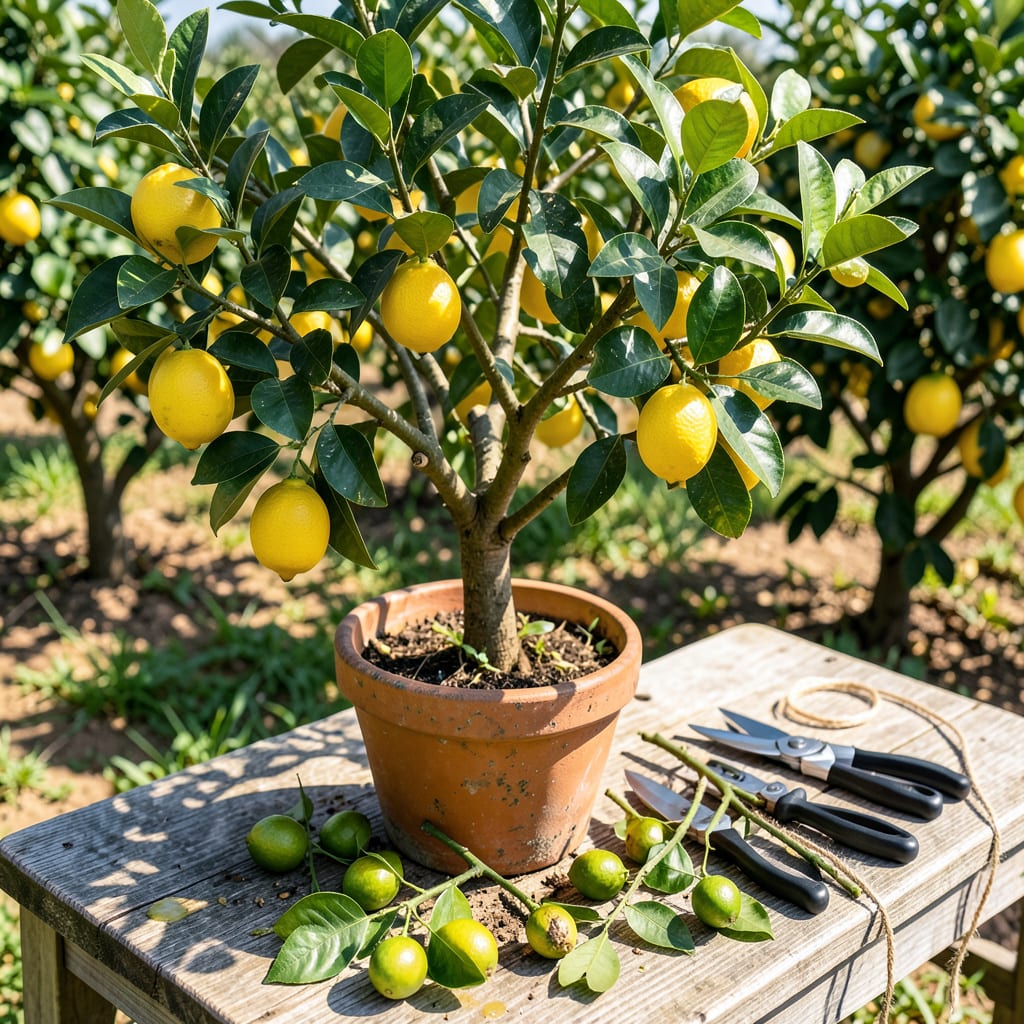
That first flush of Meyer lemons—plump, sweet, and shockingly fragrant—is what keeps me coming back to my pruning shears every winter. Pruning isn’t just about keeping your tree tidy; it’s the secret to bigger harvests, healthier branches, and a shape that fits your space. I’ve seen neglected trees produce a handful of small fruit while well-pruned ones overflow with dozens of full-sized lemons.
Timing matters more than you think. Do it right after harvest but before spring growth kicks in, and you’ll set your tree up for success. The process feels intimidating until you realize it’s mostly about removing what doesn’t belong—dead wood, crossing branches, and those pesky suckers stealing energy. With just 30 minutes and the right cuts, you’ll transform a scraggly tree into a productive powerhouse.
📚 In This Guide
Pruning at the right time with proper technique ensures healthier growth and more abundant fruit—here’s how to do it confidently.
Time your pruning after the final harvest but before new spring growth begins. For Meyer lemons, this typically falls between late winter and early spring (February to March in most zones). Pruning during dormancy minimizes stress while allowing the tree to direct energy toward new growth when temperatures rise.
Avoid pruning in fall—new growth stimulated then won’t harden off before winter, leaving it vulnerable to cold damage. I check for swollen buds (a sign of impending growth) before making cuts; this ensures you won’t remove potential fruiting wood accidentally.
Start with “the three Ds”: dead, diseased, or damaged wood. Dead branches appear brittle and gray; diseased wood may show discoloration or cankers. Use sterilized pruners to make clean cuts 1/4 inch above a bud or lateral branch—never leave stubs, as they invite pathogens.
Next, address crossing branches that rub against each other, creating wounds. Remove the weaker of the two branches entirely. Look for inward-growing branches too; these crowd the center, reducing airflow and sunlight penetration to the canopy’s interior.
Selectively remove one-third of the oldest branches annually to encourage vigorous new growth. Focus on branches that are:
Make thinning cuts just outside the branch collar (the swollen area where the branch meets the trunk). Avoid cutting into the collar itself, as this impairs the tree’s natural healing process. Angle cuts slightly away from the trunk to prevent water pooling.
Meyer lemons fruit best on 2-3 year old wood, so preserve a mix of branch ages. Shorten overly long branches by cutting back to a lateral branch or bud facing outward—this directs new growth away from the center. Maintain a scaffold structure of 3-5 main branches radiating from the trunk.
Step back frequently to assess balance. The goal is a rounded, vase-like shape that allows light to penetrate evenly. I often make a final “artist’s cut” to remove any branches that disrupt the tree’s natural symmetry—this isn’t just aesthetic; it prevents future crowding.
Remove all pruned material from the area immediately to prevent pest habitats. Apply a thin layer of horticultural oil spray to the cuts on mature trees if pests like scale have been problematic—this protects vulnerable tissue without harming the tree.
Water deeply after pruning to help the tree recover, then monitor for new growth within 3-4 weeks. This is when you’ll see if your cuts were well-placed: healthy regrowth should emerge uniformly across the canopy. Adjust your technique next season if you notice uneven sprouting or dieback.
Pruning citrus trees is both an art and a science—these insights will help you avoid common pitfalls while maximizing fruit production.
The Timing Secret: That late winter to early spring window mentioned in Step 1 isn’t arbitrary. I’ve found that pruning just as the first buds begin to swell (but before they open) gives the tree time to heal before the growing season explodes. In warmer climates like California, this might mean late January, while cooler zones should wait until March. The swollen buds are your visual cue—don’t start cutting until you see them.
Cutting Technique That Prevents Damage: When making those 1/4-inch cuts above buds in Step 2, angle your pruners at about 45 degrees with the lower blade closer to the trunk. This prevents water from collecting on the cut surface, which is critical for preventing fungal infections. I learned this after losing several branches to rot—now I make every cut with this angle in mind.
Canopy Thinning Wisdom: The one-third rule in Step 3 isn’t just about quantity—it’s about strategic removal. Focus first on branches that are completely shaded (receiving no direct sunlight), as these contribute little to fruiting. I use this trick: stand back and squint at the tree—any branch that disappears against darker areas is a prime candidate for removal. This visual test ensures you’re opening the canopy effectively.
Future Growth Direction: In Step 4, when cutting back to outward-facing buds, remember that the topmost bud will become the new branch’s leader. I always select a bud that points slightly upward (about 30 degrees) rather than perfectly horizontal—this creates a more natural growth pattern that resists wind damage better than perfectly horizontal branches.
The ideal time is late winter or early spring (just before new growth starts). Avoid pruning in fall—it can stimulate tender growth vulnerable to frost. Light pruning to remove dead branches can be done anytime, but save major shaping for late winter for the best results.
Never remove more than one-third of the tree’s foliage in a single season. Focus on thinning crowded branches, cutting just above a leaf node or branch junction. Over-pruning stresses the tree and reduces fruit production, so prune gradually over multiple years if needed.
Yes! Meyer lemons respond well to size-control pruning. Use sharp bypass pruners to trim back leggy branches and maintain a compact shape. Regular light pruning (2–3 times a year) works better than drastic cuts. Dwarf varieties are especially easy to manage in containers.
Over-pruning (especially removing fruit-bearing wood) or pruning at the wrong time can delay fruiting. Ensure you’re leaving plenty of 2–3-year-old branches, as these produce the most lemons. Also, check for stress factors like poor soil, under-watering, or lack of sunlight.
Pruning involves cutting branches with tools to shape the tree or remove dead growth. Pinching is a gentle technique where you use your fingers to snap off tender new growth tips (encouraging bushiness). Pinching is great for young trees or container-grown Meyers to promote density without major cuts.
