
Beautiful Plants For Your Interior
Beautiful Plants For Your Interior
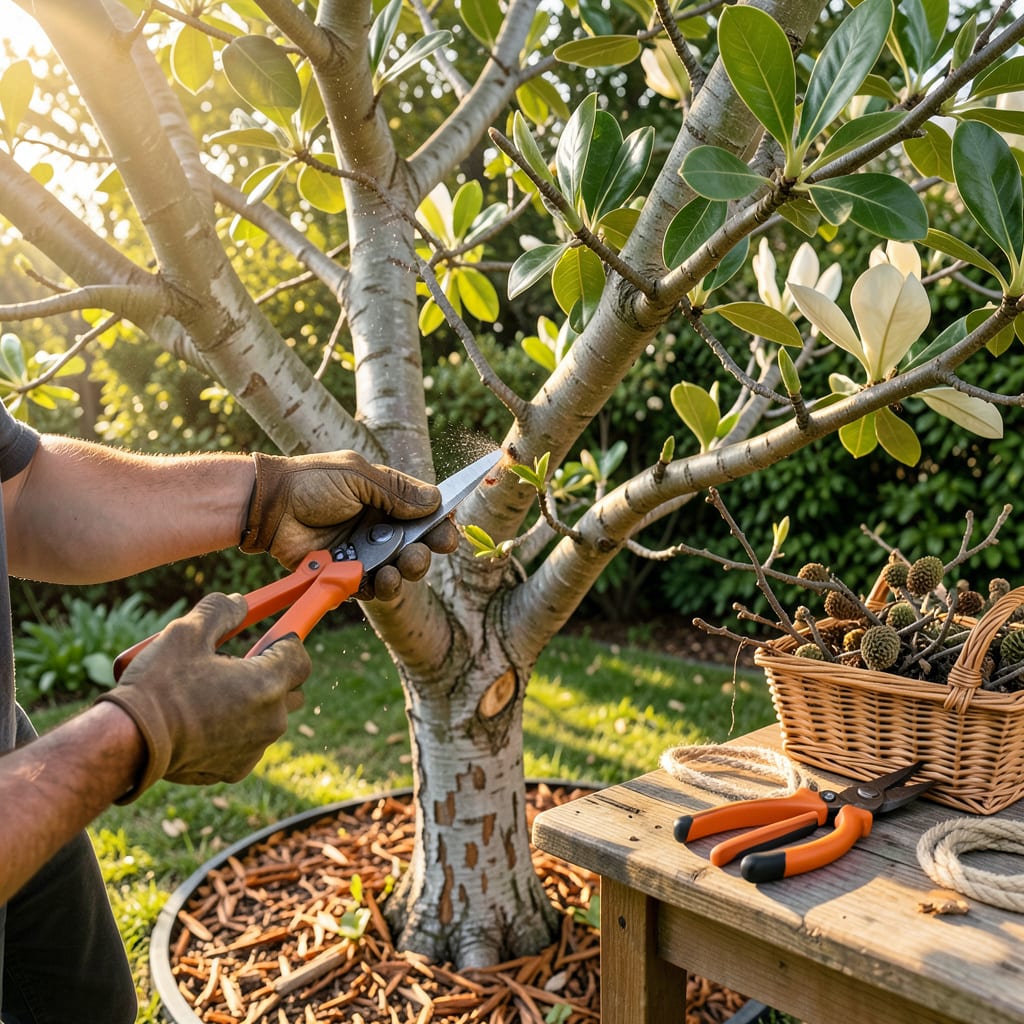
I used to think magnolias were “prune-proof” until I saw what strategic cuts could do. The right pruning transforms a leggy tree into a showstopper—more blooms, better shape, and stronger health. Timing matters: do this right after flowering ends (usually late spring to early summer) and you’ll avoid cutting off next year’s buds.
This isn’t about hacking away branches—it’s about making three key cuts that encourage new growth where you want it. My southern magnolia went from sparse to stunning in one season after I learned this method. You’ll need sharp tools, a clear plan, and about 30 minutes to set your tree up for its best year yet.
📚 In This Guide
Here’s my foolproof approach to shaping your magnolia while encouraging those spectacular blooms we all love.
Timing is everything with magnolias. I always prune immediately after flowering in late spring or early summer—this gives the tree time to heal before winter while avoiding cutting off next year’s buds. Never prune in fall or winter, as magnolias bleed sap heavily during dormancy, which weakens the tree.
Look for when about 70% of the flowers have faded but before new growth hardens off. You’ll see the difference: fresh growth is flexible and green, while mature branches are rigid and brown. This window ensures you won’t accidentally remove developing flower buds for next season.
Start by cutting any dead or diseased wood back to healthy tissue. Dead branches feel hollow when tapped and have no green layer under the bark. For diseased branches, sterilize your pruners with rubbing alcohol between cuts to prevent spreading pathogens.
Next, tackle branches that rub against each other or grow inward. These create wounds that invite pests and diseases. I make clean cuts just outside the branch collar (that swollen area where the branch meets the trunk) at a slight angle. Never leave stubs or cut flush—both prevent proper healing.
Step back and assess the tree’s overall shape. Remove about 10-15% of the oldest branches each year, focusing on those growing toward the center. This opens up the canopy for better air circulation, which reduces fungal issues and lets sunlight reach inner branches.
I use the “3-D” rule: remove anything that’s Dead, Diseased, or Disrupting the natural shape. Magnolias have a beautiful natural form, so I never force unnatural shapes. Make thinning cuts (removing entire branches back to their origin) rather than heading cuts (cutting partway along a branch), which can stimulate excessive regrowth.
For each cut, locate the branch collar and make a clean, angled cut just outside it. The collar contains specialized cells that help the tree heal. If you cut too close, you’ll damage these cells; too far out leaves a stub that won’t heal properly.
Use sharp bypass pruners for branches under ½ inch thick, loppers for ½ to 1½ inches, and a pruning saw for anything larger. I always make the first cut on the underside of the branch about 6 inches from the trunk to prevent bark tearing, then finish with a top cut just outside the collar.
Remove all cut branches from the area immediately—these can harbor pests and diseases. I like to make a final inspection from different angles to ensure I haven’t missed any problematic branches or created uneven areas.
Water the tree deeply after pruning to help it recover, and apply a 2-3 inch layer of mulch around the base (keeping it 6 inches away from the trunk). Monitor the tree over the next few weeks for signs of stress like wilting or excessive sap flow, which might indicate you’ve over-pruned or made improper cuts.
Pruning magnolias is more art than science, but these insights will help you avoid common pitfalls while achieving beautiful results.
Timing Precision: The window mentioned in Step 1—when about 70% of flowers have faded—is absolutely critical. I’ve found that waiting until 80% of flowers have dropped gives you an extra safety margin against accidentally removing next year’s buds. Look for the transition point where new growth is still bendable but starting to firm up. This is your sweet spot for pruning.
Tool Selection Matters: In Step 4, the specific tool recommendations (bypass pruners for ½ inch branches, loppers for up to 1½ inches) aren’t arbitrary. Using the wrong tool can crush rather than cut branches, creating jagged wounds that heal poorly. I keep my pruners razor-sharp and clean them with rubbing alcohol between trees—this prevents disease transmission and makes cleaner cuts.
The 3-D Rule in Practice: When applying the “3-D” rule from Step 3 (Dead, Diseased, Disrupting), I start by walking completely around the tree before making any cuts. This perspective helps identify which branches are truly disrupting the natural shape. Remember that “disrupting” doesn’t just mean crossing branches—it includes any growth that’s throwing off the tree’s balance or blocking sunlight from reaching the center.
Healing and Recovery: The 2-3 inch mulch layer mentioned in Step 5 does more than just retain moisture—it creates an ideal environment for root recovery. I’ve had best results using organic mulch like shredded bark, which breaks down slowly and adds nutrients to the soil. Keep that 6-inch gap around the trunk religiously; mulch piled against the trunk can cause rot and invite pests.
The ideal time is late winter to early spring (just before new growth starts) for deciduous magnolias. Evergreen varieties (like Southern magnolia) tolerate light pruning in early summer after flowering. Avoid pruning in fall—it can encourage frost-sensitive growth.
Magnolias respond poorly to aggressive pruning. Instead, use gradual renewal pruning: remove 1-2 large branches annually over several years. Heavy cuts can stress the tree, reduce blooms, or even kill it. Opt for shaping over drastic size reduction.
Young trees (under 5 years) need structural pruning to encourage strong branches—remove competing leaders and weak growth. Mature trees require maintenance pruning: thin crowded branches, remove deadwood, and shape lightly. Never remove more than 20% of the canopy at once.
Over-pruning (especially removing flower buds) or pruning at the wrong time (like late summer) can zap next year’s blooms. Magnolias bloom on old wood, so avoid cutting branches with fat, rounded buds. If stressed, the tree may skip a bloom cycle to recover.
Yes! Try these first:
