
Beautiful Plants For Your Interior
Beautiful Plants For Your Interior
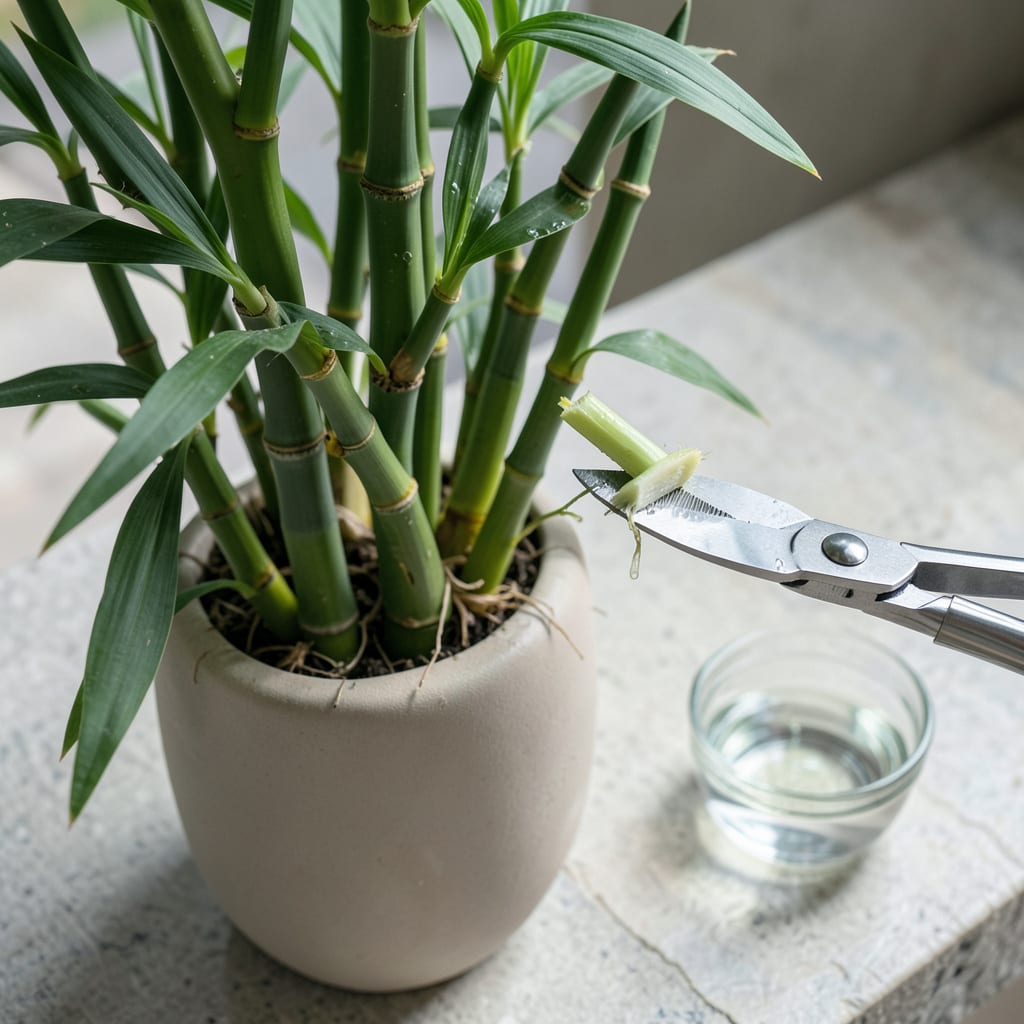
That leggy lucky bamboo stalk staring back at you? It’s begging for a trim. I’ve turned countless overgrown, sad-looking stalks into full, vibrant plants with just a few strategic cuts. Pruning isn’t about hacking away—it’s about guiding growth where you want it, and lucky bamboo responds beautifully when you do it right.
The right technique gives you two wins: a bushier main plant and free cuttings to propagate. No green thumb required—just clean shears, 10 minutes, and the confidence to make that first cut. You’ll see new shoots emerge within 2-3 weeks, transforming sparse stalks into the lush, layered look that makes this plant so satisfying to grow.
📚 In This Guide
This simple process will keep your plant thriving while encouraging that signature lush, controlled growth.
Look for stems that are yellowing, overgrown, or crowding the arrangement. The best time to prune is in spring or early summer when the plant is actively growing and can recover quickly. I always start by examining the base of the plant first—this is where older, less vigorous stems tend to accumulate.
Focus on removing no more than one-third of the total stems in a single session. This prevents shocking the plant while still allowing you to shape it effectively. Healthy stems should be firm and bright green—anything soft, discolored, or mushy needs to go immediately to prevent rot from spreading.
Use sharp, clean scissors or pruning shears to make 45-degree angle cuts just above a leaf node (the small bump where leaves emerge). This angle prevents water from pooling on the cut surface, which could lead to rot. I always wipe my tools with rubbing alcohol first—lucky bamboo is sensitive to bacteria.
For tall, leggy stems, cut them back to about 1-2 inches above the soil line. Don’t worry about being too aggressive—this plant bounces back remarkably well. If you’re shaping the plant, step back occasionally to check your progress from different angles. The goal is balanced growth, not perfection.
After pruning, place your lucky bamboo in bright, indirect light for 24-48 hours to help it recover. Avoid direct sun, which can stress the freshly cut stems. I like to mist the remaining foliage lightly with water—this mimics the humid conditions the plant loves.
Within 2-3 weeks, you should see new shoots emerging from the cut nodes. This is your sign the pruning was successful. If any cut stems show signs of browning, trim them back slightly further. The plant will redirect energy to healthier growth points.
Don’t discard those healthy cuttings! Place them in 1-2 inches of clean water (filtered or distilled works best) with the cut end submerged. Within 4-6 weeks, you’ll see roots beginning to form. I use clear glass containers so I can monitor root development without disturbing the cuttings.
Once roots reach 1-2 inches long, you can pot them in soil or keep them in water. This is how I’ve expanded my collection for free—each pruning session gives me more plants to share or display. Change the water every 5-7 days to prevent bacterial growth during propagation.
Pruning lucky bamboo is simpler than you might think, but these key insights will help you avoid common pitfalls.
Timing Strategy: The 24-48 hour recovery period mentioned in Step 3 is crucial—don’t rush this process. I’ve found that plants recover best when kept in stable conditions during this window. Avoid moving the plant or changing its environment during this time, as it can delay new growth. If you notice any wilting after pruning, extend this period by another 12 hours before returning to normal care.
Cutting Technique: When making those 45-degree angle cuts in Step 2, take your time to identify the leaf nodes. These small bumps are where new growth will emerge, so cutting just above them (about 1/4 inch) gives the best results. I use a magnifying glass for precision with smaller plants—it makes a noticeable difference in how quickly new shoots appear.
Propagation Success: For the cuttings in Step 4, using clear glass containers isn’t just for visibility—it helps prevent algae growth that can occur in opaque containers. Change the water every 5 days without fail, and position the cuttings where they’ll get bright but indirect light. I’ve had the best success with east-facing windowsills, where they get gentle morning sun without harsh afternoon rays.
Seasonal Consideration: While spring or early summer is ideal for pruning as mentioned in Step 1, you can do light maintenance pruning year-round. Just be more conservative outside the growing season—remove only damaged stems and avoid major shaping. The plant’s recovery will be slower in fall and winter, so adjust your expectations for new growth accordingly.
Yes! Lucky bamboo grows year-round indoors, so you can prune it anytime. For best results, trim during active growth (spring/summer) when it recovers faster. Avoid heavy pruning in winter if your plant is dormant or stressed.
Yellowing is normal if you pruned aggressively—it’s just stress. Trim yellow leaves at the base and ensure clean water (change weekly). If the stem yellows, check for rot or overwatering. Healthy plants bounce back in 2-4 weeks with proper care.
Nope! Sharp, clean scissors or pruning shears work fine. Avoid dull blades—they crush stems. For thick stalks, use a sterile knife. Always disinfect tools with rubbing alcohol to prevent infections.
Place healthy cuttings (4+ inches long) in water or moist soil. Remove lower leaves to prevent rot. Roots should appear in 4-8 weeks. Change water weekly and keep cuttings in bright, indirect light for best results.
Prune the top 1/3 of the plant to encourage bushier growth. If stems are bare, cut just above a node (the ring-like mark) to stimulate new shoots. Rotate the plant regularly for even light exposure and prevent future legginess.
