
Beautiful Plants For Your Interior
Beautiful Plants For Your Interior
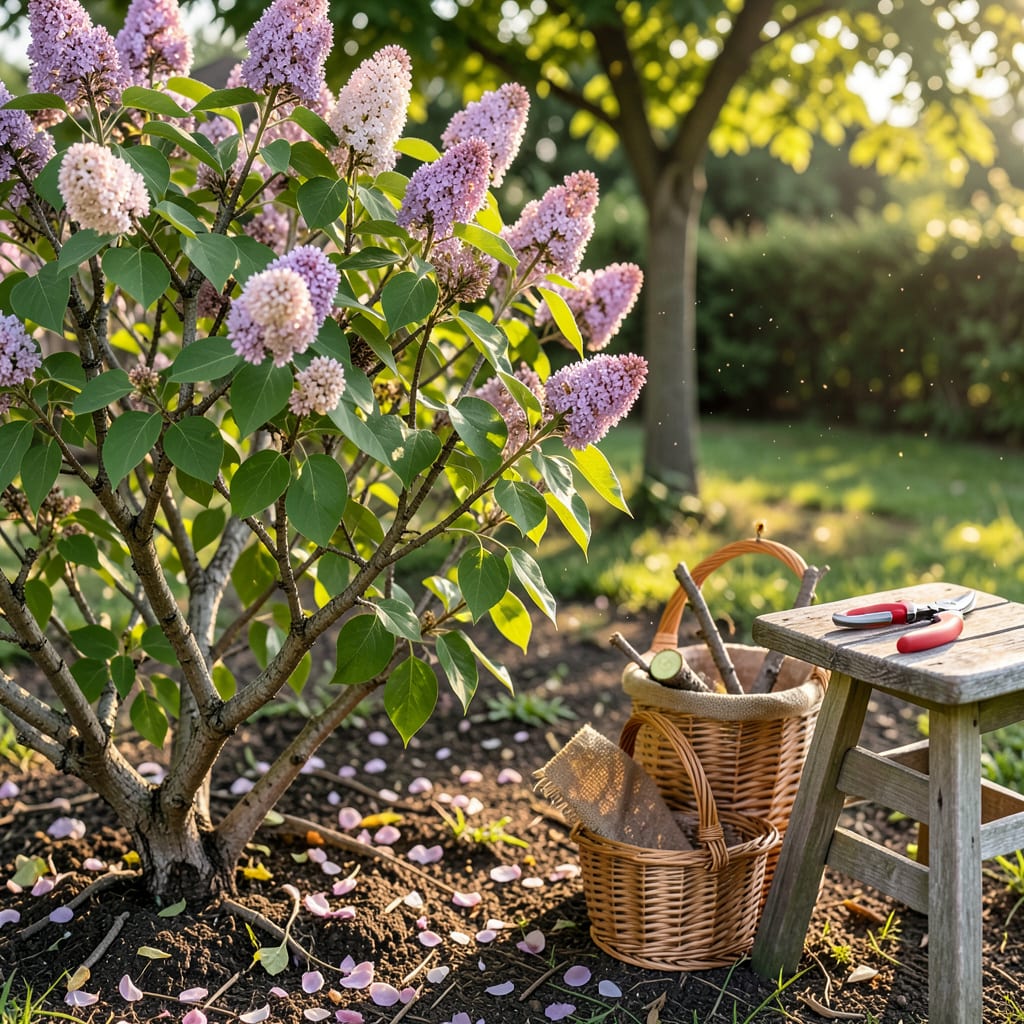
I used to think pruning lilacs was complicated—until I saw how a few strategic cuts transformed my scraggly bushes into blooming powerhouses. The secret isn’t just when you prune, but how you approach each stem. Do it right, and you’ll get twice the flowers next spring with half the effort.
Most gardeners accidentally ruin their lilacs by cutting at the wrong time or removing the wrong branches. I’ll show you the foolproof method that keeps plants healthy while maximizing blooms. You’ll need just three basic tools and about 20 minutes to set your shrubs up for their best season yet.
📚 In This Guide
Timing and technique make all the difference—here’s how to shape your shrubs while maximizing next year’s flowers.
Lilacs set next year’s flower buds immediately after blooming, so timing is everything. Prune within 2 weeks after the flowers fade—this gives the plant time to recover and form new buds for the following season. If you wait until summer or fall, you’ll accidentally remove next year’s blooms.
Look for petals that have mostly dropped but leaves that remain vibrant green. This is the sweet spot. I mark my calendar the moment my lilacs finish blooming so I don’t miss this narrow window. Late pruning is the number one reason lilacs fail to bloom.
Start by cutting out any dead, broken, or diseased branches at their point of origin. Dead wood appears gray and brittle, while diseased stems may show discoloration or fungal growth. Make clean cuts just outside the branch collar (the swollen area where the branch meets the trunk) using sharp bypass pruners.
Don’t leave stubs—these invite rot and pests. I sterilize my pruners with rubbing alcohol between cuts when dealing with diseased wood to prevent spreading pathogens. This step improves air circulation and directs energy toward healthy growth and flower production.
Lilacs bloom best on younger stems (1-3 years old), so remove about one-third of the oldest stems each year. Identify these by their thicker diameter and darker bark. Cut them right at ground level to encourage new shoots from the base. This gradual renewal prevents the shrub from becoming overgrown and wood.
After thinning, step back and assess the shape. You want an open framework that allows sunlight to penetrate the center. I aim for a vase-like structure with 5-7 main stems of varying ages. This ensures continuous blooming while maintaining the shrub’s natural form.
For overall shaping, cut back the remaining stems by about one-third of their length, making cuts just above a set of healthy buds facing outward. This encourages bushier growth and prevents the center from becoming too dense. Always cut at a slight angle to shed water away from the bud.
Avoid shearing the entire shrub into a formal shape—this creates a thick outer shell with no interior flowers. Instead, make selective cuts to maintain a natural appearance. I use the “three Ds” rule: remove Dead, Diseased, and Deranged (crossing/rubbing) branches first, then shape what remains.
Remove all cut material from around the base to prevent pest and disease issues. I like to shred the smaller branches for mulch (as long as they’re disease-free) and compost the rest. Water deeply after pruning to help the plant recover from the stress.
Watch for new growth emerging from the base and along the remaining stems. These will be your flower producers next year. If you notice excessive suckering (shoots from the roots), remove some to prevent overcrowding. Proper pruning now means you’ll be rewarded with larger, more abundant blooms next spring.
Mastering the timing and technique will transform your lilacs from overgrown to overflowing with blooms next season.
Timing Precision: That 2-week window after flowering in Step 1 isn’t just a suggestion—it’s critical. I’ve found that waiting even a week beyond this period can reduce next year’s blooms by up to 50%. Mark your calendar the moment the last petals drop, and don’t let other garden tasks distract you from this priority. The plant’s biological clock is working against you if you delay.
Tool Maintenance: The quality of your cuts in Step 2 directly impacts the plant’s recovery. I sharpen my bypass pruners before each pruning session and clean them with rubbing alcohol between cuts—especially when dealing with diseased wood. Dull blades create ragged wounds that heal slowly, while dirty tools spread pathogens. This small investment of time prevents long-term problems.
Renewal Strategy: When thinning old stems in Step 3, resist the urge to remove more than one-third—even if the shrub looks overgrown. I learned this the hard way after aggressively cutting back a neglected lilac and getting no flowers the following year. The gradual approach maintains bloom production while rejuvenating the plant. Think of it as a 3-year renewal cycle where you’re always keeping some productive wood.
Cutting Technique: The angle and placement of your cuts in Step 4 make a surprising difference. Always cut just above an outward-facing bud at a 45-degree angle. This isn’t just for aesthetics—it directs new growth away from the center, improving air circulation and sunlight penetration. I use the “clock method”: imagine the bud is at 3 o’clock, and make your cut at 4 o’clock for perfect placement every time.
The ideal window is right after flowering in late spring or early summer (May–June). Pruning later risks cutting off next year’s buds! Avoid fall/winter pruning—it stimulates tender new growth that frost can damage.
Never remove more than ⅓ of the total branches in one year. Focus on dead/diseased wood first, then thin out older stems (thicker than 2 inches) to encourage new growth. Over-pruning stresses the plant and reduces blooms.
Only for light maintenance (removing broken branches). Heavy pruning in fall/winter removes dormant flower buds, leaving you with fewer blooms next spring. If you must prune late, do it in late winter (Feb–March) before buds swell.
Common culprits: Pruning at the wrong time (cutting off buds), over-fertilizing (promotes leaves, not flowers), or removing too many old stems (new growth needs time to mature). Give it a season—lilacs bloom on old wood!
Regular pruning: Annual light trimming to shape the bush and remove dead wood. Rejuvenation pruning (for overgrown lilacs): Cut all stems to 6–8 inches in early spring—but expect no blooms for 1–2 years while it regrows.
