
Beautiful Plants For Your Interior
Beautiful Plants For Your Interior
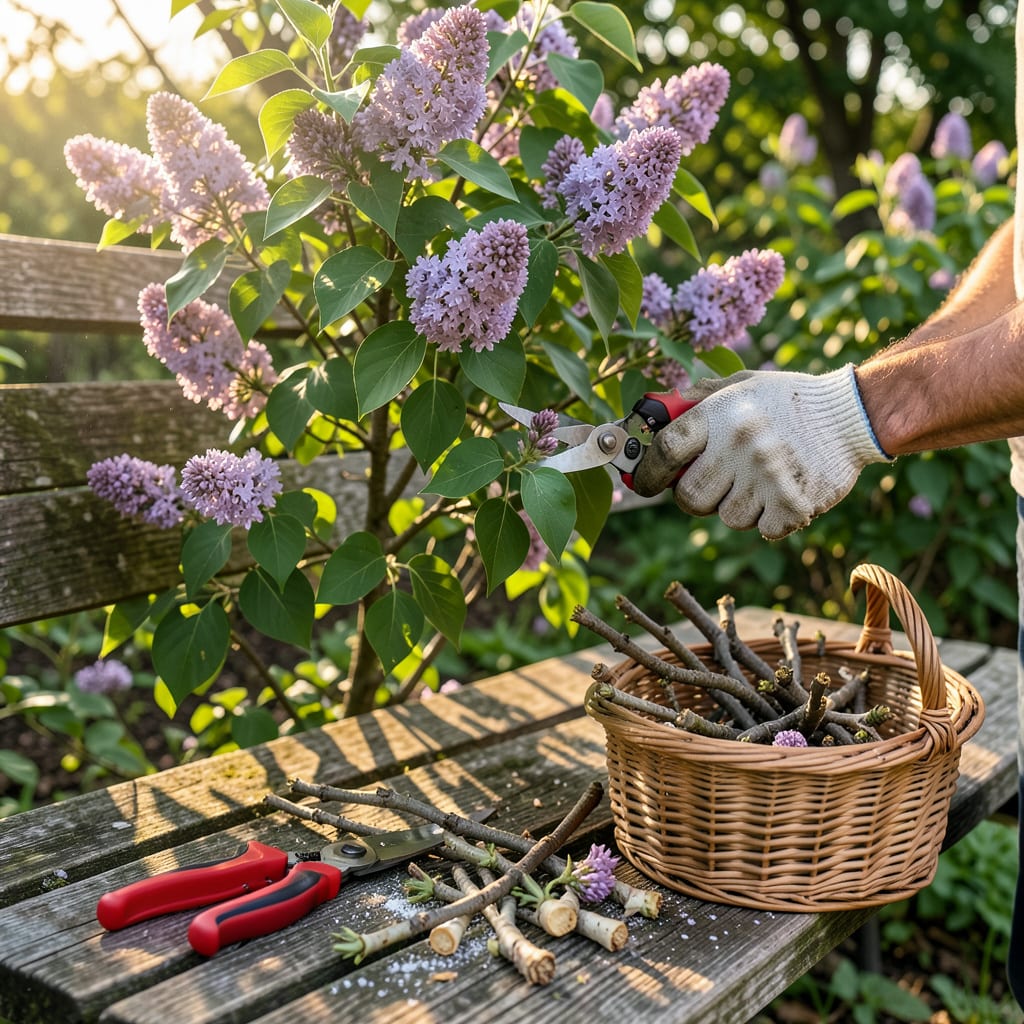
I used to wonder why my neighbor’s lilacs exploded with blooms while mine stayed scraggly and sparse. The answer? A single afternoon with pruners at the right time. Pruning lilacs isn’t about hacking away—it’s about making strategic cuts that redirect energy into next year’s flowers instead of wasted growth.
Do it immediately after the blooms fade (yes, timing matters that much), and you’ll be rewarded with bushier plants and twice as many flowers next spring. The process takes less than an hour, requires just three basic tools, and even a first-timer can master the technique with a little guidance. Here’s exactly how to do it right.
📚 In This Guide
Timing and technique make all the difference—here’s how to do it right for spectacular blooms.
Prune lilacs immediately after they finish blooming in spring. This timing preserves next year’s flower buds, which form on old wood during summer. If you wait until fall or winter, you’ll cut off all the developing buds and sacrifice next season’s blooms.
You’ll know the window is right when about 90% of flowers have faded but leaves remain green and healthy. I mark my calendar the moment the last cluster opens—this gives me a 2-3 week window to complete pruning before new buds set.
Start by cutting out any dead, broken, or diseased branches at their base. Dead wood appears gray and brittle, while healthy stems show green tissue when scratched lightly. Diseased branches often have discolored leaves or cankers (sunken, cracked areas on the bark).
Use clean, sharp bypass pruners for cuts up to ½ inch diameter, and loppers for thicker branches. Make each cut at a 45-degree angle just outside a bud or branch collar—the slight slope prevents water from pooling on the cut surface.
Remove about one-third of the oldest stems each year, cutting them right at ground level. These are typically the thickest stems (often 1-2 inches in diameter) with rough, peeling bark. Thinning opens the center of the shrub to sunlight and air circulation.
You’ll see new shoots emerging from the base after pruning—these will become your future flowering stems. I aim to maintain a mix of stem ages: thick old wood for stability, medium stems for current blooms, and thin new growth for future seasons.
Step back frequently to assess the shrub’s natural shape. Cut back overly tall stems to just above a strong side branch or bud, maintaining the plant’s rounded form. Never remove more than one-third of the total foliage in a single year—this stresses the plant and reduces flowering.
For height control, cut the tallest stems first, then gradually work your way down. You’ll notice lilacs bloom most heavily on stems that received full sun the previous summer, so prioritize opening the top of the shrub to sunlight.
Rake up and dispose of all pruned material immediately—this prevents disease spread and eliminates hiding places for pests. I like to spread a thin layer of compost around the base after pruning to support new growth, but avoid piling it against the stems.
Watch for new shoots emerging from the base over the next 4-6 weeks. These will develop into next year’s flowering wood. Water deeply during dry spells to help the plant recover, but avoid overhead watering that could promote fungal diseases on fresh cuts.
Pruning lilacs properly can feel intimidating at first, but these practical insights will help you avoid common mistakes and set your shrub up for spectacular blooms next season.
The Timing Window: That 2-3 week period after blooming mentioned in Step 1 is absolutely critical. I learned this the hard way after pruning too late one year and losing all my flowers the following spring. Mark your calendar when about 90% of flowers have faded—this is your signal to act. If you miss this window, it’s better to wait until next year than risk cutting off developing buds.
Tool Selection Matters: In Step 2, the recommendation to use bypass pruners for branches up to ½ inch diameter isn’t arbitrary. Anvil pruners can crush stems rather than making clean cuts, which invites disease. I keep my pruners sharp with a diamond file—dull blades create ragged cuts that heal poorly. For thicker stems (those 1-2 inches in diameter mentioned in Step 3), quality loppers make the job much easier.
Thinning Technique: When removing that one-third of the oldest stems in Step 3, don’t just cut randomly. Look for stems with peeling bark and trace them all the way to the ground. Cutting at ground level encourages strong new growth from the base. I’ve found that removing stems in a balanced pattern around the shrub (rather than all from one side) maintains better shape and airflow.
Regrowth Monitoring: The 4-6 weeks of new growth monitoring in Step 5 is when you’ll see the payoff of your work. I check weekly for those fresh green shoots at the base—they’re your future flowering stems. If you notice weak or sparse regrowth, that’s a sign you may have pruned too aggressively. Next year, reduce the amount you remove by about 10-15% to give the plant time to recover.
The ideal window is right after flowering in late spring or early summer (May–June). Pruning later risks cutting off next year’s buds! Avoid fall/winter pruning—it stimulates tender new growth that frost can damage.
Only for light shaping or deadwood removal. Heavy pruning in fall/winter removes next year’s flower buds. If you must, limit cuts to 1/3 of old stems and avoid hard pruning—better to wait until after blooming next year!
Use the “1/3 rule”: Never remove more than 1/3 of the plant in one season. For severely overgrown lilacs, spread rejuvenation over 3 years—cut the oldest, thickest stems first (down to 6–12 inches). This encourages new growth while keeping some blooms.
Common culprits:
Minimal pruning is best for young plants (1–3 years old). Focus on removing:
