
Beautiful Plants For Your Interior
Beautiful Plants For Your Interior
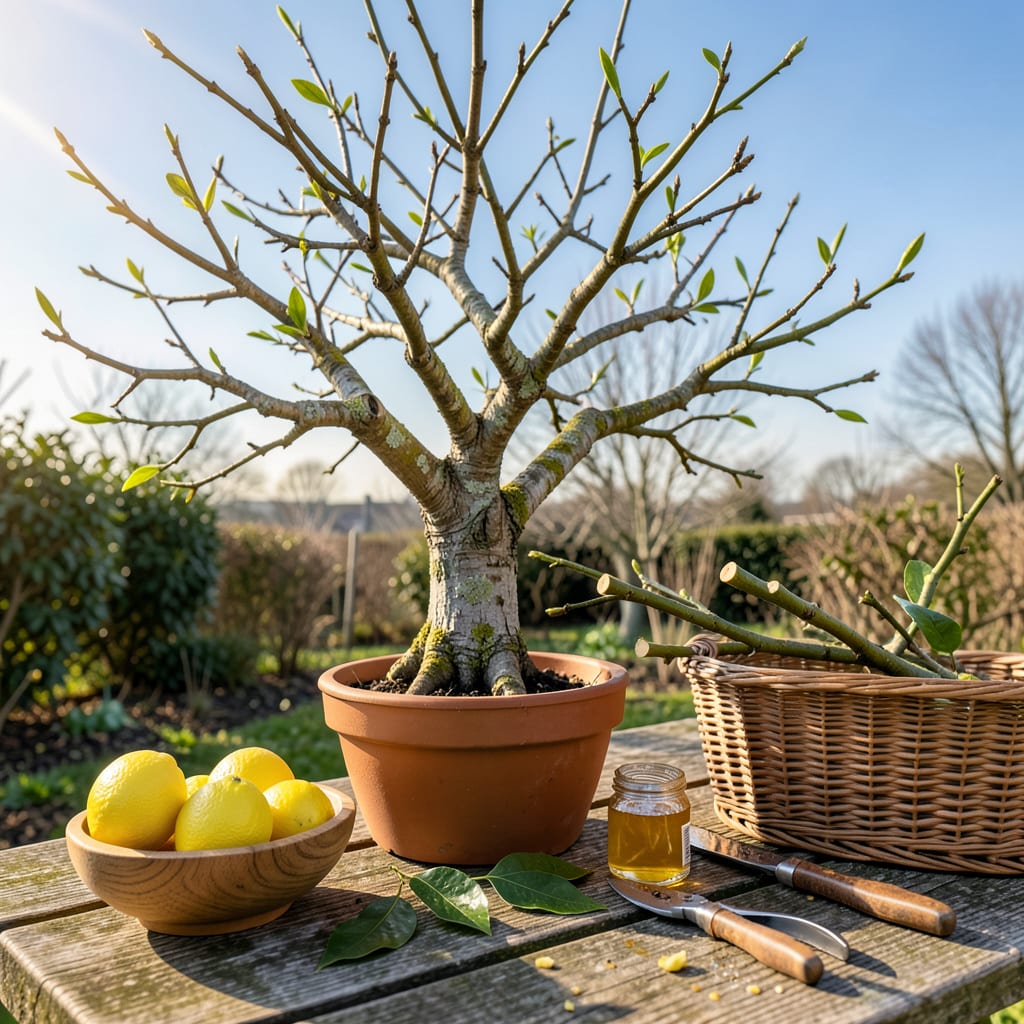
I used to think pruning a lemon tree was just about making it look neat—until I saw how the right cuts doubled my harvest. That first season after proper pruning, my tree went from a few sad lemons to branches heavy with fruit. The difference wasn’t luck; it was knowing where and when to make each cut.
Here’s the thing: lemon trees don’t need fancy techniques, just smart timing and a few key tools. Prune in late winter before new growth starts, focus on opening the canopy for sunlight, and remove anything dead or crossing. You’ll get a stronger tree, bigger lemons, and fewer pest problems—all with about 30 minutes of focused work.
📚 In This Guide
Pruning a lemon tree isn’t complicated once you know where to cut and when. Here’s how to do it right.
Always prune your lemon tree in late winter or early spring, just before new growth begins. This timing lets you see the tree’s structure clearly without leaves in the way. I’ve found this window—right after the last frost but before flowers appear—gives the tree time to heal before summer’s heat.
Avoid pruning in fall or mid-winter. Fall cuts stimulate tender new growth that winter cold will damage, and winter pruning leaves wounds vulnerable to frost. You’ll know it’s the right time when you see small leaf buds swelling but no open flowers yet.
Start with your pruning shears and remove any dead wood—these branches will be dry, brittle, and often gray instead of green. Cut them back to healthy wood where you see green tissue inside the bark. Next, take out diseased branches (look for black spots, oozing sap, or fungal growth).
Then focus on branches that cross or rub against each other. These create wounds that invite pests and disease. I always remove the weaker of the two crossing branches entirely, cutting just outside the branch collar (that swollen area where the branch meets the trunk). Never leave stubs—they won’t heal properly.
Stand back and look for areas where branches grow too densely. Your goal is to open up the tree’s center so sunlight and air can circulate. Remove about one-third of the oldest branches each year, focusing on those growing inward or straight up (called “water sprouts”).
Make thinning cuts by removing entire branches back to their point of origin. This is better than just shortening branches, which encourages bushy regrowth. You’ll know you’ve thinned enough when you can see daylight through the canopy when standing beside the tree.
Now focus on shaping. Lemon trees fruit best on horizontal branches, so leave these while removing overly vertical growth. Shorten remaining branches by cutting just above an outward-facing bud—this directs new growth away from the center. I aim for a rounded, vase-like shape that’s wider at the bottom than the top.
Avoid over-pruning—never remove more than 20% of the foliage in one session. This keeps the tree productive while still improving its structure. You’ll see the payoff next season with larger, healthier fruit and fewer pest problems.
Rake up all cut material immediately and dispose of it (don’t compost diseased wood). Wash your pruning tools with rubbing alcohol to prevent spreading pathogens. Water the tree deeply after pruning to help it recover—this is especially important if your soil is dry.
Watch for new growth over the next 4-6 weeks. Healthy recovery shows as bright green shoots emerging from your cut points. If you see dieback or no new growth, the tree may need fertilizer or you may have pruned too aggressively. Next year’s pruning will be easier once you’ve established this basic structure.
Pruning lemon trees becomes much easier once you understand these key details from my years of experience.
Timing Precision: The late winter or early spring window mentioned in Step 1 is absolutely critical. I learned this the hard way after pruning too late one season and losing half my potential fruit. Look for those small leaf buds swelling but no open flowers yet – that’s your perfect moment. This timing gives the tree just enough time to heal before summer’s heat stress arrives.
Tool Preparation: Before starting Step 2, take 5 minutes to sharpen your pruning shears and wipe them down with rubbing alcohol. Dull tools create ragged cuts that heal poorly, and clean tools prevent spreading disease between cuts. I keep a small spray bottle of alcohol handy to clean between branches, especially when dealing with diseased wood.
Visual Guidance for Thinning: In Step 3, when thinning out branches, here’s what nobody tells you – stand about 6 feet back from the tree and squint your eyes. This helps you see the overall shape better. You’re aiming for that vase-like shape where you can see daylight through the canopy. I like to take photos before and after to track my progress year to year.
Recovery Monitoring: After completing Step 5, don’t just walk away. Set a calendar reminder for 3 weeks to check for those bright green shoots mentioned in the instructions. If you don’t see them, that’s your signal to fertilize lightly. I use a balanced citrus fertilizer at half strength to encourage recovery without overwhelming the tree.
The ideal time is late winter to early spring (just before new growth starts) or after harvest in warm climates. Avoid pruning in fall—it can stimulate tender growth vulnerable to frost. In frost-free zones, light pruning can happen year-round, but major cuts should align with dormancy for faster recovery.
Yes, but minimize heavy pruning during fruiting to avoid stressing the tree. Focus on removing dead/diseased branches or suckers. If shaping is needed, wait until after harvest. Over-pruning while fruiting can reduce yield—prioritize light maintenance only!
Pruning involves cutting larger branches for shape, health, or size control (use shears/saws). Pinching back is gently removing new growth tips with your fingers to encourage bushiness—no tools needed! Use pinching for young trees; reserve pruning for mature structural cuts.
Leggy trees need selective pruning to encourage fullness:
Common issues include:
