
Beautiful Plants For Your Interior
Beautiful Plants For Your Interior
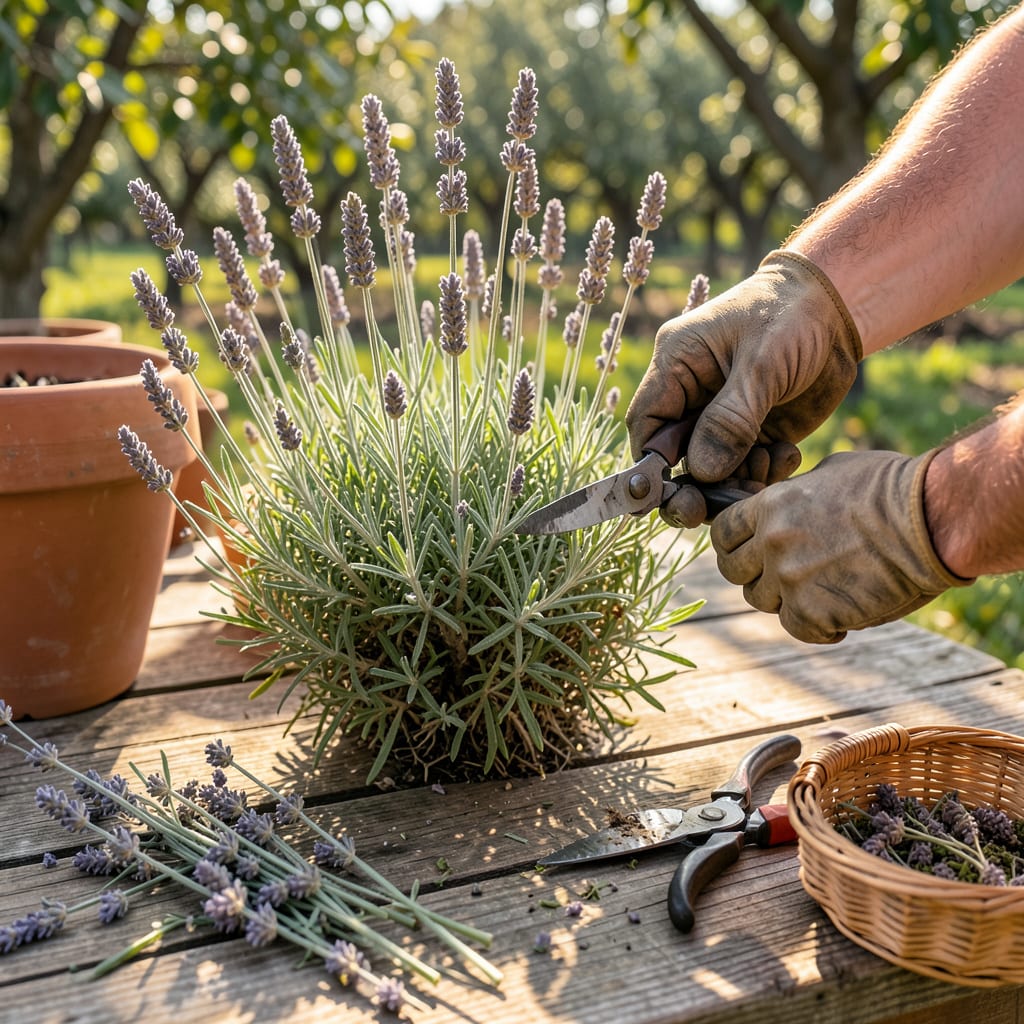
That first spring prune changed everything for my lavender. What looked like a scraggly, half-dead plant in March transformed into a mound of fragrant purple by June—all because of a few strategic cuts. Spring pruning isn’t just maintenance; it’s how you trick lavender into growing twice as bushy with three times the blooms.
Most gardeners wait too long or cut too little, leaving plants woody and sparse. I learned the hard way that lavender thrives on tough love: prune early (right as new green shoots appear), cut back hard (about a third of the plant), and never fear the shears. The payoff? A compact, vibrant plant that outlasts summer heat and keeps flowering until frost.
📚 In This Guide
This simple method will transform your lavender into fuller, healthier plants that bloom like never before.
Wait until you see new green growth emerging at the base of the plant—this signals it’s time to prune. I typically do this in early spring (March or April, depending on your climate) when daytime temperatures consistently reach 50°F or higher. Pruning too early while winter damage is still visible risks cutting into dead wood.
Before making any cuts, run your hands gently over the plant to feel for live stems. Healthy wood will feel firm and slightly flexible, while dead stems will be brittle and snap easily. Look for tiny green buds forming along the stems—these are your future leaves and flowers.
Start by cutting out any completely dead stems at their base using sharp bypass pruners. These will appear gray or brown with no green growth. Next, trim away any stems with winter damage—look for blackened or mushy sections. Always cut back to healthy wood, which will appear light green inside when you make the cut.
Don’t skip this step (I learned the hard way)—leaving dead material invites pests and disease. As you work, step back occasionally to maintain the plant’s natural mound shape. You should be removing no more than one-third of the total plant volume at this stage.
Now focus on shaping the remaining healthy growth. Cut back the previous year’s flower stems by about one-third to one-half, making each cut just above a set of new green leaves or buds. This encourages bushier growth from the base. Never cut into old, woody stems that have no green growth—they won’t regenerate.
The goal is a rounded, dome shape that’s slightly wider at the base than the top. This allows sunlight to reach all parts of the plant and prevents moisture from collecting in the center. I like to make my cuts at slight angles to help water run off rather than pool on the cut surfaces.
Remove all cut material from around the base of the plant—this debris can harbor disease. Give your lavender a light drink of water after pruning, but don’t overdo it. The plant will need about 1 inch of water per week (including rainfall) as it recovers. Avoid wetting the foliage to prevent fungal issues.
Apply a 1-2 inch layer of gravel mulch around the base (not touching the stems) to improve drainage and reflect heat. You’ll see new growth within 2-3 weeks—this is your sign the pruning was successful. The plant should produce more flowers than ever by mid-summer.
After your spring pruning, lightly trim back spent flower stems throughout the summer to encourage continuous blooming. Never cut back into old wood during these maintenance prunings—only remove the current season’s growth. I like to do this immediately after each flush of flowers fades.
Watch for any stems that grow significantly longer than others and trim them back to maintain the plant’s shape. By late summer, stop all pruning to allow the plant to harden off before winter. Your lavender will enter dormancy stronger and be ready for another productive season next year.
Pruning lavender properly makes all the difference between a struggling plant and one that explodes with blooms. Here’s what I’ve learned from years of trial and error.
Timing is Everything: Don’t rush into pruning just because it’s spring. Wait until you see that new green growth at the base as mentioned in Step 1—this is your plant’s way of telling you it’s ready. I’ve ruined plants by pruning too early when winter damage was still visible. That 50°F daytime temperature threshold is crucial; colder temps mean the plant isn’t actively growing yet and won’t recover well from cuts.
The One-Third Rule: When removing dead growth in Step 2, stick religiously to that one-third volume limit. I once got overzealous and removed nearly half the plant, thinking I was helping. The result? A lavender that took all season to recover and barely bloomed. Your plant needs enough healthy growth to photosynthesize and produce those beautiful flowers. When in doubt, cut less—you can always trim more later if needed.
Angle Your Cuts: Pay special attention to the technique in Step 3 about making angled cuts. This isn’t just for aesthetics—those slight angles prevent water from pooling on the cut surfaces, which is a major cause of stem rot. I use a 45-degree angle and always cut just above a set of new leaves or buds. This gives the plant clear direction for where to send its new growth energy.
Aftercare Matters: Don’t underestimate the importance of those post-pruning steps in Step 4. That 1-2 inch gravel mulch layer isn’t optional if you want thriving lavender. It reflects heat back up to the plant (which lavender loves) and prevents moisture from sitting at the base. I use small pea gravel about the size of a dime—it stays in place better than larger rocks and allows for good airflow around the stems.
Absolutely! Spring is the second-best time to prune lavender—just avoid cutting into old wood (woody stems with no green growth). Focus on shaping and removing winter damage, but wait until new growth appears (late spring) to avoid frost harm.
Never prune more than 1/3 of the plant at once. Trim just above the first set of leaves on each stem to encourage bushiness. Avoid cutting into bare wood—lavender struggles to regrow from old, woody sections.
Don’t panic! Scratch the stems with your nail—if you see green underneath, it’s alive. Prune dead tips back to healthy growth. If the whole plant is brown and brittle, replace it; lavender typically lives 10–15 years.
Hand-pruning with bypass pruners is best for precision, but clean, sharp hedge trimmers work for large plants. Avoid crushing stems—make clean cuts at a slight angle to prevent water pooling.
Light spring pruning won’t delay blooms—it actually promotes fuller flowers! But hard pruning (over 1/3) may push blooms later. For earliest flowers, prune right after the first flush fades in summer.
