
Beautiful Plants For Your Interior
Beautiful Plants For Your Interior
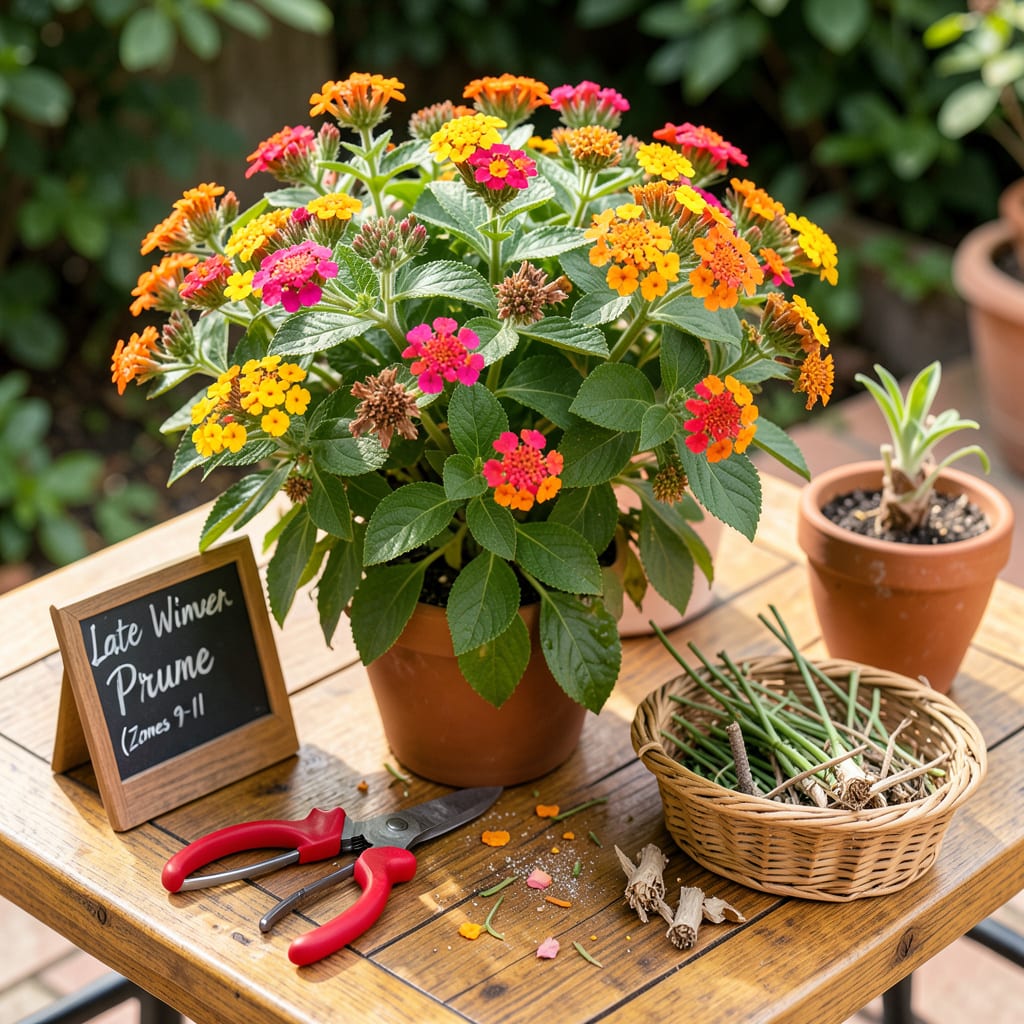
I used to let my lantana grow wild—until I realized pruning was the secret to twice as many blooms. That first season I finally grabbed the pruners, my plants transformed from leggy and sparse to compact powerhouses covered in vibrant clusters. The difference was shocking, and now I prune religiously every spring.
Timing matters more than you’d think. Cut too late in fall, and you risk winter damage. Do it right in early spring, and you’ll get bushier growth with flowers that just won’t quit. The best part? This isn’t complicated surgery—just three simple cuts with the right tools, and your lantana will reward you all season long.
📚 In This Guide
Here’s the method I’ve perfected to keep lantana thriving with more flowers and fuller growth.
Timing matters most with lantana. In warm climates (zones 9-11), prune in late winter or early spring before new growth starts. For cooler areas where lantana dies back, wait until all danger of frost has passed and you see the first green shoots emerging from the base.
Never prune in fall—this stimulates tender new growth that winter will kill. I check my plants weekly starting in February. When I spot those first tiny green bumps at the stem bases, that’s my signal to grab the pruners. The plant is waking up and ready for shaping.
Start by cutting out any completely dead stems (they’ll be brown, brittle, and hollow-sounding when tapped). Follow each dead branch back to where it connects with living wood—you’ll see the difference in color and texture. Make clean cuts at a 45-degree angle just above an outward-facing bud or leaf node.
Next tackle damaged or crossing branches. Any stems that rub against each other create wounds that invite disease. I work my way around the plant systematically, removing one problematic branch at a time. This prevents that overwhelmed feeling when you’re staring at a tangled mess.
Now for the creative part. Lantana blooms on new wood, so you want to encourage lots of fresh growth. Cut back the remaining healthy stems by one-third to one-half of their length. Make each cut just above a leaf node where two branches meet—this is where new stems will sprout.
I aim for an open, vase-like shape that allows air and light to reach the center. Step back frequently to check your progress. The goal isn’t perfection but creating space for the plant to fill in. You’ll know you’ve done it right when you can see through the center of the plant when viewing from the side.
Remove all cut material from around the plant—these clippings can harbor pests and diseases. I use a small rake to gather everything, then dispose of it in yard waste (never compost lantana clippings—they may root and spread where you don’t want them).
After pruning, water deeply at the base and apply a balanced, slow-release fertilizer. The pruning shock makes plants thirsty, and the fertilizer gives them resources to push out new growth. Within 2-3 weeks, you’ll see fresh green shoots emerging exactly where you made your cuts.
Every 4-6 weeks during the growing season, I do a quick maintenance prune. This involves cutting back the longest stems by about one-third and removing any spent flower clusters. These “deadheads” look brown and papery—snipping them off encourages the plant to produce more blooms instead of seeds.
Watch for stems that grow significantly longer than others—they’ll make the plant look lopsided. I call these “rogue branches” and remove them completely at their base. This keeps the plant’s energy focused on producing flowers rather than unruly growth. Your reward will be a compact, floriferous plant that stays in bounds.
Pruning lantana properly makes all the difference between a scraggly plant and one bursting with blooms. Here’s what I’ve learned through years of trial and error.
Timing Precision: In Step 1, when waiting for those first green shoots to appear, don’t rush the process. I’ve found that pruning too early—before you see at least three or four distinct green bumps at the base—can set your plant back. The plant needs to fully wake up from dormancy before you start cutting. In cooler climates, this might mean waiting an extra week or two beyond your last frost date. Patience here pays off with more vigorous regrowth.
Cutting Technique: When making those 45-degree angle cuts in Step 2, here’s what nobody tells you—the angle isn’t just for looks. This specific slope allows water to run off the cut surface instead of pooling, which prevents rot. I always make sure my pruners are razor-sharp too; dull blades crush stems rather than making clean cuts, leaving the plant vulnerable to disease. A quick wipe with rubbing alcohol between plants prevents spreading any potential pathogens.
Shape Strategy: The vase-like shape mentioned in Step 3 isn’t just aesthetic—it’s crucial for air circulation. I’ve noticed that plants pruned into this open form have far fewer issues with powdery mildew, especially in humid climates. When you’re deciding where to make cuts, look for stems that are growing inward toward the center of the plant—these are your first targets. Removing them opens up that all-important airflow. Don’t worry if it looks too drastic at first; lantana bounces back quickly when pruned correctly.
Seasonal Maintenance: That 4-6 week maintenance schedule in Step 5 is your secret weapon for continuous blooms. I set phone reminders so I don’t forget—consistency is key. When you’re doing your mid-season pruning, pay special attention to the longest stems. Cutting them back by that one-third measurement isn’t just about size control; it actually stimulates the plant to produce more flowering side shoots. The spent flower clusters are equally important to remove—they’re energy sinks that would otherwise go toward seed production rather than new blooms.
The ideal time is late winter or early spring (just before new growth starts). Light pruning can also be done in summer to encourage bushier growth. Avoid heavy pruning in fall—it can stimulate tender growth vulnerable to frost.
Regular scissors work for light trimming, but for thicker stems, use sharp bypass pruners (they make clean cuts). Avoid dull tools—they crush stems, inviting disease. Sterilize blades with rubbing alcohol before use!
Don’t fear the hard prune! Cut back up to ⅓ of the plant’s height in early spring to rejuvenate it. Remove dead or weak stems first, then shape. Lantana bounces back fast—expect new growth in weeks.
Quite the opposite! Pruning boosts blooms by redirecting energy to new growth. Just avoid cutting into woody stems (older than 2 years) too aggressively. Post-prune, fertilize lightly to support recovery.
Both keep plants healthy—just adjust your approach!
