
Beautiful Plants For Your Interior
Beautiful Plants For Your Interior
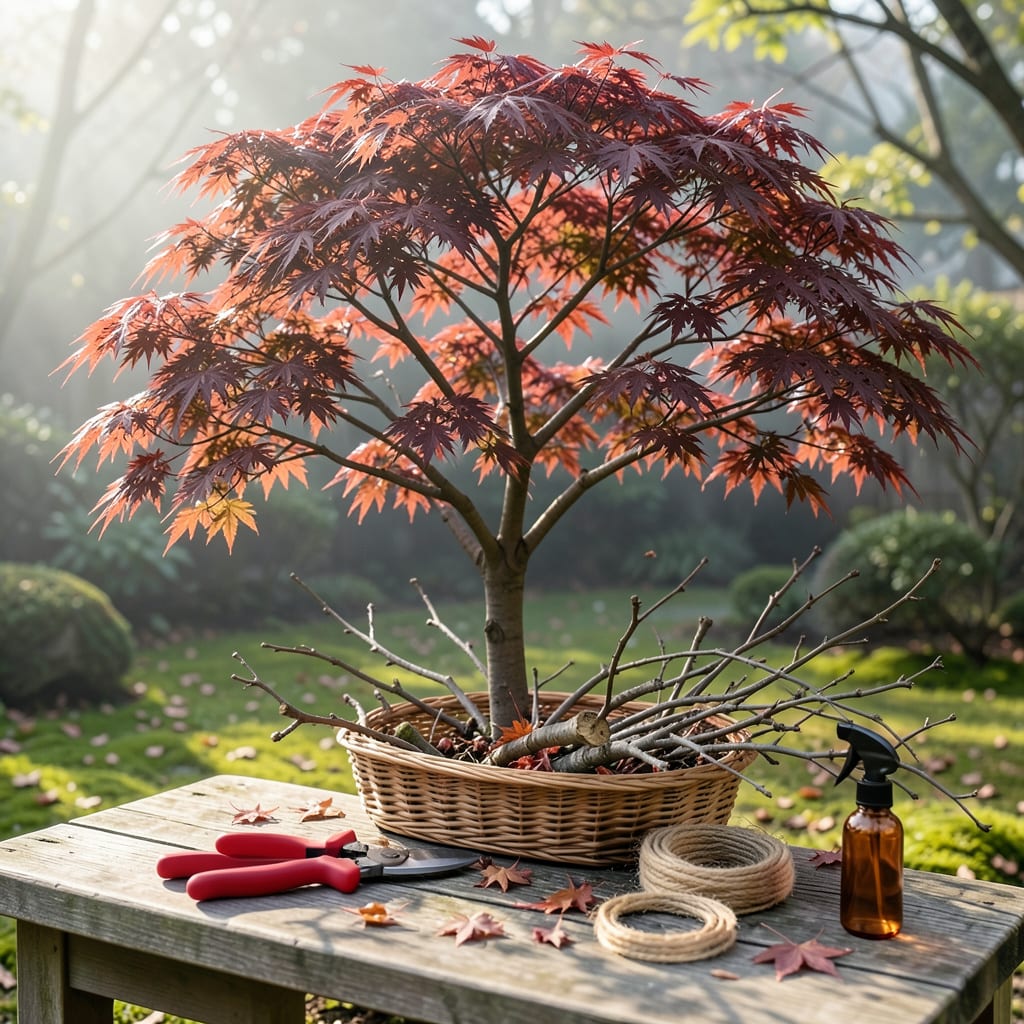
There’s something magical about watching a Japanese maple transform under your hands. I’ve shaped dozens over the years, and the difference between a pruned tree and an unpruned one is shocking – we’re talking vibrant color, balanced branches, and that perfect weeping form that makes neighbors stop and stare.
The secret isn’t complicated tools or advanced techniques – it’s timing and precision. Prune in late winter before buds swell, focus on removing just 3 types of branches, and make clean cuts at the right angle. My trees recover faster and flush out with denser foliage each spring because I follow these simple rules. You’ll see the difference in just one growing season.
📚 In This Guide
With the right approach, you’ll transform your tree into a living sculpture that thrives for decades.
Late winter—just before new growth begins—is ideal for major structural pruning. I aim for February to early March in most climates, when the tree is still dormant but about to wake up. This timing minimizes stress and gives cuts time to heal before spring growth explodes.
You can also do light touch-ups in mid-summer after the first flush of growth hardens off. Avoid pruning in fall, as fresh cuts won’t have time to callus before winter. Always check the forecast—prune when you have 3-5 days of dry weather ahead to prevent disease entry.
Use sharp bypass pruners for branches under ½ inch, loppers for ½ to 1½ inches, and a pruning saw for anything thicker. I wipe my blades with rubbing alcohol between cuts to prevent spreading disease—Japanese maples are particularly sensitive to fungal issues.
Lay a clean tarp under the tree to catch debris and protect the root zone. Have a bucket of 10% bleach solution nearby to sanitize tools if you notice any diseased wood. Wear gloves to protect your hands from the tree’s delicate bark, which bruises easily when handled roughly.
Start by cutting any dead wood (it’ll be brittle and gray) back to healthy tissue. Make clean cuts just outside the branch collar—the slightly swollen area where the branch meets the trunk. For diseased branches, cut 6-8 inches below visible symptoms to ensure complete removal.
Next, address branches that rub against each other or grow inward toward the center. Remove the weaker of any crossing pairs. I like to step back frequently during this process—what looks fine up close often reveals awkward angles from a distance. Your goal is an open center that allows light and air to circulate freely.
Japanese maples respond beautifully to selective thinning. Remove about 20-30% of the smallest, most crowded branches from the interior. Focus on cuts that maintain the tree’s natural layered form while improving light penetration to lower branches.
Avoid shearing or heading back randomly—this creates dense, unnatural growth. Instead, make each cut purposeful. I follow the “one-third rule”: never remove more than one-third of the total foliage in a single season. After each cut, pause to admire how the change affects the tree’s overall silhouette.
Every cut should be made at a 45-degree angle, about ¼ inch above a bud or branch junction. This angle prevents water pooling while directing new growth outward. For larger cuts (over 1 inch diameter), I apply a thin coat of horticultural wound dressing to protect the exposed area.
Water the tree deeply after pruning to help it recover, providing about 1 inch of water over the entire root zone. Hold off on fertilizer for 4-6 weeks to let the tree focus energy on healing rather than new growth. You’ll see fresh buds swelling within 2-3 weeks—that’s your sign the tree is responding well.
Pruning these delicate trees is as much art as it is science—here’s what I’ve learned through years of shaping my own Japanese maples.
Timing Wisdom: That February to early March window mentioned in Step 1 isn’t just a suggestion—it’s critical. I once pruned a week too early during a cold snap, and the cuts took twice as long to heal. The tree’s dormant state during this period means it can focus all its energy on sealing wounds rather than supporting new growth. If you miss this window, wait until mid-summer as the instructions suggest; the tree will handle it much better than fall pruning.
Tool Sanitation Secret: In Step 2, the 10% bleach solution isn’t overkill—it’s your best defense against fungal diseases that can devastate Japanese maples. I keep a small spray bottle of the solution handy and give my pruners a quick spritz after every few cuts, especially when working with older trees that might harbor hidden issues. The extra 30 seconds per sanitization saves me from heartbreak later.
The One-Third Rule in Action: Step 4’s guideline about removing no more than one-third of the foliage is there for a reason. I learned this the hard way after over-pruning a young tree that then struggled to produce enough energy through photosynthesis. Now I approach thinning like a sculptor—removing just enough to reveal the tree’s natural beauty without compromising its health. When in doubt, prune less; you can always do more next season.
Aftercare That Makes a Difference: The 4-6 week fertilizer pause in Step 5 might seem counterintuitive when you want to encourage new growth, but trust me on this. I’ve seen trees that were fertilized too soon after pruning develop weak, spindly growth at the cut sites. That waiting period allows the tree to properly seal its wounds and establish strong new growth points. The deep watering immediately after pruning is equally important—it helps the tree recover from the stress while the roots are still active in the cool soil.
The ideal time is late winter to early spring (January–March) while the tree is dormant but before new growth starts. Avoid pruning in fall—it can encourage weak growth before winter. Light pruning for shape can also be done in summer after leaves fully emerge.
Yes, but only for light shaping. Heavy summer pruning can stress the tree. Stick to removing dead branches or minor touch-ups. Avoid pruning during heatwaves—wait for cooler mornings or overcast days to reduce shock.
Pruning involves cutting branches with tools (for structure or health), while pinching is hand-removing soft new growth (to encourage bushiness). Use pinching in spring/summer for young trees; reserve pruning for mature branches.
Don’t panic! Some sap bleeding is normal, especially in early spring. It’s the tree’s natural response and won’t harm it. Avoid pruning during active sap flow (late winter) if you’re concerned. The tree will seal the cuts as it grows.
No! Hedge shears create jagged cuts and ruin the tree’s natural shape. Always use sharp bypass pruners (for small branches) or loppers (for thicker limbs). Clean cuts heal faster and prevent disease.
