
Beautiful Plants For Your Interior
Beautiful Plants For Your Interior
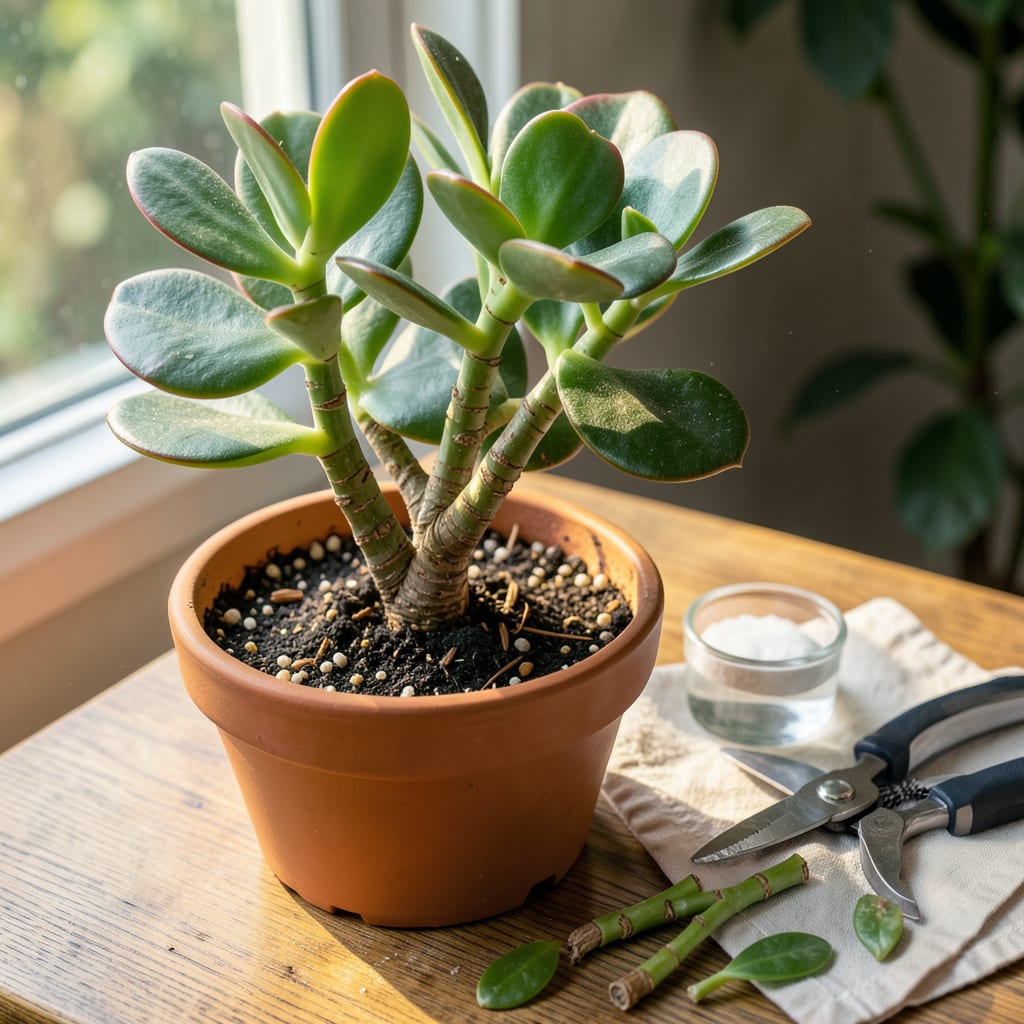
That leggy jade plant on your windowsill could be twice as full with one simple pruning session. I’ve turned scrawny, top-heavy jades into compact, bushy stunners just by making a few strategic cuts—no green thumb required. The best part? Every snip gives you free cuttings to grow new plants.
Timing matters: late spring or early summer, when your jade is actively growing, is ideal. You’ll need just three things—sharp pruners, rubbing alcohol to sterilize them, and 10 minutes. The secret isn’t cutting more, it’s cutting smart: right above the leaf nodes where new branches will sprout. No guesswork, no plant trauma, just thicker growth in weeks.
📚 In This Guide
This simple method transforms leggy plants into full, vibrant specimens—no green thumb required.
Prune in spring or early summer when your jade plant is actively growing. This timing ensures the fastest recovery and new growth. I use sharp bypass pruners (scissors work for small plants) and wipe the blades with rubbing alcohol first—this prevents spreading any potential diseases between plants.
Look for a bright, overcast day if possible. Direct sun immediately after pruning can stress the plant. You’ll know it’s a good time when the stems feel firm (not soft or mushy) and the leaves look plump, indicating the plant is well-hydrated and ready for the process.
Focus on three key areas: leggy stems (long with sparse leaves), crossing branches that rub together, and any damaged or diseased growth. For bushier growth, cut just above a leaf node—the spot where leaves emerge from the stem. This encourages the plant to branch out from that point.
Never remove more than one-third of the plant in a single session. Over-pruning shocks the system and can stunt growth. I like to step back occasionally to visualize the shape—I’m aiming for balanced, rounded growth rather than a perfectly symmetrical look.
Position your pruners at a 45-degree angle, about 1/4 inch above a leaf node. This angle helps water run off the cut rather than pooling, which prevents rot. Make one decisive cut—don’t saw back and forth, as this creates jagged edges that heal poorly.
For thicker stems (pencil-width or larger), you might need to make two cuts: the first to remove most of the branch, then a second to clean up the stub. Immediately after each cut, check the exposed tissue—healthy cuts show green or white interior; brown or black indicates potential rot that needs further investigation.
After pruning, move your plant to bright, indirect light for about a week. Avoid direct sun, which can scorch the fresh cuts. Hold off on watering for 3-5 days—this gives the cuts time to callous over, reducing infection risk. You’ll notice the calloused areas turn slightly white and hardened.
Within 2-3 weeks, you should see new growth emerging at the cut sites. This is when you can resume normal care. I like to rotate the pot occasionally during this period to ensure even light distribution, which prevents the new growth from becoming lopsided.
Don’t discard those healthy cuttings! Let them dry (callous) for 1-3 days in a warm, shaded spot. The cut ends should form a dry, slightly wrinkled surface. Once calloused, place them in a well-draining mix (I use half potting soil, half perlite) and keep the soil barely moist—not wet.
You’ll see roots forming in 2-4 weeks. The secret is patience—overwatering is the number one killer of new cuttings. Once roots are established (give the cutting a gentle tug—resistance means roots!), treat it like a mature plant. This way, one pruning session can give you multiple new jade plants to share or expand your collection.
Pruning jade plants is simpler than it seems—these practical insights will help you avoid common pitfalls and achieve that full, bushy growth you’re after.
Timing Consideration: The recommendation to prune in spring or early summer isn’t just about convenience—it’s when your jade plant has the most energy for recovery. I’ve found that plants pruned during this active growth period produce noticeably more vigorous new growth compared to those pruned in fall or winter. If you must prune outside this window, reduce the amount you remove by half to minimize stress.
Tool Preparation: Clean tools make all the difference. I learned this the hard way after losing a beautiful jade plant to infection. Wiping your pruners with rubbing alcohol isn’t just a suggestion—it’s essential. Even if your plant looks healthy, microscopic pathogens can linger on tool surfaces. For small plants, sharp scissors work fine, but invest in quality bypass pruners for anything larger than a few inches tall.
Cutting Technique: The 45-degree angle mentioned in Step 3 isn’t arbitrary. This specific angle allows water to run off rather than collect on the cut surface, which is crucial for preventing rot. I’ve experimented with different angles, and anything steeper than 45 degrees can create pockets where water pools. When making your cut, position the pruners so the blade closest to the remaining plant is on the lower side of the angle.
Recovery Period: Those 3-5 days without watering after pruning might seem counterintuitive, but they’re critical. The plant needs this time to form calloused tissue over the cuts, which protects against infection. I check my plants daily during this period—when the cut surfaces turn from moist to slightly white and hardened, that’s your signal they’ve properly calloused. Only then should you resume your normal watering schedule.
Spring or early summer is ideal for pruning, as this aligns with the plant’s active growth phase. Avoid pruning in winter or fall, when the plant is dormant—it may struggle to recover. If you must trim outside the best window, do it lightly and avoid major cuts.
Legginess often means the plant isn’t getting enough light. After pruning, move it to a brighter spot (like a south-facing window) and rotate it weekly for even growth. If the stems are bare, propagate the cuttings and replant them to fill out the pot.
Nope! Jade plants root easily without hormone—just let the cuttings callus for 1–3 days, then place them in well-draining soil. For faster results, dip the cut end in cinnamon (a natural antifungal) before planting. Keep soil lightly moist until roots form.
Brown/mushy stems usually mean overwatering or poor airflow after pruning. Stop watering immediately, ensure the soil dries out, and move the plant to a breezy spot. If rot spreads, trim the affected area with sterilized shears and repot in fresh, gritty soil.
For tiny, soft growth, pinching with clean fingers works! But for thicker stems, always use sharp, sterilized shears to avoid tearing. Sanitize tools with rubbing alcohol before/after to prevent disease. Never rip stems—clean cuts heal faster and reduce stress on the plant.
