
Beautiful Plants For Your Interior
Beautiful Plants For Your Interior
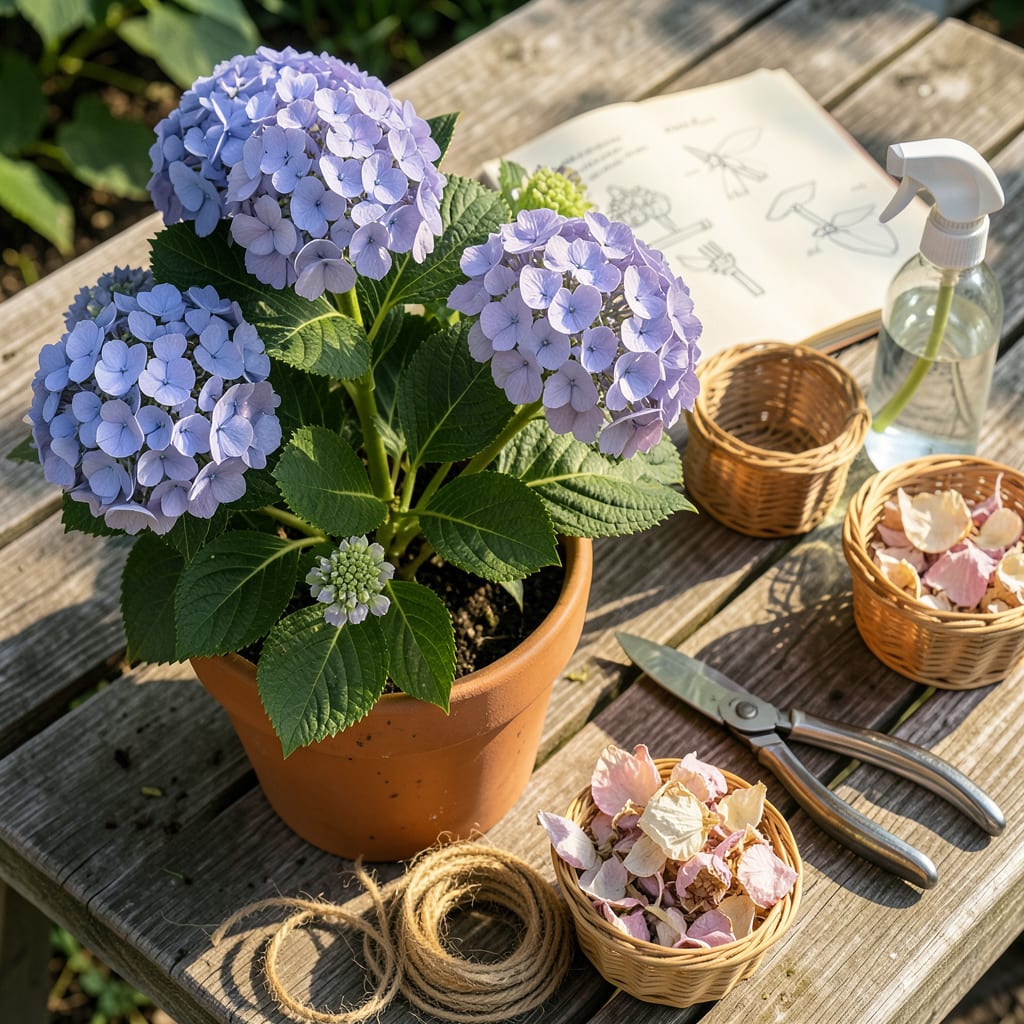
Mid-summer is your secret weapon for hydrangeas. I used to think pruning was just a spring chore until I saw how a few strategic cuts in July transformed my plants. The right summer pruning doesn’t just tidy up your shrubs—it redirects energy to stronger stems and bigger blooms next season. No more floppy stems or tiny flower clusters.
Here’s the thing—timing and technique matter more than you’d think. Cut back spent blooms the right way, and you’ll get a second flush on reblooming varieties. Shape the plant now, and you avoid that overgrown, leggy look by fall. I’ll walk you through exactly where to make each cut (hint: it’s not random) and which tools make this foolproof. Your hydrangeas will thank you with showstopping flowers.
📚 In This Guide
Before you grab those pruners, let’s gather everything you’ll need to tackle summer hydrangea pruning like a pro! 🌿✂️ Having the right tools and prep work ensures clean cuts, healthy plants, and—most importantly—stunning blooms next year. Here’s your
Summer pruning sets the stage for next year’s spectacular blooms—here’s how to do it without harming your plants.
Before making any cuts, determine whether you have old-wood bloomers (like mophead or lacecap) or new-wood bloomers (like panicle or smooth hydrangeas). Old-wood varieties form next year’s flower buds in late summer, so they require minimal summer pruning—just deadheading spent blooms.
New-wood hydrangeas bloom on current season’s growth, so you can prune them more aggressively in summer. Check the stems: old-wood types have plump flower buds already forming at the tips, while new-wood varieties show only leaf buds. When in doubt, snap a photo and use a plant identification app for confirmation.
For all hydrangea types, start by deadheading faded flowers. Cut just above the first set of healthy leaves or buds—this prevents unsightly seed heads and redirects energy to root and foliage development. Use sharp bypass pruners (not anvil pruners) to make clean cuts at a 45-degree angle.
On old-wood bloomers, you’ll see next year’s flower buds forming just below the current blooms—these look like small, round swellings. Take care not to damage these when removing spent flowers. For new-wood varieties, you can cut the stem back further if needed, as they’ll produce new flower buds on the current season’s growth.
Summer is ideal for selective thinning to improve air circulation. Remove about one-third of the oldest stems at ground level, focusing on weak, spindly, or crossing branches. This opens the plant’s center to sunlight and reduces disease pressure while maintaining the natural shape.
Look for stems thicker than a pencil—these are your keepers. The stems you remove should be the thinnest, most congested ones. After thinning, stand back and assess the plant’s shape. You want an open, vase-like structure that allows light and air to penetrate the center.
For new-wood bloomers only, you can reduce the plant’s overall size by cutting back the strongest stems by up to one-third. Make these cuts just above an outward-facing bud to encourage bushier growth. This summer pruning won’t affect next year’s blooms since these varieties flower on new growth.
Avoid shearing hydrangeas into formal shapes—this leads to weak, twiggy growth and smaller flowers. Instead, make individual cuts to maintain a natural, rounded form. Step back frequently to check your progress, as it’s easy to over-prune when you’re focused on individual stems.
Collect all pruned material and dispose of it (don’t compost if you suspect disease). Water the plant deeply after pruning to help it recover from the stress. Apply a balanced, slow-release fertilizer around the drip line, but avoid high-nitrogen formulas that might promote leafy growth at the expense of flower buds.
Monitor your hydrangeas for the next few weeks. You should see new growth emerging from the cut stems within 2-3 weeks. If any stems fail to produce new growth, they may be dead—remove them completely at ground level. Keep the soil consistently moist (but not soggy) during this recovery period to support new growth.
Summer pruning can transform your hydrangeas, but a few key details make all the difference between thriving plants and accidental damage.
Identification is Everything: In Step 1, don’t skip the stem inspection—this is where most mistakes happen. Old-wood varieties (mophead, lacecap) already have next year’s flower buds forming as small, round swellings just below current blooms. New-wood types (panicle, smooth) show only leaf buds. I’ve seen gardeners accidentally remove next year’s blooms by misidentifying their plants. When in doubt, use a plant ID app before making any cuts.
The Right Cut Makes All the Difference: For Step 2’s deadheading, always use bypass pruners (not anvil-style) and cut at a precise 45-degree angle just above healthy leaves or buds. This angle prevents water pooling that could lead to stem rot. On old-wood varieties, I use my fingernail to gently feel for next year’s buds before cutting—you’ll notice they’re slightly raised and firm compared to leaf buds.
Thinning Strategy for Healthier Plants: Step 3’s one-third rule isn’t arbitrary—removing exactly this proportion maintains the plant’s energy balance while improving airflow. Focus on stems thinner than a pencil, cutting them at ground level. I like to work my way around the plant systematically rather than randomly snipping. After thinning, you should be able to see through the plant’s center when viewing from above.
Recovery Monitoring is Critical: After completing Step 5, don’t assume all stems will recover equally. Within that 2-3 week window mentioned in the instructions, check each cut stem for new growth. Stems that remain bare after three weeks are likely dead and should be removed completely. I’ve found that maintaining consistent moisture (not soggy) during this period dramatically improves recovery rates.
Yes! Summer pruning is safe if done correctly—focus on deadheading (removing spent blooms) or trimming leggy growth. Avoid heavy pruning on bigleaf or oakleaf hydrangeas (they bloom on old wood). For panicle or smooth types, light summer trimming encourages stronger stems. Always use clean, sharp tools!
When is the absolute latest I can prune hydrangeas in summer?
Aim to finish by mid-August in most zones. This gives plants time to harden off before fall. Pruning too late (e.g., September) risks stimulating tender new growth that frost can damage. Check your USDA zone—warmer climates may have a slightly longer window.
Deadheading = removing only faded flowers (cuts just above the first set of leaves). Pruning = cutting back stems for shape, size, or health. Deadheading encourages more blooms; pruning shapes the plant. For summer, stick to deadheading unless your hydrangea is overgrown or damaged.
Possibly! If you cut back old wood hydrangeas (like H. macrophylla) in summer, you may have removed next year’s buds. Solution: Wait until after blooming next year to prune. For no-bloom issues, also check sunlight (4–6 hours/day) and soil pH (test kits help!).
Not ideal! Hedge trimmers can shred stems, inviting disease. Use bypass pruners (clean, sharp) for precise cuts. If your hydrangea is a formal hedge (e.g., H. paniculata), you can lightly shape with trimmers—but avoid cutting into thick, woody stems.
