
Beautiful Plants For Your Interior
Beautiful Plants For Your Interior
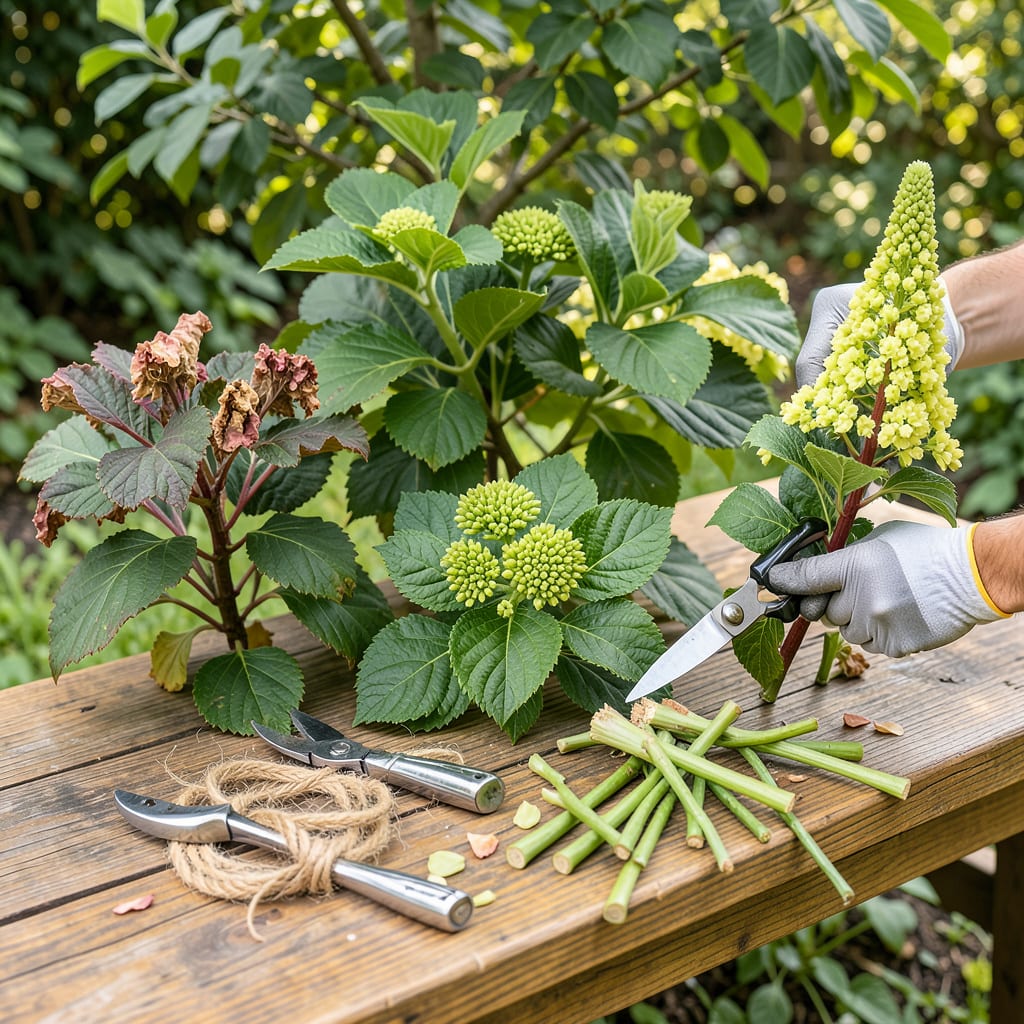
Spring pruning is the secret to hydrangeas that explode with blooms. I’ve seen shrubs go from sparse and leggy to packed with flowers just by making a few strategic cuts at the right time. The catch? Not all hydrangeas get pruned the same way—what works for your neighbor’s Endless Summer could ruin your Limelight.
Here’s the thing—timing matters more than technique. Cut old-wood bloomers like mopheads too late, and you’ll lose this year’s flowers. Prune panicle types too early, and you’ll get weak stems. I’ll show you exactly when to grab those pruners and where to make the cuts for your specific variety. No more guessing games, just bigger blooms.
📚 In This Guide
This is the method I use every year to keep my hydrangeas healthy and covered in blooms all season long.
Before making any cuts, you need to know whether you’re dealing with an old-wood or new-wood bloomer. Here’s the thing—this determines everything. Old-wood varieties (like bigleaf and oakleaf) form next year’s buds on current year’s stems, while new-wood types (like panicle and smooth) bloom on fresh growth.
Check the stems: if you see plump buds already forming along last year’s growth, you’ve got an old-wood variety. No visible buds? It’s likely a new-wood type. When in doubt, snap a photo and compare to online images—this prevents accidental removal of flower buds.
Start by cutting out any stems that are clearly dead—they’ll be brown, brittle, and won’t have any green tissue when you scratch the bark. I use sharp bypass pruners and make clean cuts at a 45-degree angle just above a healthy bud or branch junction.
Next, look for weak or crossing stems that might rub against each other. Remove these completely at their base. You’ll also want to trim any stems that show signs of disease (black spots, powdery residue) down to healthy wood. This prevents problems from spreading to the rest of the plant.
For bigleaf and oakleaf hydrangeas, your goal is to maintain shape without removing potential flower buds. I simply trim back the tips of stems that grew last year by about one-third, cutting just above a pair of healthy buds. This encourages bushier growth while preserving most flower buds.
Don’t get heavy-handed here—remember, every bud you remove is a flower you won’t see this summer. If your plant is overgrown, remove up to one-quarter of the oldest stems at ground level to open up the center for better air circulation.
Panicle and smooth hydrangeas can handle more aggressive pruning since they bloom on new growth. I cut these back by one-third to one-half of their total height in early spring, just as new growth begins. Make cuts just above a set of healthy buds.
For particularly old or overgrown plants, you can cut all stems back to 12-18 inches from the ground. This drastic renewal pruning will sacrifice this year’s blooms but results in stronger, more vigorous growth and better flowers next season.
After pruning, rake up and remove all cut stems and debris from around the plant. This prevents disease and pests from overwintering in the garden. I like to spread a 2-inch layer of fresh mulch around the base (keeping it away from the stems) to conserve moisture and suppress weeds.
Watch for new growth to emerge in the coming weeks. If you notice any stems that aren’t leafing out, remove them completely. The plant will tell you what’s working—healthy new growth means you’ve pruned correctly, while delayed or sparse growth suggests you may have over-pruned.
Pruning hydrangeas doesn’t have to be intimidating—these practical insights will help you avoid common pitfalls and get the most blooms this season.
Identification is Everything: I can’t stress this enough—Step 1 is the most critical part of the entire process. Many gardeners accidentally remove flower buds because they didn’t properly identify their hydrangea type first. When checking for plump buds on old-wood varieties, look closely at the stem junctions where last year’s growth meets older wood. These buds are often smaller than you expect and easy to miss if you’re not examining each stem carefully. Take your time with this step; it’s better to be thorough than to regret removing potential blooms later.
The One-Third Rule Works Wonders: In Step 3, when trimming old-wood bloomers, that one-third measurement isn’t arbitrary—it’s the sweet spot for encouraging new growth while preserving flowers. Here’s what nobody tells you: measure from the tip of last year’s growth downward, not from the base of the plant. I use my pruners as a measuring guide—most standard bypass pruners are about 8 inches long, so I visualize dividing that length into thirds. This simple trick helps me make consistent cuts without over-thinking the math.
Don’t Fear the Hard Cutback: For new-wood varieties in Step 4, cutting back by one-third to one-half might feel drastic, but I’ve found this actually reduces maintenance later in the season. The plants come back stronger with fewer weak, spindly stems. When doing renewal pruning to 12-18 inches, make your cuts just above a healthy bud pair—look for plump, green buds rather than small, underdeveloped ones. This ensures you’re cutting to viable growth points that will produce strong new stems.
Cleanup Prevents Future Problems: The cleanup in Step 5 isn’t just about aesthetics—it’s crucial disease prevention. I’ve learned the hard way that leaving even small pieces of infected stem debris can lead to powdery mildew or leaf spot issues later. When spreading that 2-inch layer of mulch, create a small mulch-free zone (about 3 inches wide) around the base of each stem. This prevents moisture from accumulating against the bark, which can lead to stem rot—a common issue I see in many gardens.
Yes! Spring pruning is fine for most hydrangeas, but timing matters. For bigleaf (mophead/lacecap) and oakleaf varieties, prune immediately after blooming (late spring/early summer). Panicle and smooth hydrangeas can be pruned in early spring before new growth starts. Avoid heavy pruning after mid-July to protect next year’s buds!
Check your variety: Bigleaf (mophead/lacecap) and oakleaf bloom on old wood (last year’s stems). Panicle (like ‘Limelight’) and smooth (‘Annabelle’) bloom on new wood. Unsure? Snap a photo and use a plant ID app, or look for swollen buds on older stems—those are next year’s flowers!
Late pruning (after buds form) can remove this year’s flowers. For old-wood bloomers (bigleaf/oakleaf), you might get fewer or no blooms. New-wood varieties (panicle/smooth) are more forgiving but may have delayed flowers. If you slip up, focus on light shaping and remove only dead/damaged stems.
Yes! Pruning stimulates growth, so feed your hydrangeas with a balanced, slow-release fertilizer (10-10-10 or 12-4-8) after pruning. For blue/pink blooms, adjust soil pH with aluminum sulfate (blue) or lime (pink). Avoid high-nitrogen fertilizers—they promote leaves over flowers. Water deeply after feeding!
Patience is key—some hydrangeas take a season to recover!
