
Beautiful Plants For Your Interior
Beautiful Plants For Your Interior
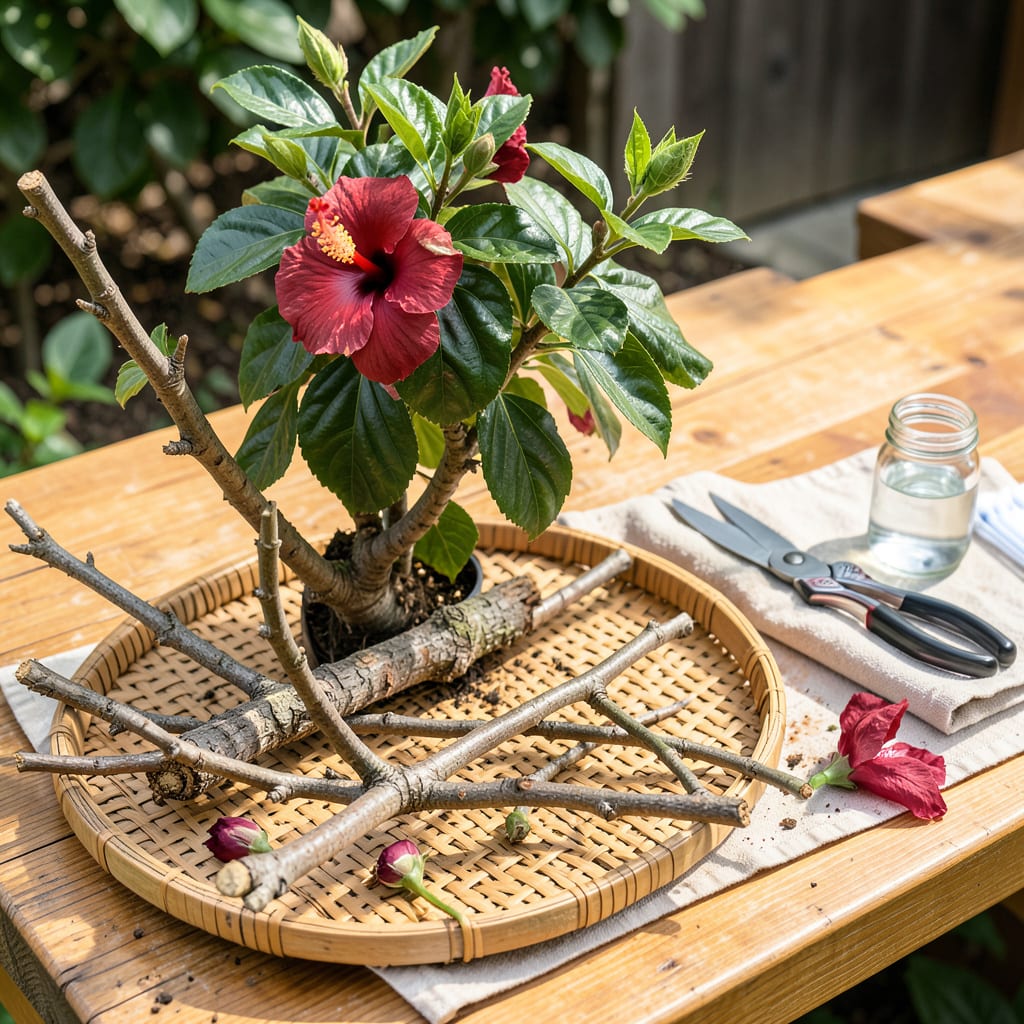
Spring pruning transforms hibiscus from last year’s scraggly stems into this season’s bloom machine. I used to skip this step—until I saw how my neighbor’s pruned plants exploded with twice as many flowers while mine lagged behind. The difference comes down to timing and technique, not luck.
Cutting back old growth now forces energy into new shoots that’ll carry those showy blooms. You’re not just shaping the plant—you’re setting it up for months of vibrant color. The best part? It takes less than 20 minutes with the right approach, and even first-timers can nail it with these simple rules.
📚 In This Guide
Timing and technique make all the difference—here’s exactly how I shape my hibiscus for explosive summer blooms.
Wait until new growth appears but before leaves fully expand—typically when nighttime temperatures stay above 50°F. This window (usually late March to early April in most zones) ensures you won’t cut off emerging flower buds. I use sharp bypass pruners (never anvil-style) and rubbing alcohol to sterilize between cuts.
Examine the plant carefully: healthy stems show green tissue when scratched, while dead wood remains brown and brittle. You’ll feel resistance when cutting live wood versus the clean snap of dead branches. This distinction matters because hibiscus blooms on new growth, so we’re removing only what won’t produce flowers.
Start by cutting all dead, diseased, or crossing branches at their base. Make clean 45-degree angle cuts just above an outward-facing bud or branch junction. I always remove any stems thinner than a pencil—they’ll never support robust blooms. You should see the plant’s structure open up immediately.
Don’t hesitate to remove up to one-third of the plant’s total volume if needed. Hibiscus responds vigorously to hard pruning. Look for last year’s flower stems (they’ll have swollen nodes) and cut those back by half their length—this forces multiple new flowering shoots to emerge from each cut site.
Create an open vase shape by removing inward-growing branches. I aim for 6-12 inches of space between main stems to allow air circulation that prevents fungal issues. Step back frequently to assess balance—you want sunlight to penetrate the center of the plant.
Cut remaining branches back by one-third to one-half, always just above a leaf node. The ideal cut leaves 1/4 inch of stem above the bud—too close risks damaging the growth point, while too far creates ugly stubs. You’ll notice the pith (center tissue) is white and firm in healthy stems, brown and mushy in diseased ones.
Rake up all debris immediately—hibiscus pests and diseases overwinter in fallen leaves. I apply a balanced, slow-release fertilizer (10-10-10) after pruning to support the coming growth surge. Water deeply to help the plant recover from stress, but avoid wetting the fresh cuts.
Within 2-3 weeks, you’ll see vigorous new shoots emerging from every cut. These will become your flower-bearing stems. The real test comes in 6-8 weeks when buds form—properly pruned plants will have twice as many as unpruned ones. I mark my calendar to check for aphids at this stage, as the tender new growth attracts them.
Pruning hibiscus properly in spring sets the stage for a summer bursting with flowers—here’s how to avoid the pitfalls I’ve learned through years of trial and error.
Timing Precision: The window when nighttime temperatures consistently stay above 50°F is absolutely critical. I’ve ruined entire blooming seasons by pruning too early when late frosts damaged tender new growth. Wait until you see that first green bump of new growth—this is nature’s signal that it’s safe. In warmer zones, this might be late February; in cooler areas, it could be mid-April. When in doubt, err on the side of waiting another week rather than risking frost damage to emerging buds.
Cutting Technique: The 45-degree angle cuts mentioned in Step 2 aren’t just for aesthetics—they prevent water from pooling on the cut surface, which can lead to rot. I learned this the hard way after losing several branches to fungal infections. Always make your cut just above an outward-facing bud (you’ll see it as a small bump on the stem) and leave that 1/4 inch of stem—this gives the bud room to expand without constriction. The difference between a proper cut and an improper one becomes painfully obvious about 2-3 weeks later when new growth either thrives or stalls.
Pruning Confidence: Many gardeners hesitate to remove up to one-third of the plant’s volume as suggested in Step 2, but I’ve found hibiscus actually produces more flowers when pruned aggressively. The key is focusing your cuts on the right areas: remove all stems thinner than a pencil completely (they’re energy drains), and don’t be afraid to cut flowering stems back by half—the swollen nodes you’ll see are last year’s flower sites, and each will produce multiple new flowering shoots when cut back properly. I’ve had plants that produced twice as many blooms after hard pruning compared to lightly pruned neighbors.
Post-Pruning Care: The fertilizer application in Step 4 isn’t optional if you want maximum blooms. I use a 10-10-10 formula because hibiscus needs balanced nutrition for both foliage and flower production. Water deeply immediately after pruning to help the plant recover from stress, but keep water off the fresh cuts for at least 24 hours to prevent disease entry. I also mark my calendar for 6-8 weeks after pruning—that’s when buds form, and when you’ll want to start regular feeding to support all those new flowers.
Prune tropical hibiscus after the last frost when new growth starts (late March to early May, depending on your zone). Hardy hibiscus can wait until late spring (May-June) when stems show green buds. Avoid pruning too early—cold snaps can damage fresh cuts!
For tropical hibiscus, remove up to ⅓ of the plant to shape it and encourage bushiness. Hardy hibiscus tolerates heavier pruning—cut back to 6–12 inches above ground if overgrown. Always leave a few healthy nodes for regrowth.
Over-pruning or cutting too late in spring can delay flowers. Tropical hibiscus blooms on new wood, so prune early. Hardy hibiscus blooms on current-year stems—avoid trimming after July. Check for pests or poor sunlight if buds still don’t form.
No! Fall pruning stimulates tender new growth vulnerable to winter kill. Only remove dead/diseased wood in fall. Save major shaping for spring. Exception: Light trimming in late summer (August) can reduce height without harming blooms.
Hollow stems signal over-pruning or cutting too close to the base. Tropical hibiscus may also develop hollow stems if pruned during dormancy. Stop pruning, water deeply, and apply a balanced fertilizer (10-10-10) to support recovery. New growth should fill in by mid-summer.
