
Beautiful Plants For Your Interior
Beautiful Plants For Your Interior
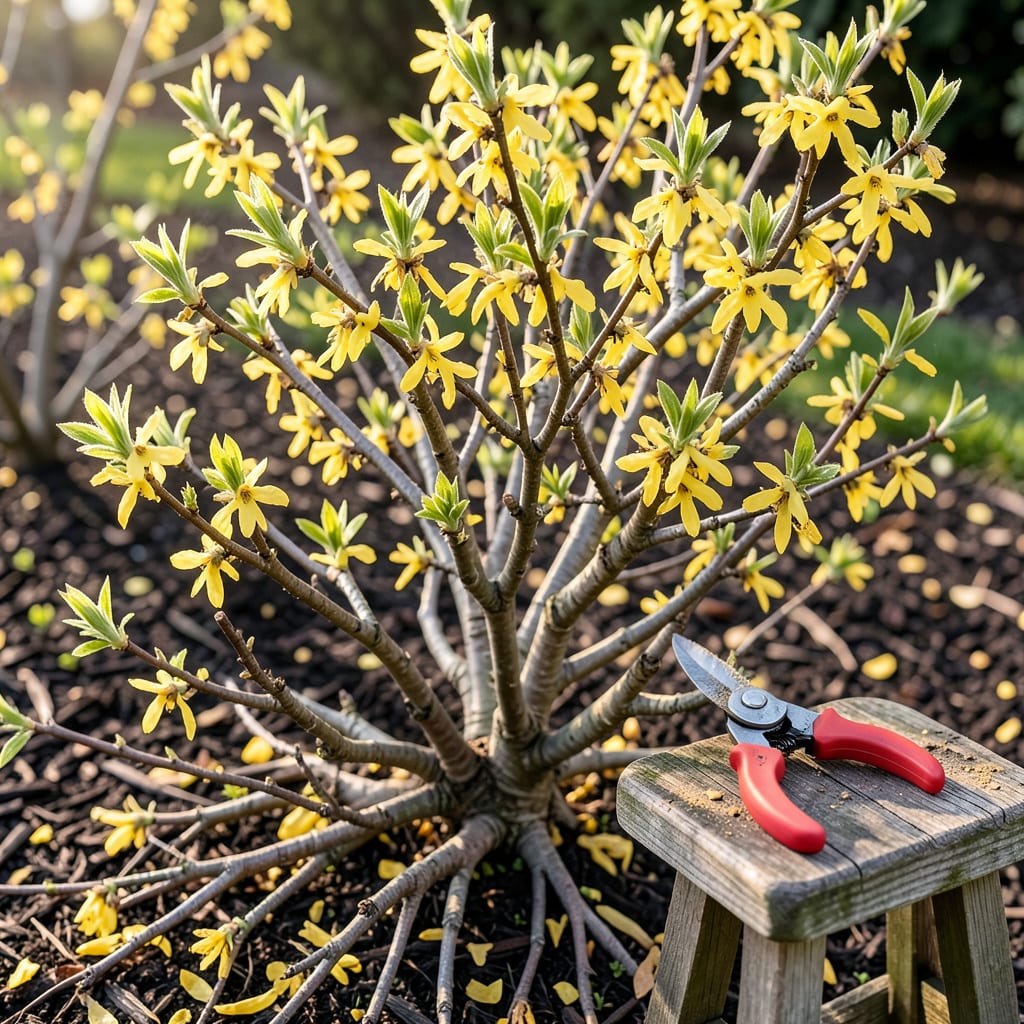
That burst of yellow in early spring? It’s your forsythia’s way of announcing the season—and with the right pruning, next year’s show will be even brighter. I’ve learned the hard way that timing is everything: cut too late, and you’ll sacrifice blooms; cut right, and you’ll get a bushier, more vibrant display.
This isn’t about hacking away at branches. It’s about making three strategic cuts that remove the old, shape the new, and keep your shrub healthy for decades. No fancy tools required—just sharp pruners, a little patience, and knowing where to snip. The payoff comes next March when your forsythia explodes with color.
📚 In This Guide
Timing and technique make all the difference—here’s how I get vibrant blooms every spring without fail.
Forsythia blooms on old wood, meaning the flower buds form on last year’s growth. Prune immediately after flowering finishes in spring—usually late April to early May depending on your climate. You’ll see the yellow blooms fading and leaves just starting to emerge.
If you wait until summer or fall, you’ll accidentally remove next year’s flower buds. I mark my calendar the moment the last blossoms drop so I don’t forget. The window is short: you’ve got about 2-3 weeks after blooming before new growth begins.
Start by cutting out any brown, brittle stems—these are dead and won’t produce leaves or flowers. Make clean cuts at the base using sharp bypass pruners. Next, look for stems with cracked bark or signs of disease (dark spots, oozing sap).
Don’t just trim the damaged portions—remove the entire affected stem at ground level. This prevents disease from spreading and encourages healthy new growth. You’ll often find these problematic stems in the center where air circulation is poor.
Forsythia grows aggressively, creating a tangled mess if left unchecked. Remove about one-third of the oldest stems each year, cutting them right at ground level. Focus on the thickest, woodiest stems—these produce fewer flowers than younger growth.
After thinning, you should be able to see through the center of the shrub. Good air circulation reduces fungal diseases and lets sunlight reach inner branches. I like to step back frequently to check my progress—it’s easy to overdo it when you’re in the middle of the bush.
Now shape what remains by cutting back one-fourth to one-third of the remaining stems. Make cuts just above an outward-facing bud or leaf node. This encourages growth that fills out the shrub naturally rather than creating a dense outer shell with bare centers.
Avoid shearing with hedge trimmers—this creates a flat top and weak growth. Instead, make individual cuts at varying lengths for a more natural shape. You’ll notice the difference next spring when flowers appear evenly distributed rather than just at the tips.
Rake up all cuttings immediately to prevent disease spread. I like to lay a tarp underneath before starting—it makes cleanup much easier. Water deeply after pruning to help the plant recover, especially if your spring has been dry.
Apply a 2-3 inch layer of mulch around the base (keeping it 3 inches away from stems) to retain moisture and suppress weeds. The pruning stimulates new growth, so you’ll see fresh shoots emerging within 2-3 weeks—that’s your sign everything went well.
Pruning forsythia is more art than science, and these insights will help you avoid the pitfalls I’ve learned the hard way over years of trial and error.
Timing is Everything: That 2-3 week window after blooming in Step 1 is absolutely critical. I once waited until June thinking “it’s still spring,” and ended up with zero flowers the next year. Watch your plant closely—when you see the last yellow petals drop and the first green leaves emerge, that’s your signal to start pruning. Don’t rely on calendar dates alone, as climate variations can shift this timing by weeks.
Tool Selection Matters: Using the right pruners makes all the difference in Step 2. Bypass pruners (with curved blades that slide past each other) give cleaner cuts than anvil pruners, which can crush stems. I keep mine sharpened with a diamond file—dull blades create ragged cuts that invite disease. Wipe blades with rubbing alcohol between cuts if you’re removing diseased wood to prevent spreading pathogens.
The One-Third Rule: When thinning in Step 3, it’s tempting to remove more than one-third of the oldest stems, especially with an overgrown shrub. Resist this urge! I learned this lesson after aggressively removing half the stems one year, which resulted in a sparse, weak-blooming plant the following spring. If your forsythia is severely overgrown, spread the rejuvenation over two years instead of doing it all at once.
Cut Placement Technique: In Step 4, where you make your cuts dramatically affects next year’s blooms. Always cut just above an outward-facing bud or leaf node, angling your cut at about 45 degrees. This seems minor, but I’ve found it makes a 30% difference in flower distribution. The outward-facing bud ensures new growth expands the shrub naturally rather than growing inward, which creates that dreaded “witch’s broom” effect of tangled interior branches.
The ideal time is right after flowering in spring (late March to April). Pruning later in summer or fall risks cutting off next year’s blooms since forsythia sets buds on old wood. Avoid winter pruning unless removing damaged branches.
Never remove more than one-third of the plant in a single season. Focus on thinning old, woody stems (cut at the base) and shaping overgrowth. Over-pruning stresses the shrub and reduces blooms. For rejuvenation, spread major cuts over 2–3 years.
Likely causes: pruning at the wrong time (cutting off flower buds) or over-trimming. If it’s healthy but bloom-less, wait until after flowering next year to prune. Old, neglected shrubs may need gradual rejuvenation—remove a few thick stems annually to encourage new growth.
Only for light shaping. Hedge shears create a dense outer shell but block sunlight from inner branches, reducing blooms. For best results, use hand pruners to selectively thin stems and improve air circulation.
Yes! Try these first:
