
Beautiful Plants For Your Interior
Beautiful Plants For Your Interior
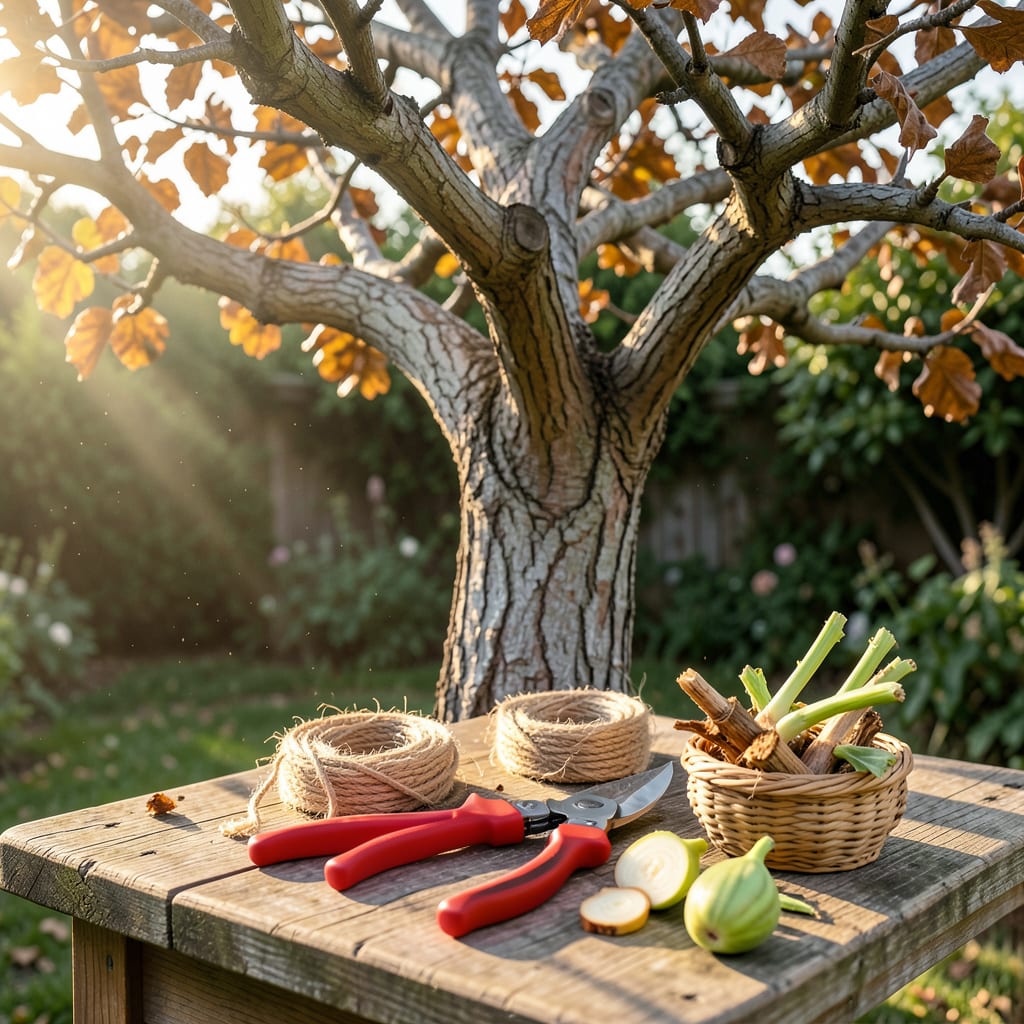
I used to think fig trees were low-maintenance until I realized pruning was the secret to bigger, sweeter fruit. My first attempt was a disaster—too many cuts, wrong timing, and a tree that barely produced. Now, after years of trial and error, I’ve landed on a method that doubles my harvest while keeping the tree healthy and manageable.
The right pruning transforms a scraggly fig into a productive powerhouse. You’ll focus on removing dead wood, opening the canopy for sunlight, and encouraging the branches that actually bear fruit. Timing matters too—do it too late, and you risk cutting off next year’s figs. Here’s how to get it right the first time.
📚 In This Guide
Here’s my foolproof method for shaping fig trees to maximize fruit production and keep them healthy for years.
Late winter or early spring—just before new growth begins—is ideal for pruning fig trees. I wait until the last hard frost has passed but before buds start swelling. This timing prevents winter damage while giving cuts time to heal before active growth.
You’ll know it’s time when daytime temperatures consistently stay above 50°F. Avoid pruning in fall, as fresh cuts won’t harden off before winter. Summer pruning is possible for light shaping but never remove more than 10% of foliage during hot months.
Start by cutting out any dead wood (it’ll be brittle and gray) or branches showing signs of disease. Make clean cuts at a 45-degree angle just outside the branch collar—the slightly swollen area where the branch meets the trunk.
Next, look for branches that rub against each other or grow inward toward the center. Remove the weaker of any crossing branches completely. This opens the canopy for better air circulation and sunlight penetration, which reduces disease risk and improves fruit ripening.
Fig trees fruit best on new wood, so I thin out about one-third of the oldest branches each year. Focus on removing branches that are: – Growing straight up (water sprouts) – Weaker than pencil-thickness – Shading the center of the tree
After thinning, you should be able to see sunlight filtering through the branches when looking at the tree from any angle. This selective removal encourages the tree to put energy into fewer, higher-quality fruits rather than excessive foliage.
For bush-style trees, I maintain an open vase shape with 3-5 main branches. For standard trees, I keep a single trunk with scaffold branches spaced 12-18 inches apart vertically. Cut back the remaining branches by about one-quarter of their length to encourage branching.
Always make cuts just above an outward-facing bud. This directs new growth away from the center of the tree. Step back frequently to check your progress—the goal is a balanced shape that allows sunlight to reach all branches evenly.
Remove all pruned material from the area to prevent pest and disease issues. I like to sterilize my pruners with rubbing alcohol between cuts when dealing with diseased wood. Apply a thin layer of horticultural oil to the cuts if you’re in a particularly wet climate to prevent fungal infections.
Watch for new growth to emerge within 2-3 weeks. The first leaves will be smaller than normal—this is expected. Water deeply after pruning to help the tree recover, but avoid fertilizing until you see 2 inches of new growth to prevent stressing the tree.
Pruning fig trees properly makes all the difference between a struggling tree and one that rewards you with abundant fruit. Here’s what I’ve learned through years of trial and error.
Timing Precision: That 50°F threshold in Step 1 isn’t arbitrary—it’s when the tree’s metabolism kicks in but before active growth starts. I use a soil thermometer to double-check, as air temperature can be misleading. If you prune too early in cold climates, the cuts may not callus properly before winter storms. Conversely, waiting until buds swell means you’ll remove potential fruit-bearing wood. The sweet spot is when you see the first hint of bud swelling but before leaves emerge.
Cutting Technique: The 45-degree angle mentioned in Step 2 serves two critical purposes: it prevents water from pooling on the cut surface (which invites rot) and maximizes the wound’s exposure to air for faster healing. Here’s what nobody tells you—always cut just outside the branch collar, never flush with the trunk. That swollen collar contains specialized cells that help compartmentalize the wound. Flush cuts remove this natural protection and create larger wounds that heal poorly.
Thinning Strategy: When removing that one-third of oldest branches in Step 3, focus on the thickest, woodiest branches first. These are the least productive for fruit but consume the most energy. I use the “pencil test”—if a branch is thicker than a sharp pencil, it’s a prime candidate for removal. The goal isn’t just to remove old wood but to create a scaffold of younger, more productive branches. After thinning, you should be able to toss a baseball through the canopy without it hitting branches—that’s how open it should be.
Post-Pruning Care: The 2 inches of new growth benchmark in Step 5 is your green light for fertilizing, but here’s the nuance: that measurement refers to the length of new shoots, not just leaf expansion. I measure from the bud scale scars (those horizontal lines where the bud was) to the tip of the new growth. This ensures the tree has truly entered its active growth phase. Water deeply immediately after pruning—this isn’t just about hydration but about signaling the roots to support new growth.
The ideal time is late winter or early spring (just before new growth starts) when the tree is dormant. Avoid pruning in fall—fresh cuts may not heal before cold weather, risking frost damage. Light summer pruning is okay for shaping, but save major cuts for dormancy.
Yes! Fig trees handle aggressive pruning well. Remove up to one-third of the branches annually to manage size. Focus on cutting back overgrown or crossing branches first. Just avoid removing all new growth—you’ll sacrifice that year’s fruit.
For fruit production, thin out older branches (3+ years) to encourage new growth—figs form on current-season wood. For shape, trim wayward branches and open the canopy for airflow. Balance both by removing deadwood first, then shaping.
Over-pruning (removing too much new wood) or pruning at the wrong time (fall/winter in cold climates) can delay fruiting. Figs fruit on 1-year-old branches, so avoid cutting all young growth. If the tree is stressed, fertilize with potassium and phosphorus to boost recovery.
No! Fig trees heal naturally, and sealing wounds can trap moisture, promoting rot. Just make clean, angled cuts just outside the branch collar. Let the tree callus over on its own—it’s healthier! (Exception: Use pruning sealant only if disease is present.)
