
Beautiful Plants For Your Interior
Beautiful Plants For Your Interior
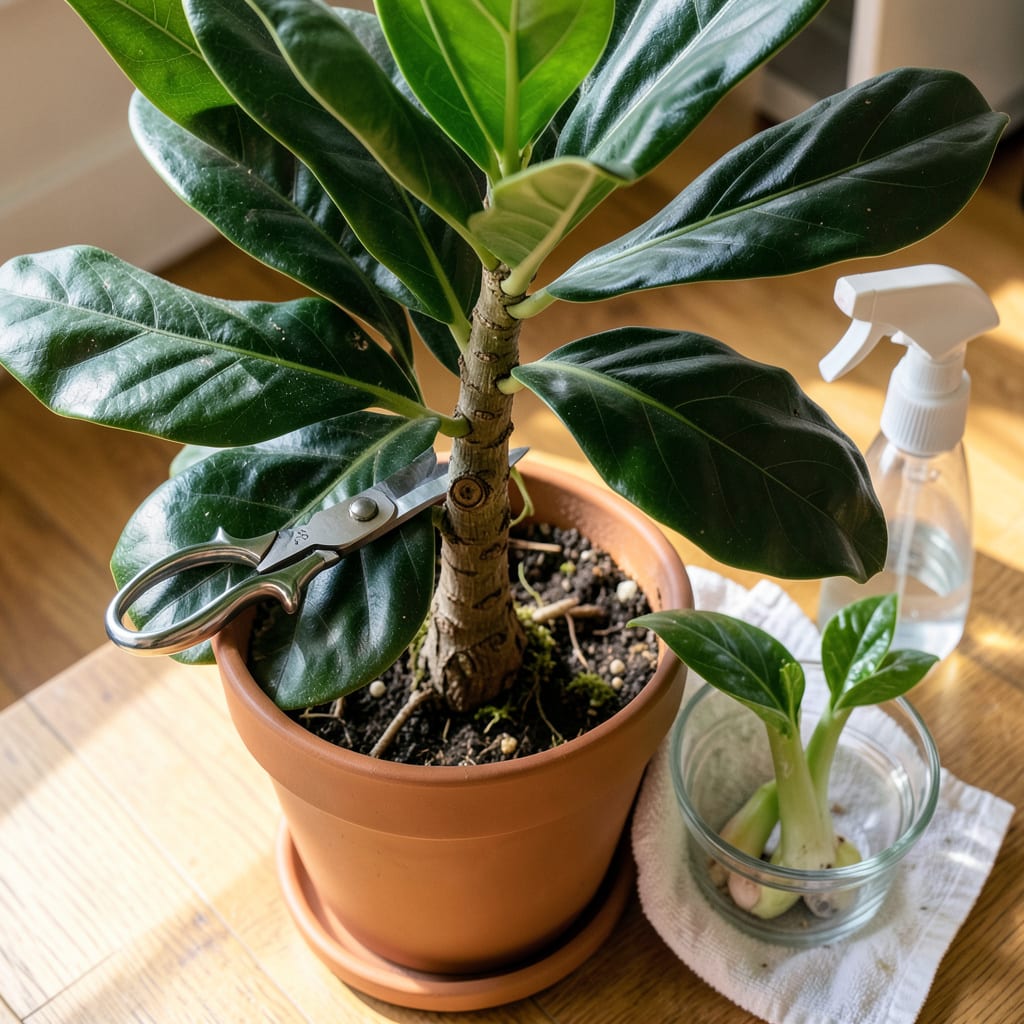
That first time I pruned my fiddle leaf fig, I nearly chickened out. The thought of cutting into those big, beautiful leaves felt wrong—until I saw how much fuller and healthier the plant grew afterward. Pruning isn’t just maintenance; it’s how you turn a leggy, uneven plant into something lush and balanced.
Timing matters here. Spring or early summer, when your fig is actively growing, is ideal. You’ll need sharp shears (sterilized with rubbing alcohol) and a clear plan for where to cut—just above the leaf nodes. The best part? Those cuttings can root in water, giving you free baby plants. No green thumb required, just confidence and the right approach.
📚 In This Guide
This simple method will transform your leggy plant into a fuller, healthier focal point—no fancy tools required.
Start by examining your plant for nodes—those small brown rings where leaves emerge from the stem. You’ll want to cut just ¼ inch above a node at a slight angle. This is where new branches will sprout, so choose nodes that face outward to encourage bushier growth rather than upward.
Look for stems that are overly long or bare at the bottom—these are your best candidates. I always begin with the tallest, most unruly branches first. Avoid cutting more than one-third of the plant’s total foliage in a single session, which could stress it.
Real talk: If your plant looks perfectly balanced, you might not need to prune yet. Wait until you see 6-8 new leaves growing from the top before making any cuts—this ensures the plant has enough energy stored for recovery.
Wipe your pruning shears or sharp scissors with rubbing alcohol before starting—this prevents spreading bacteria between cuts. The blade should glide through the stem without crushing it. If you feel resistance, your tool isn’t sharp enough and needs honing.
Make your cut in one confident motion at that 45-degree angle you identified. A clean cut heals faster and reduces the risk of infection. I like to hold the stem gently with my other hand to steady it—this prevents accidental tearing of the bark.
After each cut, step back and assess the plant’s shape. You’ll notice the structure becoming more balanced immediately. Don’t worry about the white, milky sap that oozes out—it’s normal and will dry within a few hours.
Place your pruned plant in bright, indirect light for the next 2-3 weeks—this is when it’ll focus energy on producing new branches. Avoid direct sun during this recovery period, as the stress could cause leaf drop. You’ll see tiny bumps forming at the nodes within 7-10 days, which are your new growth points.
Hold off on fertilizing for 4-6 weeks after pruning. The plant needs time to heal before you introduce nutrients. When you do resume feeding, use a balanced liquid fertilizer at half strength. I’ve found this gentle approach prevents burning tender new growth.
Mist the leaves lightly every 2-3 days to maintain humidity around the cut sites. You’ll notice the remaining leaves looking perkier within a week—a sure sign your plant is responding well to the pruning.
Don’t discard those healthy cuttings! Strip off the lower leaves, leaving 2-3 leaves at the top. Dip the cut end in rooting hormone (optional but speeds up the process), then place in a glass of clean water. The nodes you exposed should be submerged, but no leaves should touch the water.
Set the glass in bright, indirect light and change the water every 3-4 days. You’ll see roots beginning to form in 3-5 weeks. Once they reach 2-3 inches long, you can pot them up in fresh soil.
Here’s the thing—even if propagation fails, you haven’t lost anything. The mother plant benefits from the pruning either way. But when it works, you’ll have free baby fiddle leaf figs to share or expand your collection!
Pruning your fiddle leaf fig doesn’t have to be intimidating—these practical insights will help you avoid common pitfalls and set your plant up for success.
Precision Matters: When making your cuts in Step 1, remember that the ¼ inch above the node isn’t arbitrary. Cutting too close risks damaging the node where new growth emerges, while cutting too far leaves an unsightly stub that may die back. I use the width of my pinky fingernail as a visual guide for that perfect ¼ inch measurement. The 45-degree angle mentioned in Step 2 isn’t just for aesthetics—it prevents water from pooling on the cut surface, which could lead to rot.
Stress Management: The one-third rule about foliage removal is crucial for your plant’s recovery. I learned this the hard way after over-pruning a beautiful specimen that then dropped half its remaining leaves from shock. If you’re dealing with a severely leggy plant, spread the pruning over two sessions spaced 6-8 weeks apart rather than removing too much at once. This gives your plant time to recover and redirect energy between pruning events.
Aftercare Essentials: During those 2-3 weeks of recovery time mentioned in Step 3, resist the urge to rotate your plant. Fiddle leaf figs are sensitive to movement while healing, and changing their light exposure can cause additional stress. The misting schedule every 2-3 days serves a dual purpose—it maintains humidity around the vulnerable cut sites while also helping you monitor your plant’s progress. If you notice the leaves feeling paper-dry between mistings, your environment might be too arid for optimal recovery.
Propagation Pro Tip: For the optional propagation in Step 4, don’t be discouraged if you don’t see roots after exactly 3 weeks. Some cuttings take the full 5 weeks to show progress, especially in cooler environments. The key is consistency—keep changing that water every 3-4 days without fail. I’ve found that using filtered or distilled water prevents mineral buildup on the cutting that could inhibit root growth. When you do see those first roots, resist the temptation to pot them immediately; waiting until they reach that 2-3 inch length gives your new plant the best chance at thriving.
Got questions about pruning your fiddle leaf fig? You’re not alone! Here are the most common concerns—answered in a snap.
Aim for early spring or summer when your plant is actively growing. Avoid pruning in winter—slow growth means slower recovery. If your plant is overgrown or damaged, light pruning can be done year-round, but save major cuts for warmer months.
Patience is key! New growth takes 4–8 weeks. Ensure your plant gets bright, indirect light and consistent watering. If no buds appear, check for pests or root rot. A balanced fertilizer (like 3-1-2 NPK) can also encourage fuller growth.
Yes! For height control only, trim just the top leaves (not the stem). To promote bushiness, always cut just above a leaf node (where leaves meet the stem). Skip the node, and you’ll get a taller—but not fuller—plant.
Totally normal! The milky sap is a natural defense. Wipe it away with a damp cloth to avoid mess. If sap keeps flowing excessively, your plant may be overwatered—let the soil dry out between waterings.
Yes! Try notching (a tiny cut above a node) to stimulate growth without major pruning. Rotating your plant weekly for even light exposure also helps. For leggy plants, consider air layering to propagate new stems instead of cutting.
