
Beautiful Plants For Your Interior
Beautiful Plants For Your Interior
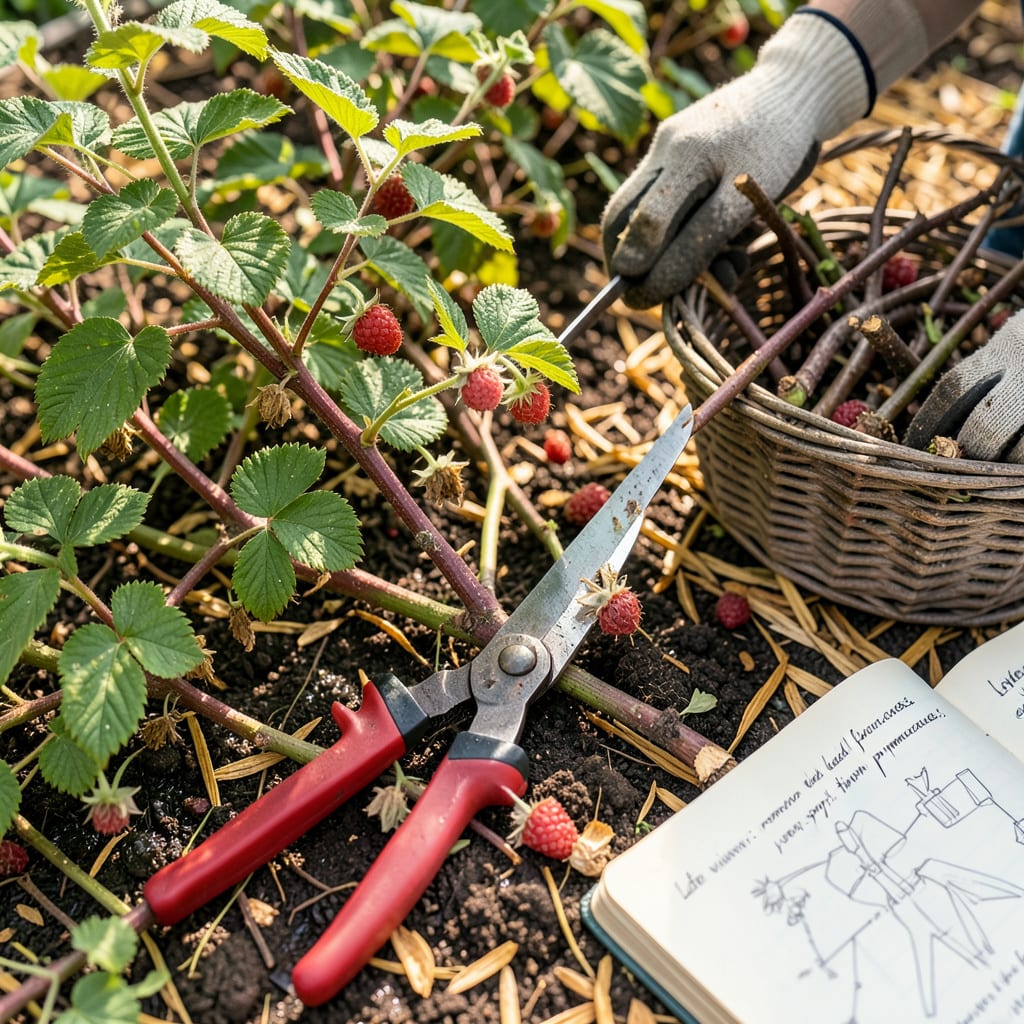
I used to get a handful of raspberries each season—until I learned the pruning trick that doubled my harvest. Everbearing raspberries are unique because they produce fruit on both first-year and second-year canes, but most gardeners accidentally prune them like summer-bearing varieties and miss out on half the crop.
The secret is timing and selective cutting. Prune at the wrong time, and you’ll lose next year’s berries. Do it right, and you’ll get two harvests: one in early summer and another in fall. All it takes is a pair of sharp pruners, 20 minutes of work, and knowing which canes to keep—and which to cut to the ground.
📚 In This Guide
This two-phase pruning method will maximize your harvest—once in summer, once in fall—without overwhelming the plants.
Everbearing raspberries produce fruit on first-year canes (primocanes) in late summer and again on second-year canes (floricanes) the following year. The key is managing both types simultaneously. I mark my calendar for two pruning sessions: one in early spring and one in late winter after the final harvest.
Before cutting anything, identify which canes already fruited (they’ll look woody and brown) versus new green canes. The brown ones have done their job and need removal. This distinction prevents accidentally cutting next year’s producers.
Once all fruit is picked in late fall/winter, cut all canes down to ground level. Yes, this seems drastic, but everbearing varieties will regrow and produce on new canes. Use clean, sharp bypass pruners to make 45-degree angle cuts just above soil level.
Remove every cane—no exceptions. This eliminates disease hiding spots and forces the plant to focus energy on fresh, productive growth. I pile the cut canes away from the patch (they can harbor pests) and burn or compost them if disease-free.
For a double harvest, skip the winter cutback on half your canes. In early summer, once new green canes reach 3-4 feet tall, prune just the top 1/3 of these primocanes. This encourages branching and a heavier late-summer crop on the lower portions.
The remaining unpruned canes will produce a small early-summer crop on their upper sections. This method requires more attention but yields raspberries from June through October. I use twine to mark which canes I’ve topped to avoid confusion.
Throughout spring, thin new canes to 4-6 strongest per plant when they reach 12 inches tall. Remove weak, spindly, or crowded canes at ground level. This spacing improves air circulation (critical for preventing fungal diseases) and directs energy to fruit production.
Install a trellis or support system early—raspberries grow 1-2 inches per week in peak season. I use a simple T-post and wire setup at 3 and 5 feet high to keep canes upright and fruit off the ground. Secure canes loosely with soft twine as they grow.
After final harvest, remove all leaf litter and debris from around plants. Rake the soil surface to expose overwintering pests. I spray the canes and soil with 3% hydrogen peroxide solution (1 part peroxide to 10 parts water) to reduce fungal spores without harming plants.
Apply 2-3 inches of mulch (straw or wood chips) around the base to protect roots from freeze-thaw cycles. Avoid piling mulch against canes, which can encourage rot. This winter prep ensures vigorous spring growth and sets up next year’s double harvest.
Mastering the timing and technique of raspberry pruning makes all the difference between a mediocre harvest and a bumper crop. Here’s what I’ve learned from years of trial and error.
Can Identification is Key: Before making any cuts, take time to really examine your canes. The woody brown ones (floricanes) have already produced fruit and need removal, while the green primocanes are your future harvest. I mark the primocanes with twine in early spring to avoid accidental removal—this simple step saved me from cutting next year’s producers multiple times. The color difference becomes more obvious once you start looking closely.
Angle Matters in Winter Pruning: When cutting canes to ground level in Step 2, those 45-degree angle cuts aren’t just for looks. This precise angle prevents water from pooling at the cut site, which could lead to rot. I’ve found that making the cut just 1/4 inch above soil level (not flush with the ground) gives the plant enough space to heal without leaving stubs that might harbor disease.
Summer Topping Technique: For the summer pruning in Step 3, don’t just eyeball that top 1/3 removal. Measure from the tip down when canes reach 3-4 feet tall. I use my hand as a guide—about 12-16 inches from the top is perfect for most varieties. This precise cut encourages the lower buds to break dormancy and produce those late-summer berries. Too little removed means weak branching; too much means lost potential fruit.
Support System Timing: Don’t wait until canes are 5 feet tall to install supports as mentioned in Step 4. I put my T-post and wire system in place when canes are just 18 inches high. This early support prevents wind damage to young growth and makes the eventual tying process much easier. The 3 and 5-foot wire heights work perfectly for most everbearing varieties, keeping fruit at easy picking height while allowing air circulation.
Prune in late winter or early spring (before new growth starts) for the simplest approach. For a double harvest, prune only the dead floricanes after fall fruiting, then thin primocanes in spring. Avoid pruning in freezing temps or wet conditions to prevent disease.
You’ll get some fruit, but expect smaller, weaker berries and overcrowded canes. Unpruned plants are prone to disease and poor air circulation. A quick annual prune boosts yield by up to 50%—worth the 20-minute effort!
Everbearing raspberries fruit on first-year canes (primocanes) and second-year canes (floricanes). Summer-bearing only fruit on floricanes. Everbearing need selective pruning for dual harvests, while summer-bearing get a full cane removal after fruiting.
Start by removing all dead, weak, or diseased canes at ground level. Thin remaining canes to 4–6 per foot of row. If severely overgrown, cut everything to the ground in early spring—you’ll sacrifice one harvest but reset healthy growth.
For thin canes, clean hedge trimmers work, but hand pruners are better for precision—especially for thick or woody stems. Sterilize blades with rubbing alcohol to prevent spreading disease. Never use dull tools; they crush stems instead of cutting cleanly.
