
Beautiful Plants For Your Interior
Beautiful Plants For Your Interior
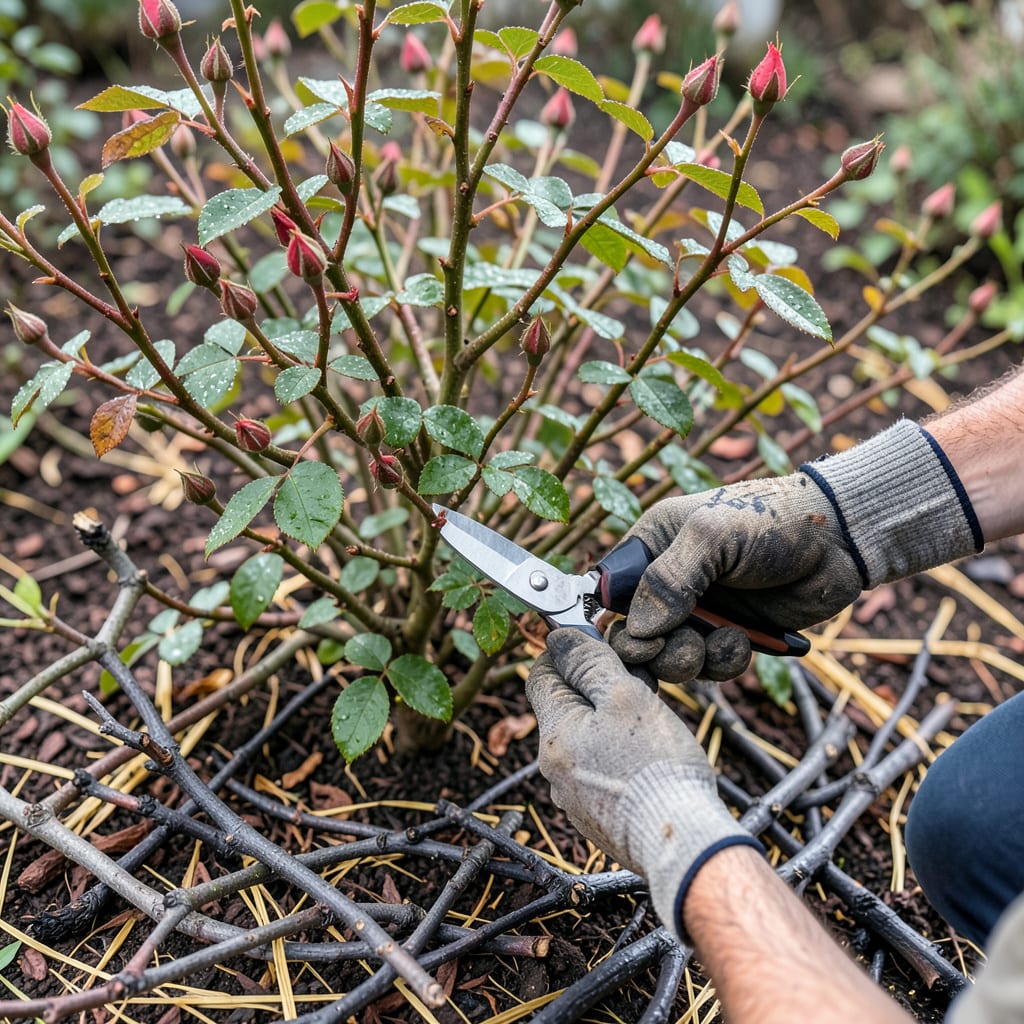
Drift roses are the overachievers of the garden—compact, disease-resistant, and capable of blooming from spring until frost. But here’s the thing: their best performance comes from a little strategic pruning. I used to just snip randomly until I realized three simple cuts at the right time could double my blooms.
Timing matters most. Prune in early spring just as new growth starts, and you’ll get bushier plants with more flowers. No fancy tools needed—just sharp pruners, gloves, and 10 minutes per plant. The technique is foolproof once you know where to make those cuts.
📚 In This Guide
Pruning drift roses is simpler than you think—just follow these clear steps for healthier plants and more blooms.
I always prune my drift roses in early spring, just as new growth begins to emerge. You’ll see tiny red buds swelling on the canes—that’s your signal to start. Avoid pruning in fall, as late cuts encourage tender new growth that winter can damage.
The ideal window is when daytime temperatures consistently reach 50-60°F. If you live in a warmer climate, you might prune as early as February. In cooler zones, wait until March or early April. Never prune during freezing weather or when plants are actively flowering.
Start by cutting out any blackened, shriveled, or mushy canes—these are dead and won’t recover. Use clean, sharp bypass pruners to make smooth cuts at a 45-degree angle, about ¼ inch above a healthy outward-facing bud. This angle helps water run off instead of pooling on the cut surface.
Next, look for canes with dark spots, powdery mildew, or cankers. Remove these completely, cutting back to healthy green wood. I always disinfect my pruners with rubbing alcohol between cuts when dealing with diseased wood to prevent spreading problems to healthy canes.
Now focus on opening up the center of the plant. Drift roses bloom best when air can circulate freely through the branches. Remove about one-third of the oldest canes—these are typically the thickest, woodiest stems. Cut them right down to the base to encourage fresh new growth.
Aim to create a rounded, mound-like shape that’s slightly wider at the bottom than the top. This form lets sunlight reach all parts of the plant and prevents the center from becoming a tangled mess. Step back occasionally to check your progress—you want an even shape without any side looking lopsided.
For the remaining healthy canes, cut them back by about one-third to one-half of their total height. Make each cut just above an outward-facing bud—this directs new growth away from the center. On particularly vigorous canes, I sometimes make my cut above a five-leaflet leaf instead of a three-leaflet one, as these tend to produce stronger growth.
Don’t worry about being too precise with measurements. The goal is to reduce the overall size while maintaining the plant’s natural shape. After pruning, your drift rose should look neat but not skeletal—you should still see plenty of green growth remaining on each cane.
Rake up all the cuttings and debris from around the base of the plant. I like to bag this material rather than compost it, especially if I removed any diseased wood. This prevents potential problems from lingering in your garden soil.
After pruning, give your roses a balanced 10-10-10 fertilizer to support the new growth you’ve encouraged. Water deeply to help the plant recover from the pruning stress. You’ll typically see fresh growth within 2-3 weeks, and the first flush of blooms will appear about 6-8 weeks after pruning.
Pruning drift roses becomes much easier when you know these key details that make all the difference.
Timing Precision: The 50-60°F temperature window mentioned in Step 1 is crucial—this is when roses are coming out of dormancy but haven’t started actively growing. I’ve found that pruning too early (when temps are below 50°F) can shock the plant, while waiting until temps exceed 60°F means you’ll be cutting off valuable new growth. Watch for those tiny red buds swelling on the canes—they’re your perfect timing indicator.
Cutting Technique: In Step 2, that 45-degree angle and ¼ inch above an outward-facing bud isn’t just for looks—it’s functional. The angle prevents water from pooling on the cut surface (which can lead to rot), while the outward-facing bud ensures new growth spreads outward rather than crowding the center. I always make my first cut slightly higher than I think I need to—you can always trim more, but you can’t put wood back on!
Shape Matters: When shaping in Step 3, think of creating a vase shape that’s wider at the bottom. This isn’t just aesthetic—it allows sunlight to reach the lower canes and promotes airflow that prevents fungal diseases. I like to step back every few cuts to visualize the shape from different angles. Remember, you’re aiming to remove about one-third of the oldest canes, which stimulates fresh growth from the base.
Post-Pruning Care: The 10-10-10 fertilizer mentioned in Step 5 is ideal because it provides equal parts nitrogen (for leaf growth), phosphorus (for root development), and potassium (for overall plant health). After pruning, I water deeply to help the plant recover, then apply a 2-3 inch layer of mulch around the base (but not touching the stems) to conserve moisture and suppress weeds during that critical 2-3 week recovery period.
The ideal time is late winter or early spring (just before new growth starts). Light pruning can also be done after each bloom cycle to encourage more flowers. Avoid heavy pruning in fall—it can stimulate tender growth vulnerable to frost.
No! Regular scissors crush stems, inviting disease. Use sharp bypass pruners (like Felco or Corona) for clean cuts. For thicker canes, opt for loppers. Always disinfect tools with rubbing alcohol between cuts to prevent spreading pathogens.
Drift roses are forgiving! You can remove up to 1/3 of the plant in one pruning session. For rejuvenation, cut back to 6–12 inches above the ground in early spring. Avoid “topping” (flat cuts)—instead, angle cuts just above a leaf node.
Check these fixes: 1) Ensure they get 6+ hours of sun daily, 2) Avoid over-fertilizing (especially nitrogen), 3) Verify you’re not pruning too late (after buds form). If stems look dead, scratch the bark—green underneath means it’s alive!
Deadheading (removing spent blooms) isn’t required but boosts reblooming. For low-maintenance care, skip it—drift roses self-clean well. If you deadhead, snip just above the first 5-leaflet set to encourage bushier growth.
