
Beautiful Plants For Your Interior
Beautiful Plants For Your Interior
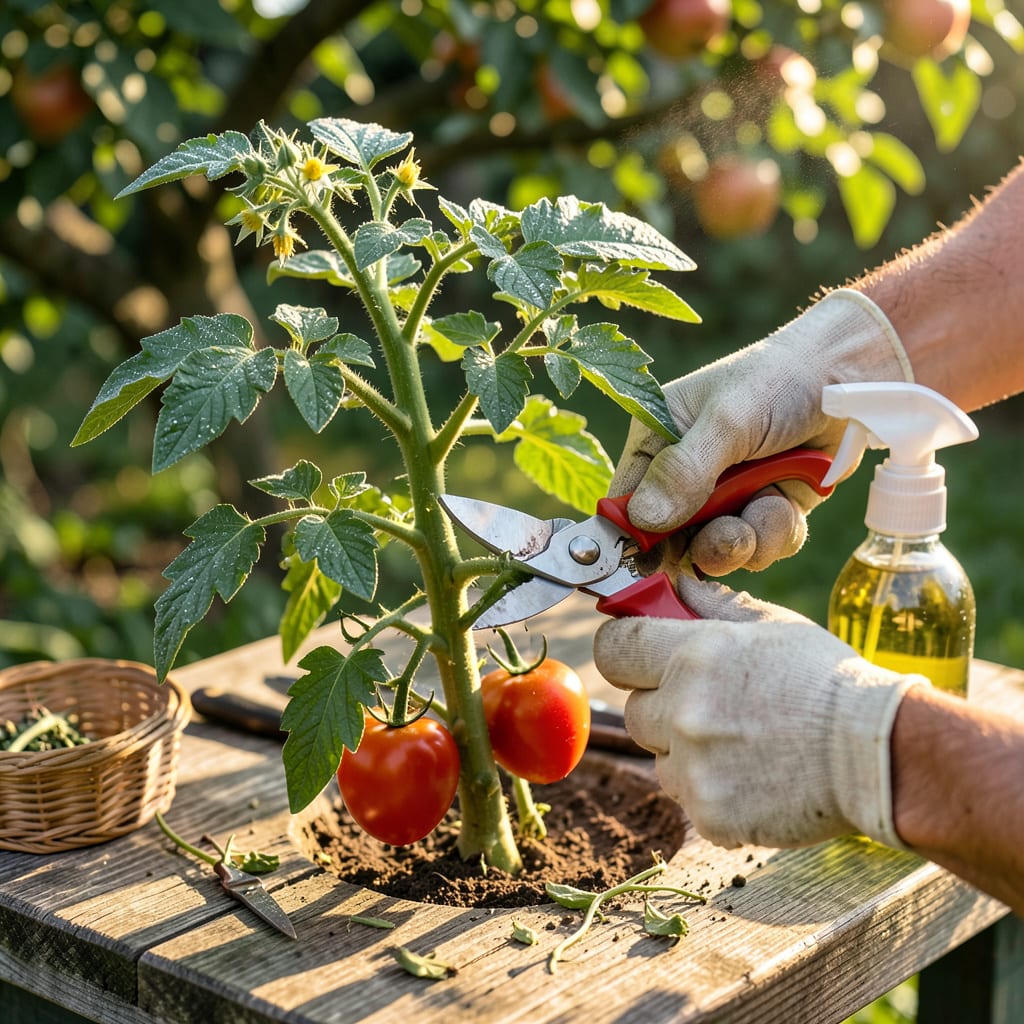
Determinate tomatoes don’t need aggressive pruning—they’re bred to grow compact and produce fruit all at once. I learned this the hard way after accidentally stunting my first crop by over-trimming. The goal here is gentle shaping to improve airflow and sunlight penetration without sacrificing those precious fruit-bearing branches.
You’ll focus on removing only the most problematic suckers (those little shoots between main stems and branches) while leaving most foliage intact. Timing matters: prune when plants are dry and you can see new growth clearly, usually when they’re 1-2 feet tall. This method keeps plants healthy and maximizes your harvest without stressing them.
📚 In This Guide
Pruning determinate tomatoes is simpler than you think—focus on strategic cuts that boost airflow without sacrificing fruit production.
Wait until your plants reach 12-18 inches tall with several sets of true leaves before making any cuts. Determinate varieties form fruit clusters at branch tips, so premature pruning removes potential harvest. I check for the first flower clusters—this signals the plant has shifted energy to fruiting and can handle light pruning.
The ideal window is early morning on a dry day. Wet foliage spreads disease, and afternoon heat stresses freshly cut plants. You’ll notice the stems are firm and snap cleanly when bent—this indicates proper turgor pressure for healing. Avoid pruning during fruit set or you’ll risk dropping blossoms.
Locate suckers—the small shoots growing in the crotch between main stems and branches. On determinate tomatoes, only remove suckers below the first flower cluster. These won’t produce fruit and just drain energy. I use my thumbnail to pinch off suckers when they’re 2-3 inches long—small enough to remove cleanly without tools.
Never remove more than one-third of the plant’s foliage at once. Over-pruning shocks determinate varieties and reduces yield. Leave all suckers above the first flower cluster—they’ll develop into productive branches. You’ll see the plant’s energy redirect to fruit rather than excessive leaf growth within days.
Reach into the plant’s center and remove 3-4 of the oldest, largest leaves near the base. These shade the soil and block airflow, creating perfect conditions for fungal diseases. I target leaves that show yellowing or spots first—they’re already declining and won’t contribute to photosynthesis.
Use clean pruners to make cuts at a 45-degree angle, about ¼ inch from the main stem. This prevents water pooling on the wound while leaving enough stem to die back naturally. You’ll immediately notice improved light penetration to lower fruit clusters, which ripens them faster and more evenly.
Scan the entire plant for leaves with dark spots, yellowing, or curled edges—these indicate disease or pest pressure. Remove affected foliage immediately, even if it means sacrificing some fruit. I make cuts 2 inches below any visible damage to ensure complete removal of potential pathogens.
Check stem intersections for rubbing or crossing branches that create wounds. Prune one of the offending branches at its base to prevent entry points for disease. The plant will heal faster with clean cuts rather than torn tissue. You’ll see new growth emerge within 5-7 days if the plant remains healthy.
After pruning, step back and assess the plant’s overall shape. Determinate tomatoes should maintain a bushy, compact form—not lanky or sparse. I aim for 60% foliage coverage when viewed from above, ensuring enough leaves for photosynthesis without excessive shading.
Water deeply at the base immediately after pruning to reduce stress. Avoid overhead irrigation for 48 hours to let wounds callus over. You’ll notice the remaining fruit begins sizing up more quickly as the plant directs energy to production rather than excess vegetation. Repeat this process every 2-3 weeks through the growing season.
Pruning determinate tomatoes becomes second nature once you understand these key principles—focus on precision and plant health.
Timing Precision: The 12-18 inch height range in Step 1 isn’t arbitrary—it ensures your plant has established enough foliage to support fruit production while still being young enough to recover quickly from pruning. I’ve found that plants at the lower end of this range (closer to 12 inches) benefit from just removing suckers, while taller plants can handle the additional interior thinning described in Step 3 without stress.
Sucker Management Technique: When removing those 2-3 inch suckers in Step 2, use your thumbnail to pinch them at their base where they meet the main stem. This method creates a cleaner wound than cutting and reduces disease entry points. The one-third foliage rule is critical—determinate varieties have a finite energy supply, and removing too much at once forces them to prioritize regrowth over fruit development.
Disease Prevention Strategy: The 45-degree angle and ¼ inch spacing mentioned in Step 3 aren’t just for aesthetics—they create an optimal healing environment. Angled cuts shed water more effectively, while leaving that small stem stub prevents moisture from wicking into the main stem. I always wipe my pruners with rubbing alcohol between plants to prevent cross-contamination, especially when dealing with diseased foliage as described in Step 4.
Post-Pruning Care: That 48-hour window without overhead watering in Step 5 is when your plant is most vulnerable to fungal infections. I recommend applying a thin layer of compost around the base (but not touching the stem) immediately after pruning to provide nutrients without encouraging weed growth. The deep watering should penetrate at least 6 inches into the soil to reach the root zone where new feeder roots will develop in response to the pruning.
Do I really need to prune determinate tomatoes, or can I skip it?
You can skip it! Determinate tomatoes grow in a compact, bushy form and produce fruit all at once. Pruning isn’t required, but light trimming (removing diseased/suckers below the first flower cluster) can improve airflow. Avoid heavy pruning—it reduces yield since these plants have a fixed number of fruiting branches.
Prune in the early morning on a dry day to help wounds heal faster. Start when plants are 1–2 feet tall, focusing on suckers before they grow larger than a pencil. Avoid pruning once flowers or fruit appear—you risk stressing the plant and losing potential tomatoes.
Determinate tomatoes grow to a fixed size (3–5 feet) and fruit in one big flush—over-pruning cuts yield. Indeterminates grow continuously and benefit from aggressive pruning (like removing all suckers). For determinates, stick to minimal trimming: just diseased leaves and low suckers.
Don’t panic! If you removed too many leaves, your plant may focus on regrowing foliage instead of fruit. Keep it well-watered, add a balanced fertilizer (like 10-10-10), and provide shade if temps spike. Future harvests might be smaller, but the plant should survive.
Yes! Remove suckers with a clean cut, place them in water until roots form (1–2 weeks), then transplant to soil. This works best with indeterminate varieties, but determinate suckers can root too—just don’t expect the same compact growth or yield as the parent plant.
