
Beautiful Plants For Your Interior
Beautiful Plants For Your Interior
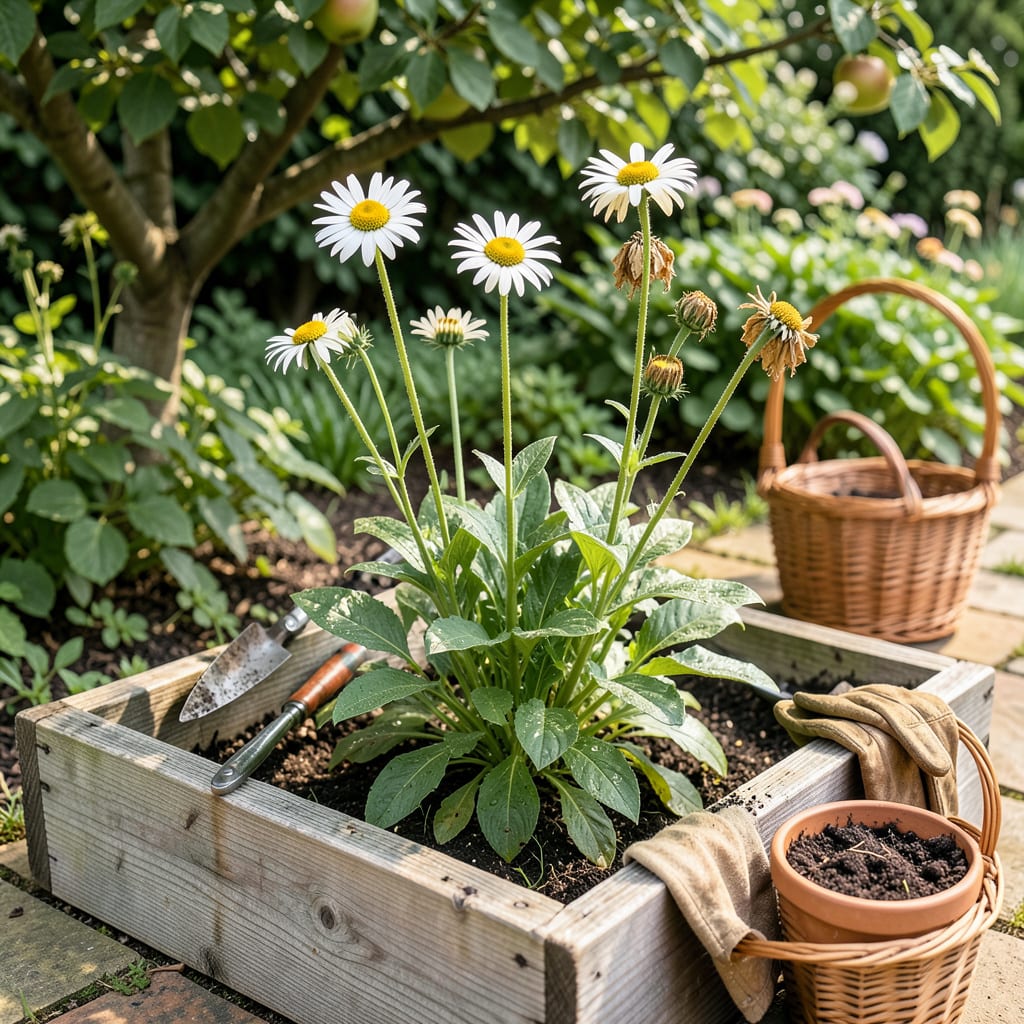
That moment when your daisies start looking leggy instead of lush? A quick prune fixes it. I used to let mine grow wild until I realized that five minutes with pruners could double my blooms. The trick isn’t complicated—just strategic cuts that tell the plant to focus energy on flowers, not floppy stems.
You’ll see new buds forming within 7-10 days of pruning, and the plants stay compact instead of sprawling. No fancy tools required—just sharp pruners and the confidence to snip. By midsummer, your daisies will be producing bigger, brighter blooms than ever, and you’ll wonder why you didn’t start sooner.
📚 In This Guide
This simple method keeps your daisies blooming bigger and longer—no complicated tools or experience needed.
Start pruning when you see the first flowers begin to fade, usually 6-8 weeks after blooming begins. Look for petals that have turned brown or papery at the edges—that’s your signal. The center disk will also lose its vibrant color, turning from yellow to dull brown.
Don’t wait until all flowers are spent. I prune when about 30% of the blooms on each stem show these signs. This timing encourages the plant to redirect energy into producing new buds rather than maintaining dying flowers. Morning is ideal—plants recover better when pruned early in the day.
Follow the fading flower stem down to where it meets a set of healthy leaves or a side branch. You’ll want to cut just above this junction—about ¼ inch above the leaf node. This precise spot is crucial because it’s where new growth will emerge.
Never leave a long stub above the leaves. I’ve found that cutting too high invites rot and looks untidy. If you’re unsure, err on the side of cutting slightly lower rather than higher. The plant will recover faster from a clean, well-placed cut than from a poorly positioned one.
Use clean, sharp pruners to make a single, decisive cut at a 45-degree angle. This angle allows water to run off rather than pool on the cut surface, which prevents stem rot. Position your pruners so the blade faces away from the remaining stem to avoid crushing the tissue.
After each cut, step back and assess the plant’s shape. You’re aiming for an even, rounded form—not a flat top. I like to rotate around the plant as I work to maintain balance. Remove no more than one-third of the plant’s total foliage in a single pruning session to avoid stressing it.
Gather all the cut stems and spent flowers from around the base of the plant. Leaving this debris creates a breeding ground for pests and diseases. I use a small hand rake to collect everything without disturbing the soil around the roots.
Water the plant deeply after pruning—this helps it recover and stimulates new growth. You’ll see fresh buds forming within 2-3 weeks if conditions are right. The plant will look sparse at first, but this temporary gap allows sunlight to reach the center, promoting stronger, bushier regrowth.
Repeat this process every 4-6 weeks throughout the growing season. Each pruning session will produce slightly smaller but more numerous blooms. I’ve found that daisies pruned regularly produce twice as many flowers as unpruned plants by season’s end.
Stop pruning about 6 weeks before your first expected frost. This gives the plant time to harden off naturally without encouraging tender new growth that could be damaged by cold. The final blooms of the season can be left to form seeds if you want to collect them or attract late-season pollinators.
These simple adjustments will help you get the most blooms from your daisies with minimal effort.
Timing Precision: The 6-8 week window mentioned in Step 1 is critical for triggering new growth cycles. I’ve found that pruning too early (before 6 weeks) can stunt the plant, while waiting past 8 weeks means wasted energy on dying blooms. Mark your calendar when blooming begins to track this timing accurately.
Cutting Technique: When making that 45-degree angle cut in Step 3, position your pruners so the blade faces away from the remaining stem. This prevents crushing the vascular tissue that transports water and nutrients. A clean cut heals faster and reduces disease risk. I like to wipe my pruners with rubbing alcohol between plants to prevent spreading pathogens.
Seasonal Strategy: The 4-6 week interval in Step 5 isn’t arbitrary—it matches the plant’s natural growth cycle. Pruning more frequently than every 4 weeks can stress the plant, while waiting longer than 6 weeks means missing optimal regrowth periods. I set phone reminders to stay consistent throughout the season.
Post-Pruning Care: The deep watering mentioned in Step 4 is more important than you might think. After pruning, the plant’s reduced foliage means less water loss through transpiration. This is your opportunity to saturate the root zone deeply, encouraging roots to grow downward rather than spreading shallowly. I water until the soil is moist to a depth of 6 inches.
Prune daisies in early spring (just as new growth appears) or after the first bloom cycle in summer. Avoid fall pruning—it can stimulate tender growth vulnerable to frost. For reblooming varieties like Shasta daisies, a mid-summer trim (cutting back by ⅓) encourages a second flush of flowers!
Regular scissors can work for thin stems, but they often crush tissue, inviting disease. Pruning shears (bypass-style) make clean cuts that heal faster. If scissors are your only option, disinfect blades with rubbing alcohol first to prevent spreading fungi or bacteria.
Leggy growth post-prune usually means you cut too little or too late. Aim to remove ⅓ of the plant (including weak stems) to encourage bushier regrowth. If they’re still sparse, check for insufficient sunlight (daisies need 6+ hours daily) or over-fertilizing (which promotes leaves over blooms).
Deadheading = removing spent flowers (pinch or snip just above a leaf node) to redirect energy to new blooms. Pruning = cutting back stems and foliage to shape the plant or rejuvenate growth. Do both! Deadhead weekly; prune 1–2 times per season for healthier plants.
Common culprits:
