
Beautiful Plants For Your Interior
Beautiful Plants For Your Interior
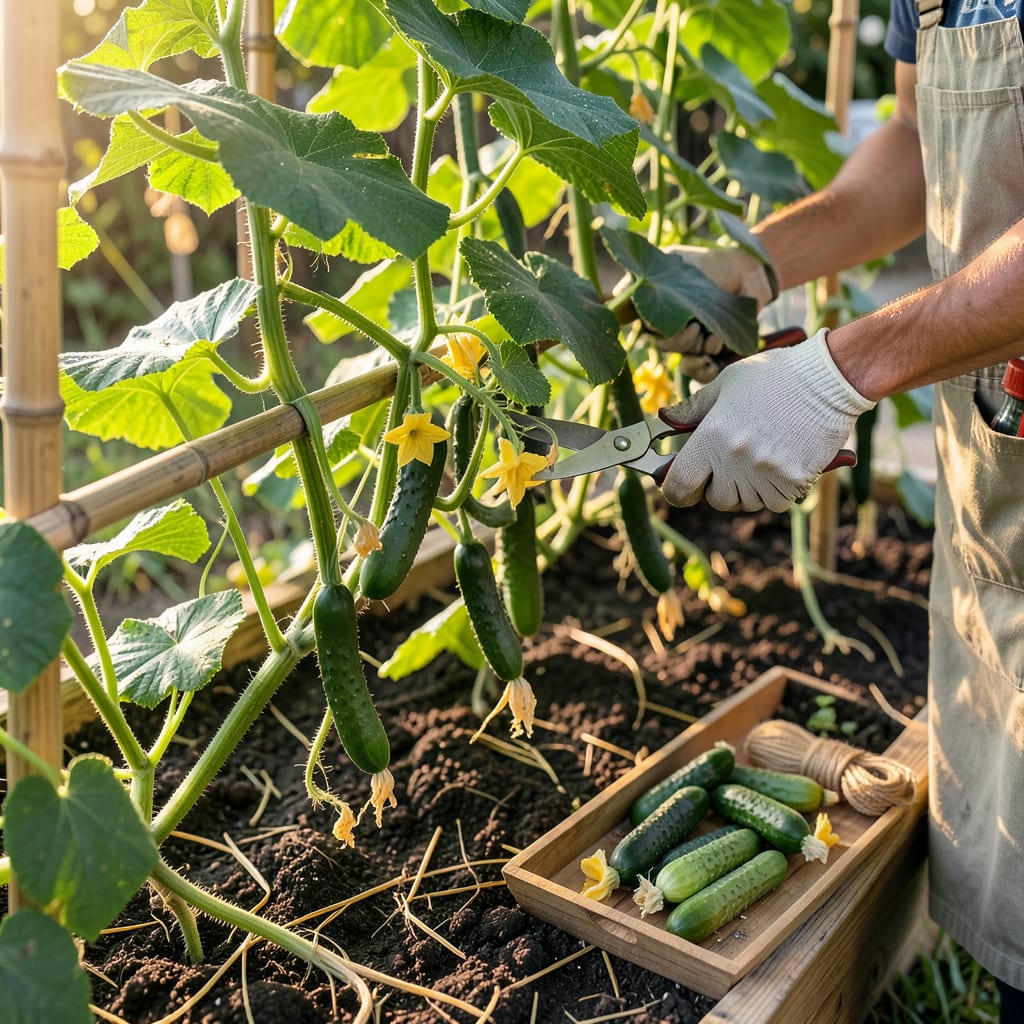
I used to let my cucumber vines sprawl wild—until I realized pruning them actually doubles the harvest. The first time I tried it, my plants produced twice as many cucumbers, and the vines stayed healthier all season. It’s not about cutting back for the sake of it, but guiding the plant’s energy where it matters most: the fruit.
Timing and technique make all the difference. Prune too early or too aggressively, and you risk stressing the plant; do it right, and you’ll see stronger vines, better airflow, and cucumbers that grow faster and tastier. Even if you’ve never picked up pruners before, this method is simple once you know where to make the cuts.
📚 In This Guide
This simple technique will transform your cucumber plants—more fruit, fewer problems, and healthier growth all season.
Start pruning when vines reach 3-4 feet long and begin developing side shoots (laterals). The goal is to remove unnecessary growth that competes with fruit production. Focus first on the lower 12-18 inches of the main vine—this is where problems like powdery mildew often start.
Look for three types of growth to remove: 1) Any shoots emerging from the first 5-7 leaf nodes (these won’t produce good fruit), 2) Side shoots that are growing toward the center of the plant (they create congestion), and 3) Any yellowing or damaged leaves. I always prune in the morning when plants are most hydrated and recover fastest.
Using clean, sharp pruners (or your fingers for tender growth), remove all leaves and shoots from the bottom 12-18 inches of the main vine. This improves air circulation dramatically and prevents soil-borne diseases from splashing up onto leaves. You’ll see the difference immediately—the base of the plant will look open and tidy.
Next, follow the main vine upward and prune any side shoots that don’t have female flowers (the ones with tiny cucumbers at their base). Male flowers (just plain yellow blooms) won’t produce fruit, so their shoots can go. I leave 2-3 leaves above each female flower to support photosynthesis without overcrowding.
As the vine grows, guide the main stem upward on your trellis, gently weaving it through openings or tying it with soft plant ties. The main vine should remain intact—never prune the growing tip. Once it reaches the top of your trellis (usually 5-6 feet tall), you can pinch out the tip to redirect energy into fruit production.
For side shoots that you keep (those with female flowers), prune them back after they’ve produced 2-3 cucumbers. Cut just above the second leaf after the last fruit. This prevents the plant from wasting energy on excessive vine growth. You’ll notice the remaining leaves look darker green and healthier within days.
Make pruning part of your weekly routine. Every 5-7 days, walk through and remove any new suckers (small shoots emerging where leaves meet the stem), yellowing leaves, or spent foliage. Pay special attention to the center of the plant where air circulation is poorest—this is where mildew starts.
After heavy rain or strong winds, do a quick inspection. Damaged leaves or broken stems should be removed immediately to prevent disease entry. I also thin out some of the densest areas if I can’t see through the foliage easily—good airflow means fewer fungus problems. The plant will look dramatically different after each session, but you’ll start seeing more flowers and fruit within a week.
Pruning cucumbers isn’t complicated, but these key insights will help you avoid common pitfalls and maximize your harvest.
Timing Matters: Begin pruning when vines reach exactly 3-4 feet long, as specified in Step 1. This is when the plant has enough energy to recover from pruning while still benefiting from improved airflow. Pruning too early can stunt growth, while waiting too long makes the job more difficult and less effective. I’ve found morning pruning works best because plants are most hydrated after overnight moisture.
The Technique That Changed Everything: In Step 2, when removing leaves from the bottom 12-18 inches, be thorough but gentle. Use clean pruners for thicker stems and your fingers for tender growth. This prevents tearing that could invite disease. The difference in air circulation is immediately visible—you’ll notice the base of the plant looks more open and less crowded, which dramatically reduces mildew risk.
What to Watch For: Pay special attention to the first 5-7 leaf nodes mentioned in Step 1. These early shoots won’t produce quality fruit but will drain energy from the plant. Removing them early redirects that energy to the upper vine where your best cucumbers will form. I check these nodes weekly as new growth appears.
Maintenance Strategy: The 5-7 day checkup schedule in Step 4 isn’t arbitrary—it matches cucumber plants’ rapid growth cycle. During peak season, you might need to check every 4-5 days instead. Focus on the plant’s center where airflow is poorest; this is where mildew typically starts. After heavy rain, I always do an extra inspection to remove damaged leaves before they become disease entry points.
Do I really need to prune cucumbers, or can I skip it?
While cucumbers can grow without pruning, trimming encourages better airflow, reduces disease risk, and redirects energy to fruit production. Unpruned vines often tangle, yield smaller cucumbers, and attract pests. For bush varieties, pruning is less critical, but vining types (like trellised plants) benefit hugely from strategic cuts.
Begin pruning when vines reach 1–2 feet long (usually 3–4 weeks after planting). Focus first on removing lower leaves touching the soil (to prevent rot). Later, trim suckers (side shoots) and excessive growth weekly during active growth. Avoid pruning when plants are wet or stressed (e.g., during heatwaves).
Bush cucumbers (compact, non-climbing) need minimal pruning—just remove dead/diseased leaves. Vining types (trellised or sprawling) require aggressive pruning: trim side shoots (suckers) below the main stem’s first 5–7 leaves and thin out excessive growth to improve airflow and fruit size.
Sharp bypass pruners (or clean scissors) work fine for small stems, but avoid crushing leaves/stems. For thicker vines, use sterilized pruning shears to prevent disease. Never tear stems by hand! Disinfect tools with rubbing alcohol between cuts if plants show signs of disease.
Over-pruning (removing >30% of foliage at once) or cutting the main stem can shock plants. Other culprits: pruning during extreme heat or when plants are water-stressed. Fix it by watering deeply, providing shade, and applying a balanced fertilizer. New growth should appear in 5–7 days if the roots are healthy.
