
Beautiful Plants For Your Interior
Beautiful Plants For Your Interior
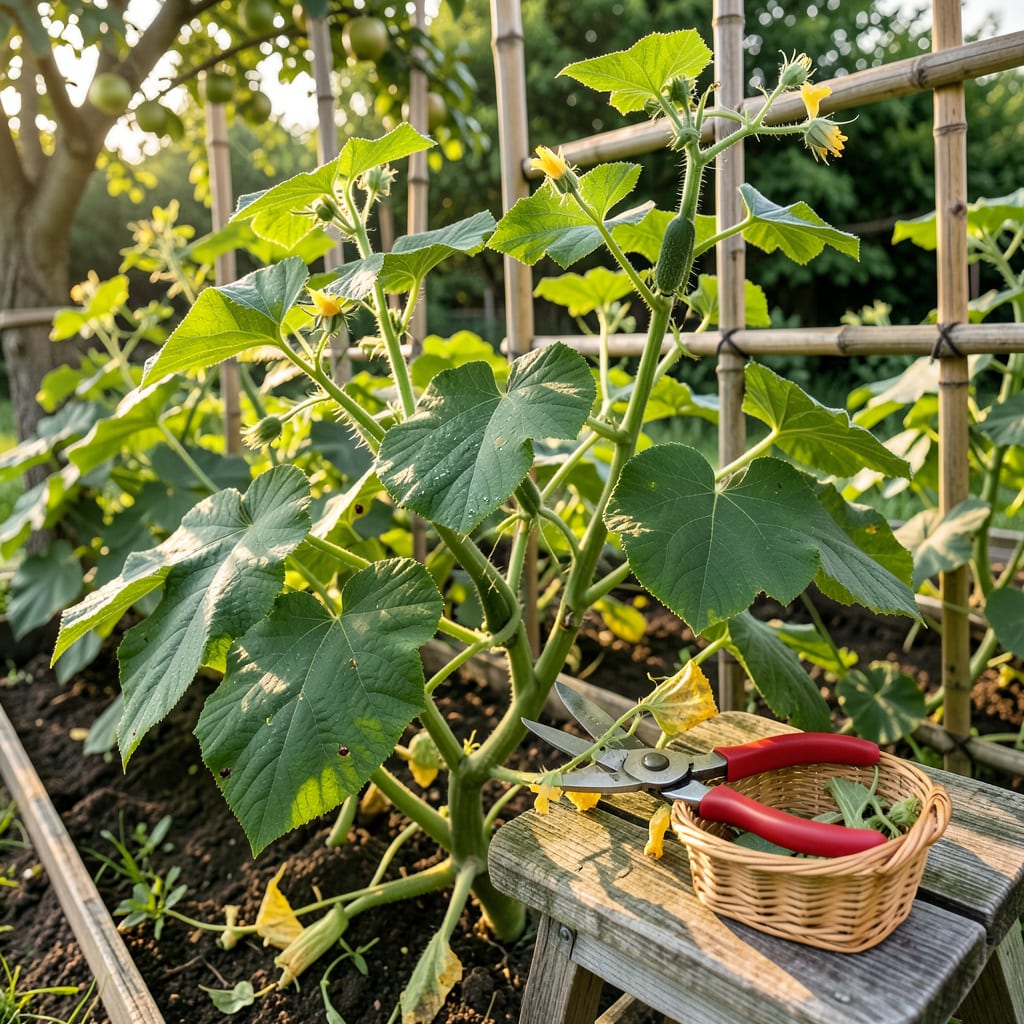
I used to let my cucumber vines run wild—until I realized pruning them could double my harvest. That first season I tried it, the difference was shocking: fewer yellow leaves, straighter fruits, and vines that kept producing instead of collapsing under their own weight. The best part? It takes 10 minutes with a pair of clean pruners and changes everything.
Here’s the thing—cucumbers aren’t like tomatoes where everyone talks about pruning. But when you remove those extra suckers and lower leaves, you get better airflow (which means no powdery mildew) and more energy going into fruit instead of unnecessary foliage. My plants now stay productive 2-3 weeks longer than before, and the cucumbers taste sweeter because they’re not competing for nutrients.
📚 In This Guide
Pruning cucumbers the right way transforms scraggly vines into powerhouse producers—here’s how I do it every season.
Wait until your cucumber vines reach 3-4 feet long and have developed 6-8 mature leaves. This usually happens about 4-6 weeks after planting, when you’ll see the first female flowers (the ones with tiny cucumbers at their base) forming. Pruning too early stunts growth; too late and you’ll lose potential fruit.
I always prune in the morning when plants are most hydrated. You’ll notice the stems snap cleanly when they’re well-watered, rather than bending or shredding. Avoid pruning during the hottest part of the day—plants heal cuts better when temperatures are below 85°F.
Start by pinching off all leaves, shoots, and flowers from the lowest 12-18 inches of the main stem. This prevents soil-borne diseases from splashing onto foliage during watering. Use your thumb and forefinger to snap these off cleanly—no tools needed for this part.
Next, locate the suckers (side shoots growing from where leaves meet the main stem). Remove suckers from the bottom 2-3 leaf nodes completely. For nodes above that, I leave just one sucker per node to grow, pinching off any additional ones. This creates a balanced framework for fruit production.
Once the vine reaches the top of your trellis (typically 6-8 feet tall), it’s time to redirect its energy. I cut the main vine’s growing tip just above a leaf node, leaving about 2-3 feet of growth beyond the last fruit. This forces the plant to focus on developing existing cucumbers rather than extending the vine.
For bush cucumber varieties, you’ll want to prune differently—remove only the outer leaves that block sunlight from reaching the center of the plant. You’ll see improved air circulation immediately, which reduces powdery mildew risk. Always make cuts at a 45-degree angle about 1/4 inch above a leaf node to prevent water pooling on the wound.
Check your plants every 3-4 days after pruning. You’ll notice new growth appearing at the nodes you left intact—these will become your next fruit-bearing branches. I tie any long tendrils to the trellis immediately, as they’ll grow 2-3 inches per day in warm weather.
Watch for yellowing leaves or wilting—this often means you’ve over-pruned. If you see this, stop pruning and give the plant 1-2 weeks to recover. Healthy pruned plants will show new flower buds within 5-7 days and maintain their deep green color. Water at the base immediately after pruning to help the plant recover.
For vining cucumbers, I maintain 2-3 main stems (the main vine plus 1-2 strong side shoots) and remove everything else. Bush varieties need only light pruning—just enough to open the center for airflow. You’ll see slicing cucumbers respond best to aggressive pruning, while pickling varieties prefer a gentler approach.
The key difference with parthenocarpic (self-pollinating) varieties is that you’ll want to remove all male flowers (the ones without tiny cucumbers at their base) to prevent bitter fruit. You’ll recognize male flowers by their straight stems, while female flowers have a small swelling at their base that looks like a miniature cucumber.
Pruning cucumbers doesn’t have to be intimidating—these practical insights will help you avoid common pitfalls and maximize your harvest.
Timing is Everything: In Step 1, waiting for vines to reach that 3-4 foot length with 6-8 mature leaves is crucial. I learned this the hard way after pruning too early and stunting my plants. The 4-6 week mark after planting is ideal because that’s when plants have enough energy stored to recover from pruning while still being young enough to redirect growth effectively.
Morning Matters: I always prune in the morning when plants are most hydrated, as mentioned in Step 1. You’ll notice stems snap cleanly when they’re well-watered, rather than bending or shredding. The temperature guideline of below 85°F is important—plants heal cuts better in cooler conditions. I’ve found that pruning between 7-9 AM gives the best results, as plants have all day to recover before evening.
Precision Pruning: When removing lower leaves in Step 2, be precise about that 12-18 inch clearance from the ground. This isn’t just about aesthetics—it’s your first defense against soil-borne diseases splashing up during watering. I use the width of my hand (about 4 inches) as a quick measuring guide, counting up from the base to ensure I’m removing enough but not too much.
Sucker Strategy: The approach in Step 2 of leaving just one sucker per node above the bottom 2-3 nodes creates the perfect balance. I’ve experimented with leaving more, but you’ll get overcrowding and smaller fruits. When pinching suckers, use your thumbnail and forefinger to snap them off cleanly—this method causes less damage than scissors or pruners, and you’ll feel when it releases naturally.
Prune cucumbers in the early morning when plants are hydrated. Start when vines reach 3-4 feet long (usually 4-6 weeks after planting). Avoid pruning during peak heat or when plants are wet to prevent stress or disease. For bush varieties, prune lightly as needed.
Yes! Container-grown cucumbers benefit from pruning to manage space. Focus on removing side shoots and lower leaves to improve airflow. Leave the main vine intact, and prune more aggressively if growth looks crowded. Dwarf varieties need minimal pruning.
Pruning involves cutting larger stems/leaves with tools (e.g., shears), while pinching is removing small shoots or tips with your fingers. Pinching is gentler and great for early training (e.g., removing flower buds on young plants). Use pruning for thicker growth or diseased areas.
Yellowing leaves post-pruning can signal shock (over-pruning), water stress, or disease. Ensure you’re not removing more than 1/3 of foliage at once. Water deeply after pruning, and avoid wet leaves. If yellowing spreads, check for pests or fungal issues like powdery mildew.
For light maintenance, use your fingers to pinch off small shoots, suckers, or leaves. Sterilize nails/hands first to avoid spreading disease. For thicker stems, tools (like pruning shears) are safer to prevent tearing the plant.
