
Beautiful Plants For Your Interior
Beautiful Plants For Your Interior
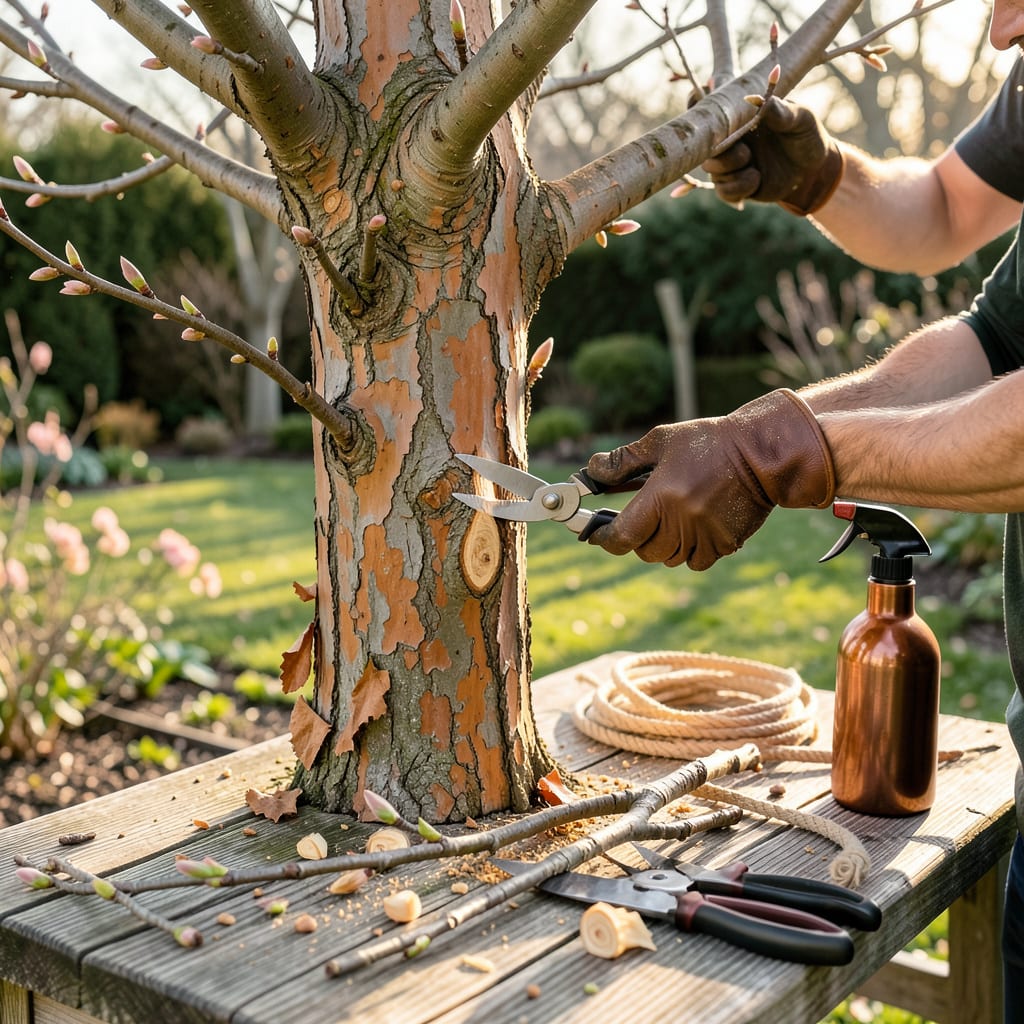
Late winter is when crepe myrtles beg for attention. I used to ignore mine until the blooms got sparse and the branches crowded—what a mistake. Proper pruning isn’t just about looks; it’s how you get those explosive summer flowers and keep the tree healthy for decades. The difference between a well-pruned myrtle and one that’s been hacked back is night and day.
Here’s the thing—most people either overdo it or skip it entirely. I’ve seen both, and neither ends well. Timing matters (hint: not fall), technique matters (no flat-topping!), and the right cuts now mean less work later. You’ll end up with a tree that blooms twice as long and stays disease-free. Let’s do this right.
📚 In This Guide
Timing and technique make all the difference—here’s how I keep mine blooming spectacularly every summer.
Prune in late winter or early spring, just before new growth starts. I watch for the first tiny leaf buds swelling on branches—that’s your signal the plant is waking up. In most regions, this falls between February and March, but adjust if you’re in a warmer climate where crepe myrtles leaf out earlier.
Avoid pruning in fall or mid-winter. Fresh cuts made then won’t have time to harden off before cold weather, leaving your tree vulnerable to frost damage. I once lost a beautiful ‘Natchez’ variety by pruning too late—don’t make my mistake.
Start by cutting away any suckers growing from the base or along the trunk. These steal energy from the main plant and create a messy shape. Use sharp bypass pruners and make clean cuts flush with the trunk—no stubs left behind.
Next, look for branches that rub against each other or grow inward toward the center. Remove the weaker of any crossing branches completely. This improves air circulation, which prevents powdery mildew later. You’ll notice the tree’s structure immediately looks more open and balanced.
Stand back and examine the tree’s shape. Remove about one-third of the oldest, thickest branches at their point of origin. I focus on cutting branches that are pencil-thick or thicker, as these are the ones that will produce the most vigorous new growth.
Make your cuts just outside the branch collar (that slightly swollen area where the branch meets the trunk). Never cut into the collar itself—this damages the tree’s natural healing process. After thinning, you should be able to see daylight through the branches when looking at the tree from any angle.
Now focus on the branches you’re keeping. Shorten them by cutting back to a lateral branch or bud that faces outward. This encourages the tree to grow in a more open, vase-like shape. I typically remove about 12-18 inches from the tips of main branches.
Avoid the “crepe murder” look—never cut everything back to the same height. Instead, make each cut at a slightly different length for a natural appearance. Step back frequently to check your progress. The goal is a tree that looks intentionally shaped, not butchered.
Rake up all cut branches immediately to prevent pests and diseases from taking hold in the debris. I like to spread a fresh 2-3 inch layer of mulch around the base (keeping it 6 inches away from the trunk) to protect roots and retain moisture for the coming growing season.
Stand back one final time to admire your work. Properly pruned crepe myrtles will reward you with larger, more abundant blooms all summer. You’ll know you’ve done it right when you see new growth appearing within 2-3 weeks and the tree maintains its shape without looking over-pruned.
Pruning crepe myrtles properly makes all the difference between a thriving tree and one that struggles. Here’s what I’ve learned from years of shaping these beautiful plants.
Timing is Everything: The February to March window mentioned in Step 1 is critical because pruning at this time allows cuts to heal before the growing season begins. I’ve found that pruning too early in winter can lead to frost damage, while waiting too long (after buds open) means you’ll cut off potential blooms. Watch for those tiny swelling buds—they’re your perfect timing indicator.
Tool Selection Matters: While Step 2 mentions using bypass pruners, I can’t stress enough how important sharp tools are. Dull blades create ragged cuts that heal poorly and invite disease. I sharpen my pruners before each pruning session and keep a small file handy for quick touch-ups. For thicker branches (over ½ inch), use loppers to make clean cuts without straining.
The One-Third Rule: Step 3 advises removing about one-third of the oldest branches, and this isn’t arbitrary. Removing more than that can stress the tree and reduce blooming. I use this trick: after thinning, I step back and look at the tree’s shadow on the ground. If I can see light filtering through the canopy and the shadow has clear gaps, I’ve thinned enough. If the shadow is still dense, I remove a few more strategic branches.
Natural Shape Preservation: When shaping branches in Step 4, remember that crepe myrtles have a naturally beautiful form. The 12-18 inch reduction is a guideline, not a strict rule. I vary my cuts even more—some branches I shorten by 10 inches, others by 20—always cutting to an outward-facing bud. This creates that lovely, irregular vase shape that makes crepe myrtles so distinctive.
Late winter (January–February) is ideal —just before new growth starts. Avoid pruning in fall, as it can stimulate tender growth vulnerable to frost. Light shaping can be done in summer after the first bloom cycle to encourage a second flush of flowers.
Never remove more than 25–30% of the canopy in a single season. Focus on thinning inner branches for airflow and removing crossing limbs. Avoid “crepe murder” (heavy topping)—it weakens the tree and ruins its natural shape.
“Crepe murder” is hacking back branches to stubs (often with a chainsaw ), leaving ugly knobs. Proper pruning involves selective cuts to enhance structure and blooms. Murdered trees grow weak, sprout suckers, and bloom poorly—avoid it at all costs!
Yes, but choose a dwarf variety (like ‘Pocomoke’ or ‘Chickasaw’) first! For existing trees, annual light pruning after blooming can control size. Over-pruning stresses the tree—opt for gradual reduction over 2–3 years if needed.
Common culprits: pruning too late (removing flower buds), over-pruning (energy goes to regrowth, not blooms), or poor sunlight (they need 6+ hours daily ). If pruned correctly, check for pests, disease, or nutrient deficiencies.
