
Beautiful Plants For Your Interior
Beautiful Plants For Your Interior
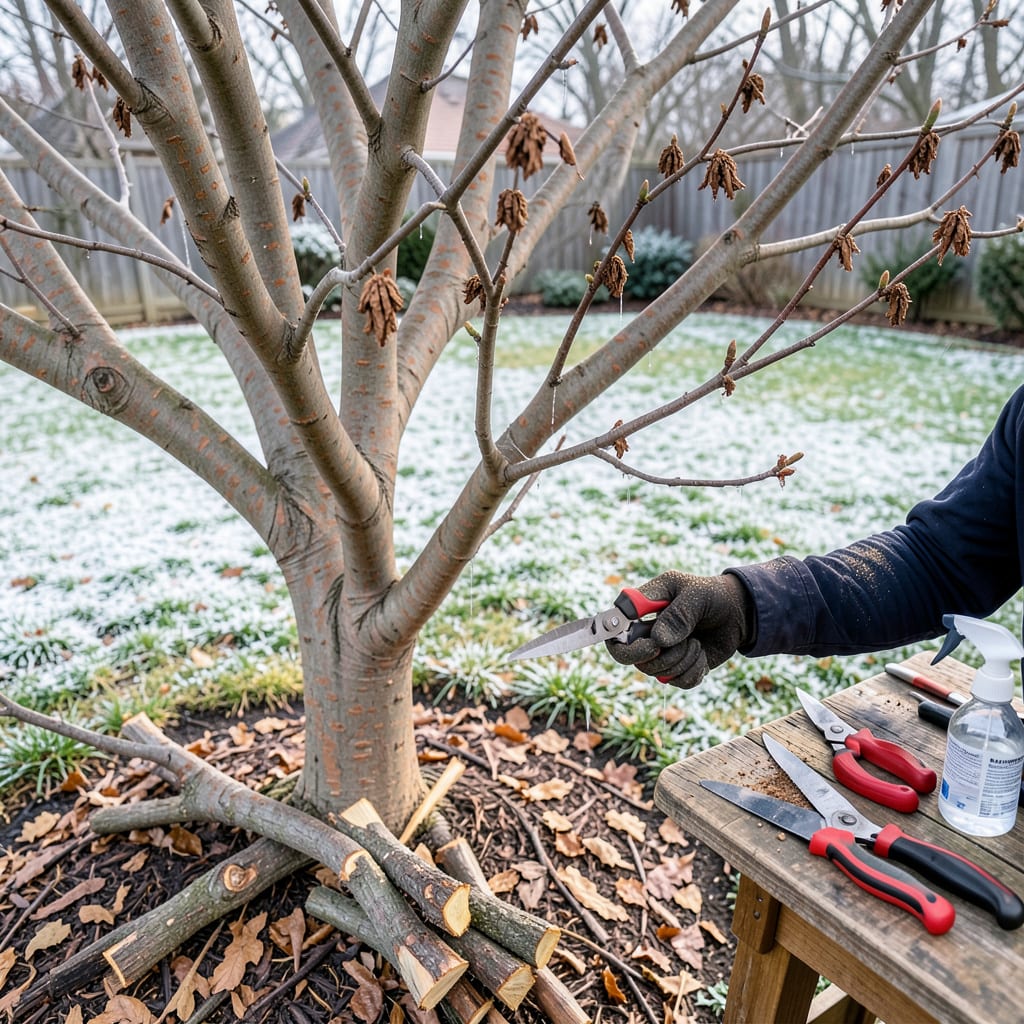
I used to cringe every time I saw a crepe myrtle butchered into stubby nubs—until I learned the right way to prune them. Late winter is the magic window, when the tree is dormant but about to wake up. Done properly, you’ll get twice the blooms next summer without stressing the plant.
The secret isn’t hacking away at random branches. It’s about removing just the right ones: dead wood, crossing limbs, and those pesky suckers at the base. A clean cut at the branch collar (that swollen spot where it meets the trunk) keeps the tree healthy and looking natural. No stubs, no flat tops—just a tree that thrives and flowers like crazy.
📚 In This Guide
Here’s the method I use every winter to keep my crepe myrtles healthy and covered in blooms all summer long.
Late winter is ideal—specifically when the tree is still dormant but the worst frost has passed. I aim for January to early February in most climates. Pruning too early in winter can leave cuts vulnerable to cold damage, while waiting until spring means you’ll cut off new growth.
Look for swollen buds on the branches—that’s your sign the tree is waking up but hasn’t started growing yet. The bark will feel firm, not soft like it does during active growth. If you see tiny leaves beginning to unfurl, you’ve waited too long.
Start by cutting any thin, whippy shoots growing from the base (called suckers) down to ground level. These steal energy from the main tree and won’t produce good blooms. Use clean, sharp bypass pruners for cuts up to ½ inch thick.
Next, identify branches that rub against each other or grow inward toward the center. Remove the weaker of any crossing branches entirely. You’ll see the bark wearing away where branches rub—that’s where disease enters. Stand back occasionally to check your work from different angles.
Crepe myrtles bloom best on new wood, so we want to open up the canopy to let light reach inner branches. Remove about one-third of the oldest stems each year, cutting them right at ground level. Choose the thickest, most crowded stems first.
After thinning, you should be able to see through the tree’s structure when looking at it from the side. Don’t worry if it looks sparse—this encourages vigorous new growth that will produce more flowers. The remaining branches should be spaced 6-12 inches apart along the main trunk.
Never use a chainsaw to “top” the tree—that destroys its natural shape and creates weak growth. Instead, make selective cuts to maintain an open vase shape. Shorten branches by cutting just above an outward-facing bud at a 45-degree angle.
Step back frequently to assess your progress. The goal is a tree that’s wider at the bottom than the top, with branches that angle slightly upward. Avoid creating flat tops or “knuckles” of cut ends—these lead to weak, spindly regrowth that flops under bloom weight.
Rake up all cut material immediately—fallen branches can harbor pests and diseases. I like to shred the smaller branches for mulch (just avoid using any that show signs of disease). Water the tree deeply after pruning to help it recover from the stress.
Mark your calendar to check for new suckers in 6 weeks—they grow fast in spring. The pruning wounds will start to heal when you see the first new leaves emerging, usually within 3-4 weeks depending on your climate. That’s when you’ll know your timing was perfect.
Pruning crepe myrtles isn’t complicated once you understand these key principles—here’s what I’ve learned from years of shaping these trees.
Timing Precision: The January to early February window mentioned in Step 1 is absolutely critical. I once pruned in late December during an unexpected cold snap, and the fresh cuts suffered frost damage that set the tree back. Wait until you see those swollen buds but no leaf growth—that’s your perfect moment. If you’re in a warmer climate where winter is mild, you might shift this window slightly later, but don’t wait until you see actual leaves emerging.
Tool Maintenance: Clean, sharp bypass pruners make all the difference when removing suckers and smaller branches as described in Step 2. I sharpen my pruners before each pruning session and wipe the blades with rubbing alcohol between cuts to prevent disease spread. For branches thicker than ½ inch, switch to loppers rather than forcing your pruners—this prevents jagged cuts that take longer to heal.
Thinning Strategy: When removing one-third of the oldest stems in Step 3, focus on creating that open vase shape from the ground up. I make the mistake of being too timid sometimes, but you really want to be able to see daylight through the tree’s structure when you’re done. This aggressive thinning might look drastic at first, but you’ll be amazed at how much more vigorous the new growth is come spring.
Cutting Technique: The 45-degree angle cut mentioned in Step 4 is important for water runoff, but here’s what nobody tells you—make sure that outward-facing bud you’re cutting above is healthy and plump. I’ve found that choosing a bud that’s slightly lower on the branch often leads to stronger growth than cutting to a higher bud that might be weaker.
Late winter ( January–February) is ideal! Prune before new growth starts but after the last frost. Avoid fall pruning—it can stimulate tender growth vulnerable to cold damage. For dead or damaged branches, remove them anytime to keep your tree healthy.
Never remove more than 25–30% of the canopy in one season. Over-pruning (“crepe murder” ) stresses the tree and reduces blooms. Focus on thinning inner branches, removing suckers, and shaping lightly. If major cuts are needed, spread them over 2–3 years.
“Crepe murder” is hacking trees into stubs (), which ruins their natural shape and weakens them. Proper pruning involves selective cuts to improve structure, airflow, and blooms. Avoid topping—opt for thinning cuts and removing crossing branches instead.
Yes, but choose a dwarf variety (like ‘Pocomoke’ or ‘Chickasaw’) first! For existing trees, gradual size reduction works best. Prune side branches back to a main trunk annually, but avoid shearing the top. Consider alternative plants if space is limited.
Common culprits: Over-pruning (removed flower buds), pruning too late (after spring growth), or poor sunlight (needs 6+ hours daily). Crepe myrtles bloom on new wood, so avoid heavy cuts in fall/winter. Fertilize lightly in spring with a balanced 10-10-10 to encourage blooms.
