
Beautiful Plants For Your Interior
Beautiful Plants For Your Interior
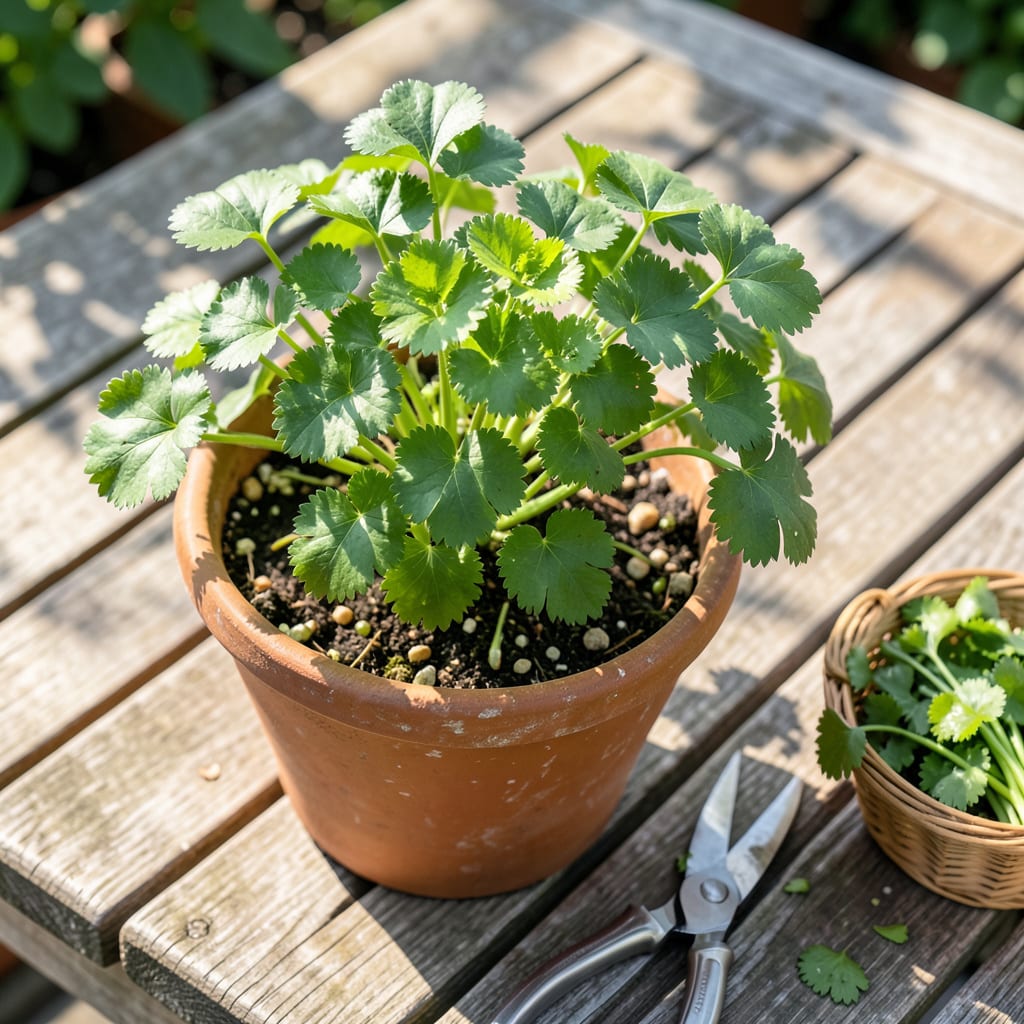
Cilantro doesn’t have to be a one-and-done herb. I used to watch mine bolt after two weeks—until I learned the simple pruning trick that keeps plants producing fresh, flavorful leaves for months. The secret lies in where and when you cut, not just how often.
With clean scissors and a little strategy, you’ll train your cilantro to grow bushier instead of shooting up flowers. I’ll show you exactly which stems to target and how to time your cuts for maximum yield. No fancy tools required—just a few minutes every couple weeks to keep your plants in prime harvesting condition.
📚 In This Guide
Here’s the simple method I use to keep cilantro productive and flavorful for months instead of weeks.
Start pruning when your cilantro plants reach 6-8 inches tall with multiple sets of leaves. You’ll notice the outer leaves are fully developed while the center shows fresh new growth. This is the perfect stage—waiting longer risks the plant bolting (sending up flower stalks) which turns leaves bitter.
Check your plants every 3-4 days during warm weather. Cilantro grows quickly, and you want to catch it before the central stem starts elongating. I always prune in the morning when plants are most hydrated, which helps them recover faster from the stress of cutting.
With clean scissors or pruning shears, cut the outer stems first, leaving the central growth point intact. Make your cuts 1/4 inch above where the leaf meets the main stem—this prevents stubble that can rot. Never remove more than one-third of the plant at once, or you’ll shock it.
Focus on harvesting the larger, older leaves while leaving the younger inner leaves to continue growing. I like to work my way around the plant in a circle, which maintains its natural shape. You’ll feel the stems snap cleanly when you’ve cut at the right spot.
After your initial pruning, you’ll notice new side shoots emerging within 5-7 days. This is where the magic happens—each time you prune properly, the plant responds by branching out. For the bushiest plants, I make a second pruning 2 weeks later, always following the same outer-leaf-first approach.
The key is consistency. Regular pruning prevents the plant from putting energy into flowering and instead directs it toward leaf production. You’ll know you’re doing it right when you see multiple new stems growing from the base rather than one tall central stalk.
Even with perfect pruning, cilantro will eventually bolt in warm weather. The first sign is the appearance of thin, feathery leaves at the top of the plant. When you see this, it’s time for more aggressive pruning—cut back the entire plant by half its height to delay flowering.
If you do find flower buds forming, pinch them off immediately. I’ve found that removing flowers can buy you an extra 2-3 weeks of harvestable leaves. Once the plant fully bolts, the leaves become bitter, so it’s better to pull it and replant at that point.
For continuous production, plan to prune your cilantro every 10-14 days throughout the growing season. Each harvest should yield about 1/4 cup of leaves per plant if you’re doing it correctly. I like to keep a small container in the kitchen for immediate use and freeze any excess in ice cube trays with water.
Remember that cilantro grows best in cool weather (below 80°F). In hot climates, you’ll need to prune more frequently and may want to provide afternoon shade. The plants will tell you what they need—yellowing lower leaves mean too much water, while wilting in the heat means they need protection from intense sun.
Mastering these simple techniques will transform your cilantro plants from short-lived to season-long producers.
Timing is Everything: The 6-8 inch height mentioned in Step 1 isn’t arbitrary—this is when plants have enough foliage to recover from pruning but haven’t started diverting energy to flowering. I’ve found that waiting even a few extra days beyond this window can trigger early bolting, especially in warm climates. Check plants every 3-4 days as suggested, because cilantro can grow surprisingly fast when conditions are right.
Precision Cutting: That 1/4 inch measurement in Step 2 makes all the difference. Cutting too close to the stem creates stubble that can rot, while cutting too far leaves unsightly stems. I use the width of my fingernail as a guide—it’s remarkably close to 1/4 inch. Also, always make clean cuts rather than tearing stems, which creates jagged edges that invite disease.
Morning Advantage: While not explicitly stated in the steps, I always prune in the morning when plants are most turgid (hydrated). This gives them the entire day to recover before the stress of nighttime. You’ll notice the cut stems seal over more quickly when pruned in morning versus evening. The plants will actually look perky again by afternoon if done early.
Bolting Prevention: When you see those thin, feathery leaves mentioned in Step 4, act immediately. This is the plant’s first sign it’s shifting to reproductive mode. I’ve successfully delayed bolting by an extra month in hot weather by being aggressive with the half-height cut recommended. Combine this with pinching off any flower buds, and you’ll extend your harvest significantly.
Regular pruning (every 2-3 weeks) encourages bushier growth. Just avoid cutting more than one-third of the plant at once to prevent stress. Focus on outer stems first, leaving the center intact for regrowth.
Prune in the cool morning hours to reduce wilting. Start when plants reach 4–6 inches tall, and continue before flowering (bolting) begins. If it bolts, snip flower stems ASAP to extend leaf production.
Bolting is often heat-related. Try these fixes:
Yes! Clean, sharp kitchen scissors work fine for small harvests. Sterilize blades with rubbing alcohol to prevent disease. For thicker stems, pruning shears give cleaner cuts with less damage.
Pruning = strategic cuts to shape the plant and delay bolting. Harvesting = taking leaves/stems for immediate use. Both can overlap! For harvesting, snip outer leaves first; for pruning, trim leggy growth or flower buds.
