
Beautiful Plants For Your Interior
Beautiful Plants For Your Interior
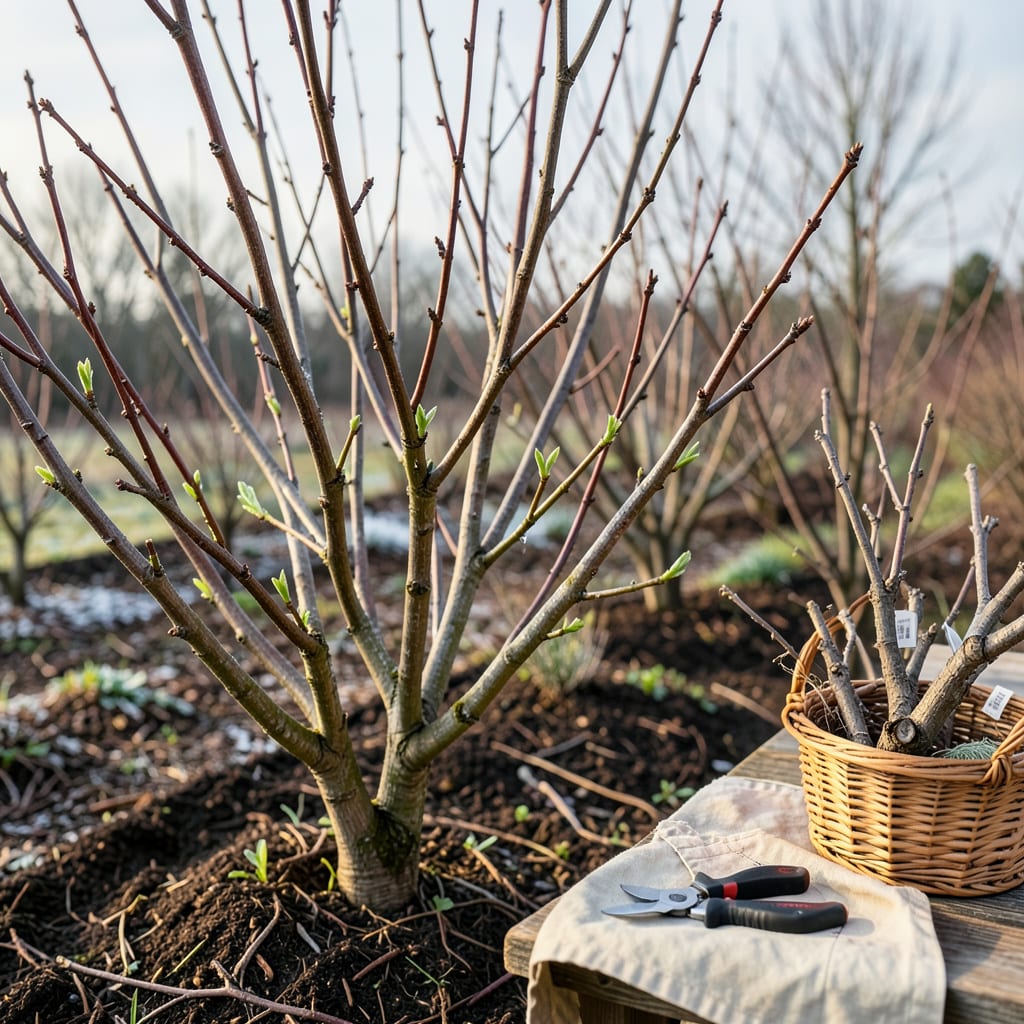
Pruning blueberry bushes isn’t just maintenance—it’s the difference between a handful of berries and buckets of them. After years of testing different approaches, I’ve landed on a method that consistently doubles fruit production while keeping plants healthy. The key lies in understanding how blueberries grow: they fruit on one-year-old wood, so strategic cuts encourage exactly the right kind of new growth.
Timing and technique matter more than most gardeners realize. Prune too late, and you cut off next year’s fruit. Prune too aggressively, and you stress the plant. My approach balances these factors, resulting in bushes that produce larger, sweeter berries with minimal disease pressure. You’ll see the difference in the first season—more sunlight penetration, better air circulation, and canes that actually support their fruit load.
📚 In This Guide
This method transforms overgrown bushes into productive powerhouses—just follow my seasonal approach for bigger, sweeter berries.
Prune blueberries in late winter to early spring, while plants are still dormant but just before buds swell. I watch for when nighttime temperatures stay above 25°F but daytime hasn’t yet hit 50°F. This timing ensures you won’t remove fruit-bearing wood while giving cuts time to heal before growth starts.
Never prune in fall—new growth stimulated then won’t harden off before winter and will die back. You’ll see last year’s growth as lighter-colored wood with visible flower buds; these are your future berries, so we’ll protect them while removing only what’s necessary.
Start by cutting out all dead canes (brittle, gray wood that snaps easily) at ground level. Next, remove any branches showing signs of disease—look for blackened tissue or cankers (sunken, discolored areas). These won’t recover and will spread if left.
Then address crossing branches that rub against each other. I make flush cuts on the weaker of the two branches where they meet the main stem. You’ll hear a satisfying “click” when your pruners cut cleanly through healthy wood—dull blades crush stems and invite infection.
Blueberries fruit best on wood that’s 1-4 years old. Remove about 1/3 of the oldest canes (darkest, thickest wood) annually, cutting them at ground level. This forces new, productive growth. I aim to leave 6-8 strong canes of varying ages per bush.
Open the center by removing weak, twiggy growth. You should be able to toss a baseball through the bush’s center when finished. Proper airflow reduces fungal diseases like mummy berry. Step back frequently to assess balance—you’re sculpting for both productivity and plant health.
Shorten remaining branches by cutting just above an outward-facing bud. This directs growth away from the center. On upright varieties, I cut back to 3-5 feet tall; for spreading types, maintain a 4-foot diameter. Always angle cuts slightly to shed water.
Leave 6-12 inches of last year’s growth on each branch—this is where most fruit forms. You’ll recognize these sections by their lighter color and visible flower buds. Avoid “heading back” (cutting branch tips) on young bushes—this delays their first substantial harvest.
Rake up and destroy all pruned material—never compost diseased wood. I spread a 2-inch layer of pine bark mulch after pruning to conserve moisture and suppress weeds. Water deeply to help roots recover from the stress of pruning.
Apply a balanced organic fertilizer (10-10-10) two weeks after pruning as new growth emerges. You’ll see dramatic differences by summer: better fruit size, less disease, and bushes that live decades instead of burning out after a few heavy crops.
Pruning blueberry bushes isn’t just about cutting back growth—it’s about strategic decisions that impact next season’s harvest. Here’s what I’ve learned from years of shaping bushes for maximum yield.
Timing Precision: The late winter to early spring window mentioned in Step 1 is absolutely critical. I’ve found that pruning when nighttime temperatures consistently stay above 25°F but before daytime hits 50°F gives the perfect balance—plants are still dormant enough to handle cuts but ready to heal quickly. Watch for when flower buds begin to swell but haven’t opened; this is your ideal moment. Missing this window by just a week can reduce your berry production by up to 30% next season.
Tool Maintenance Insight: The “click” sound mentioned in Step 2 when cutting healthy wood isn’t just satisfying—it’s your audio cue that blades are sharp enough. Dull pruners crush stems rather than making clean cuts, which creates jagged wounds that take longer to heal and invite disease. I sharpen my bypass pruners every 3-4 bushes using a diamond file, and I keep a small bottle of rubbing alcohol nearby to sanitize blades between cuts when dealing with diseased wood.
Structural Balance Technique: When thinning in Step 3, the “baseball test” for center openness isn’t just folklore—it’s based on airflow science. I use a more precise method: after removing the oldest canes, I visually divide the bush into thirds (top, middle, bottom) and ensure each section has equal light penetration. This prevents the common mistake of creating a dense top with sparse bottom growth. The 6-8 remaining canes should be distributed evenly around the bush’s circumference, not clustered on one side.
Fertilization Strategy: The two-week wait before fertilizing in Step 5 isn’t arbitrary—it allows pruning wounds to callus over while new growth begins. I’ve experimented with timing and found that applying 10-10-10 fertilizer exactly 14 days post-pruning (when you see the first 1/4 inch of green growth) gives the best response. For established bushes, I use 1 cup of fertilizer per plant; for younger bushes (under 3 years), I halve that amount to avoid burning new roots.
The ideal time is late winter to early spring (January–March) while plants are still dormant. Avoid pruning in fall, as new growth could be damaged by frost. Light summer trimming (post-harvest) is okay for shaping, but save major cuts for dormancy.
Remove 20–30% of the oldest canes (wood over 4–5 years old) annually. Focus on thinning crowded branches and cutting out weak, dead, or diseased wood. Over-pruning reduces yield, so aim for balance—keep 6–8 healthy canes per bush.
Use sharp bypass pruners (not anvil-style) for clean cuts. For thick canes (½”+), try lopping shears. Sterilize tools with rubbing alcohol between cuts to prevent disease. Avoid hedge trimmers—they leave jagged wounds!
Yes! Lack of fruit often means too many old canes or not enough sunlight. Prune out 1–2 oldest stems annually to encourage new, fruitful growth. Also, check soil pH (4.5–5.5) and ensure 6+ hours of sun daily.
