
Beautiful Plants For Your Interior
Beautiful Plants For Your Interior
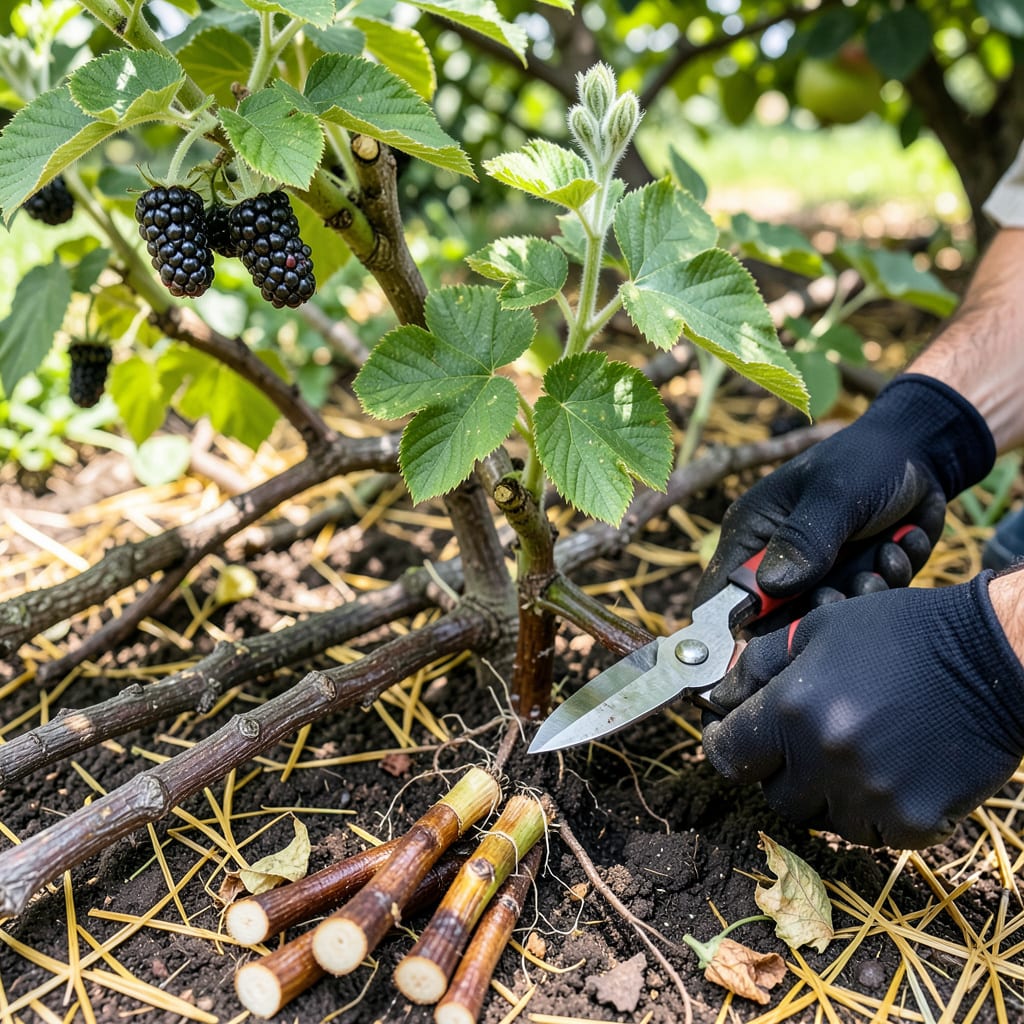
Blackberry bushes left unpruned become tangled jungles with tiny, sour berries. I learned this the hard way after my first patch produced more thorns than fruit. Proper pruning transforms scraggly canes into productive plants that yield plump, sweet berries by the bucketful—every season.
The secret lies in understanding which canes to cut and when. Do it right in late winter, and you’ll double next year’s harvest while preventing disease. No fancy tools required—just sharp pruners, gloves, and 20 minutes per bush. The difference between wild thickets and orderly, fruit-loaded plants is simpler than you think.
📚 In This Guide
Pruning transforms scraggly canes into productive plants—here’s how I maximize fruit while keeping bushes manageable.
Start by locating last year’s fruiting canes—they’re the thick, brown, woody stems that produced berries this season. These canes won’t bear again and should be removed completely at ground level. I use a clean, sharp bypass pruner for this to prevent tearing the plant tissue.
Look for any diseased or damaged canes (black spots, cracks, or weak growth) and remove those too. You’ll also want to thin out the weakest new canes, keeping only the 4-6 strongest green canes per plant. This prevents overcrowding and ensures energy goes to fruit production.
For erect blackberry varieties, cut the remaining new canes back to about 3-4 feet tall. This encourages lateral branching where fruit develops. With trailing varieties, I let the new canes grow full length but train them along a trellis system, spacing them about 6-8 inches apart.
Create an open center by removing any canes growing inward. You want sunlight and air to reach the center of the plant—this prevents fungal diseases and helps berries ripen evenly. I aim for a vase-like shape where all canes angle slightly outward from the base.
Prune immediately after harvest in summer for everbearing varieties, or in late winter (just before bud break) for summer-bearing types. I never prune in fall because new growth stimulated then won’t harden off before winter, making plants vulnerable to cold damage.
For summer-bearing varieties, I make my final cuts in early March when buds begin to swell but before leaves emerge. This timing minimizes stress while still allowing me to shape the plant before active growth begins. You’ll see white or green tissue inside healthy canes when you cut them.
Remove all pruned material from the garden immediately—old canes can harbor pests and diseases. I either burn the debris or dispose of it in the trash (never compost diseased plant material). After pruning, I apply a 2-3 inch layer of mulch around the base to protect roots and conserve moisture.
Check your tools between cuts if you’re working with multiple plants. A quick wipe with rubbing alcohol prevents spreading any potential diseases. I also make a note in my gardening journal about which canes I kept—it helps track productivity for next year’s pruning decisions.
Pruning blackberry bushes doesn’t have to be intimidating—these practical insights will help you avoid common pitfalls while maximizing your harvest.
Tool Selection: Using the right pruners makes all the difference. I recommend bypass pruners rather than anvil-style because they make cleaner cuts that heal faster. Keep them sharp too—a dull blade crushes stems instead of cutting cleanly, which can invite disease. Wipe blades with rubbing alcohol between plants as mentioned in Step 4 to prevent spreading any potential issues.
Cane Identification: It’s easy to confuse old fruiting canes with new growth, especially in early spring. Here’s what I look for: last year’s canes are thicker, darker brown, and often have peeling bark, while new canes are green and flexible. If you’re unsure, make a small test cut—healthy canes will show white or light green tissue inside. This matches exactly what you’ll see when following Step 3’s timing recommendations.
Shape Matters: The vase-like shape mentioned in Step 2 isn’t just for looks—it’s critical for plant health. When canes cross or rub against each other, they create wounds that invite disease. I use soft plant ties to gently spread canes apart if they’re too close, maintaining that 6-8 inch spacing for trailing varieties. For erect types, cutting to 3-4 feet tall might seem drastic, but it forces the plant to put energy into fruit-bearing lateral branches rather than just growing taller.
Seasonal Timing: That early March window mentioned in Step 3 is ideal because the plants are still dormant but about to wake up. I’ve found that pruning too early in winter can stimulate growth that gets damaged by late frosts, while pruning too late means you’re cutting off potential fruit buds. Watch for when buds just begin to swell—that’s your perfect moment to make those final cuts before leaves emerge.
Prune floricane-bearing varieties (like ‘Thornless Evergreen’) right after harvest in summer, while primocane-bearing types (like ‘Prime-Ark Freedom’) need late winter pruning (Feb–March). Avoid fall pruning—it can stimulate tender new growth vulnerable to frost damage.
Remove all dead, diseased, or weak canes at ground level. For floricanes, cut back fruited canes entirely. Thin primocanes to 4–6 strongest stems per plant, shortening them to 3–4 feet tall to encourage branching. Over-pruning reduces yield!
Not recommended! Most blackberry varieties have sharp thorns that can cause scratches or infections. Wear thick gardening gloves (like leather or nitrile-coated) and long sleeves. Thornless varieties (e.g., ‘Natchez’) are safer but may still have prickly stems.
Common causes:
Blackberries fruit on second-year canes (floricanes) or first-year canes (primocanes), depending on the variety. Raspberries are always floricanes (summer-bearing) or primocanes (fall-bearing). Blackberries also need more aggressive thinning (fewer canes per plant) than raspberries.
