
Beautiful Plants For Your Interior
Beautiful Plants For Your Interior
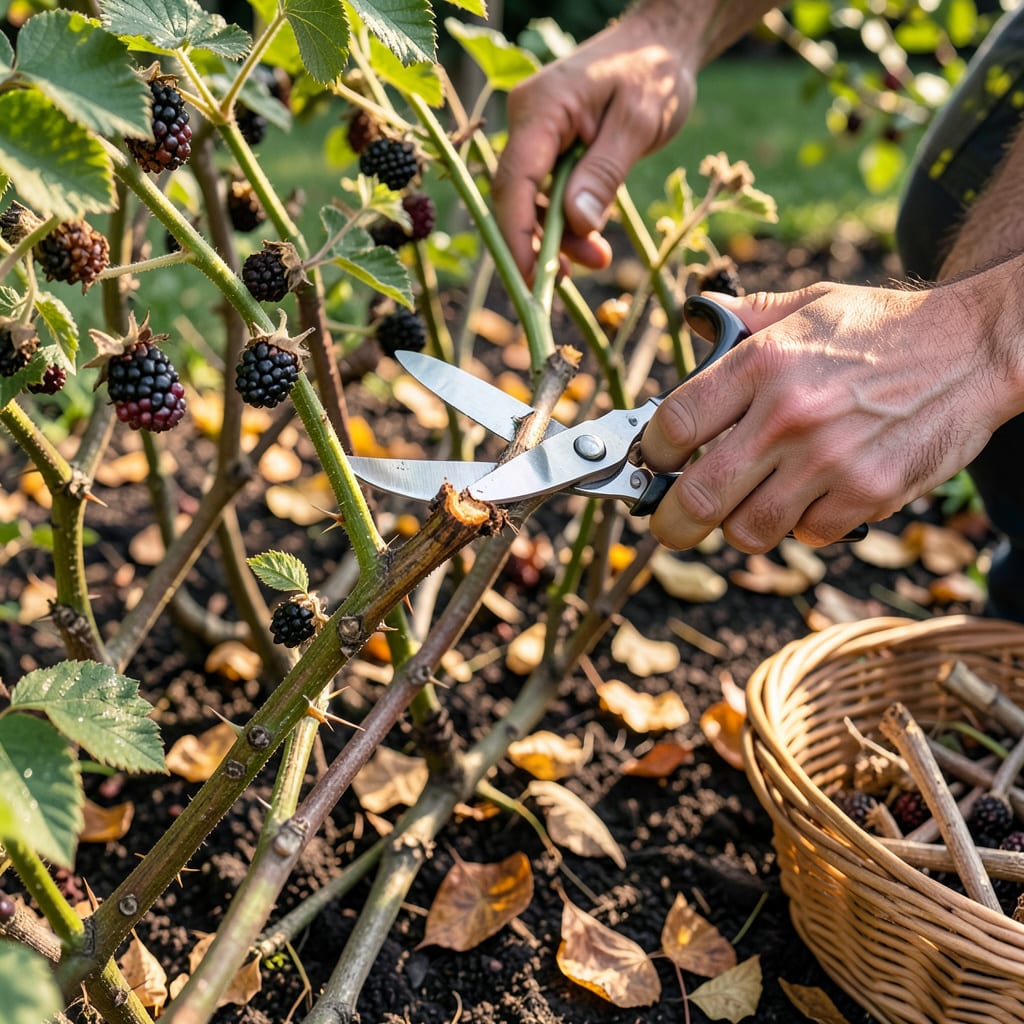
Blackberry bushes left unpruned turn into tangled messes with tiny, sour berries. I learned this the hard way after my first season yielded more thorns than fruit. Proper pruning transforms wild canes into productive plants that deliver pint after pint of sweet, plump berries—every single year.
The timing and technique depend on your blackberry type, but the payoff is universal: healthier plants, easier harvesting, and fruit that ripens faster. We’re talking about doubling your harvest with just an hour of focused work at the right time. No fancy tools required—just sharp pruners, a little know-how, and the courage to make those first cuts.
📚 In This Guide
This straightforward method ensures healthier canes and dramatically improves your harvest quality year after year.
Blackberries produce fruit on second-year canes (called floricanes), so your first task is distinguishing these from new first-year canes (primocanes). Look for thick, woody brown stems—those are your floricanes that fruited last season. They’ll never produce again, so cut them down to ground level using clean pruners.
Don’t hesitate to remove entire dead canes. I run my hand along each stem—if it’s brittle, hollow-sounding, or shows no green when scratched with a fingernail, it’s spent. Leaving these invites disease and steals energy from productive growth. You should remove about one-third to half of the total canes during this step.
Now focus on the remaining floricanes that will fruit this year. Thin them to 4-6 of the strongest canes per plant, removing weaker or crossing stems. Space the keepers about 6 inches apart along your trellis or support system. This opens the center for airflow, which prevents fungal issues like powdery mildew.
Shorten the lateral branches (side shoots) on these floricanes to about 12-18 inches long. Make cuts just above an outward-facing bud—this encourages the cane to grow wider rather than taller. You’ll see the buds as small bumps along the stem; they’re easiest to spot in late winter when they start swelling slightly.
The green, flexible canes growing from the base are this year’s primocanes—they’ll fruit next season. Select 4-6 of the most vigorous to keep, removing all others at ground level. Tie these to your trellis in a fan shape, spacing them 8-12 inches apart as they grow.
Here’s the thing—these primocanes will try to grow 6-8 feet tall by summer’s end. When they reach about 3 feet high, pinch off the top 2-3 inches. This forces branching, which means more fruiting sites next year. You’ll notice new side shoots forming within 2-3 weeks after pinching.
Rake up and remove all cut canes and leaf debris from around the plants. I use a tarp to collect everything—this prevents spores from overwintering in the soil. Blackberries are particularly susceptible to anthracnose and cane blight, both of which thrive in wet, messy conditions.
After pruning, spray the remaining canes and soil with a copper fungicide or neem oil solution. Do this on a dry, calm day when temperatures will stay above 40°F for at least 24 hours. The solution should lightly coat all surfaces but not drip—you’re creating a protective barrier, not soaking the plants.
Check your plants weekly as new growth emerges. Remove any suckers (shoots coming up outside the main plant area) immediately—they steal energy from your selected canes. Also watch for “blind wood” (canes with no buds) and remove these entirely; they’ll never produce fruit.
By mid-summer, your primocanes will be vigorous. Tie them to the trellis as they grow, keeping them separate from this year’s fruiting floricanes. I use soft plant ties that won’t cut into the stems. You’ll know you’ve done it right when each cane has its own space and the plant’s center remains open to sunlight and airflow.
Pruning blackberries is simpler than it seems once you understand the plant’s growth habits. Here’s what I’ve learned from years of trial and error.
Identification Tip: In Step 1, when distinguishing floricanes from primocanes, here’s a trick I use: floricanes have peeling bark and often still have remnants of last year’s fruit stems. If you’re unsure, make a small scratch test – floricanes will show brown underneath while primocanes reveal green. This simple test prevents accidentally removing next year’s fruit producers.
Pruning Technique: For Step 2, when thinning to 4-6 canes per plant, I’ve found that selecting canes with different heights creates better airflow. Space them like spokes on a wheel, with the tallest in the center and shorter ones toward the outside. This arrangement maximizes sunlight exposure to all parts of the plant throughout the day.
Timing Secret: The 3-foot height mentioned in Step 3 for pinching primocanes is crucial. I mark this height on my pruners with a piece of colored tape as a visual guide. When the new canes reach this mark, I pinch immediately – waiting even a few days can mean missing the optimal branching window. The 2-3 weeks mentioned for new side shoots to form is accurate, and you’ll see the most vigorous growth if you pinch during warm weather.
Disease Prevention: Regarding Step 4’s fungicide application, I’ve learned that early morning is the best time to spray when temperatures will stay above 40°F. The cooler morning air helps the solution adhere better to the canes. Use a pump sprayer rather than a hose-end sprayer for more precise coverage – you want a fine mist that coats all surfaces without dripping.
Prune erect blackberries in late winter (February–March) before new growth starts. For trailing varieties, prune after harvest in summer and again in winter. Avoid fall pruning—it can stimulate tender growth vulnerable to frost. Always prune on a dry day to reduce disease risk.
Skipping pruning leads to overcrowded canes, smaller fruit, and reduced yields. Old canes (floricanes) stop producing after 2 years, while unpruned primocanes grow weak and tangled. Pests and diseases thrive in dense growth, so pruning keeps plants healthy and productive!
No! Use sharp bypass pruners (for canes ≤½” thick) or lopping shears (for thicker stems). Hedge trimmers crush stems, inviting disease. Sterilize tools with rubbing alcohol between cuts to prevent spreading pathogens. Avoid dull blades—they tear bark.
Blackened canes often signal cane blight, a fungal disease entering through fresh cuts. Prevent it by pruning in dry weather, sterilizing tools, and applying a copper fungicide to cuts. Remove infected canes immediately to stop spread.
