
Beautiful Plants For Your Interior
Beautiful Plants For Your Interior
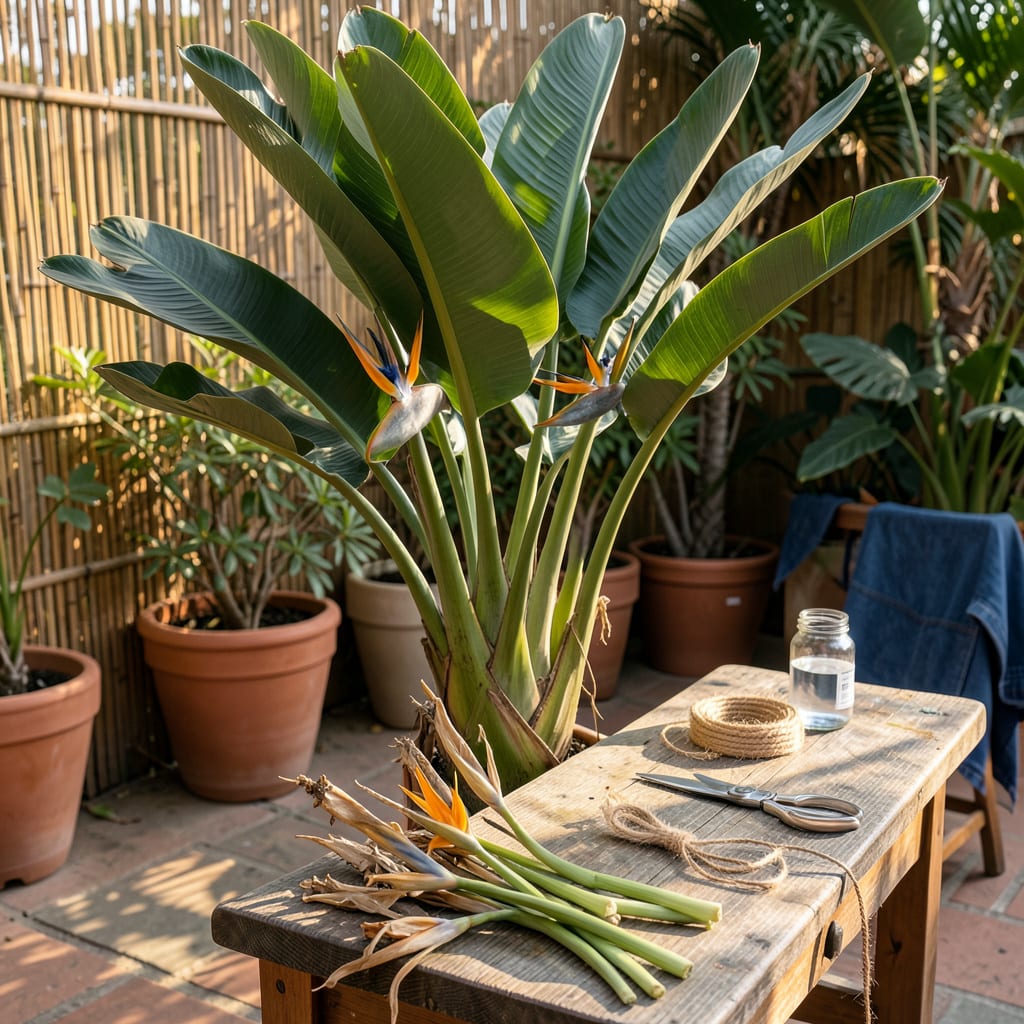
That first time I pruned my birds of paradise, I nearly chickened out. 🌿 The thick stems and dramatic leaves make it feel like you’re giving the plant a bad haircut—but done right, it’s the secret to more flowers and healthier growth. These tropical stunners actually thrive on strategic pruning, redirecting energy from ragged old leaves to stunning new blooms.
Timing matters: wait until after flowering (late winter or early spring for most zones), when the plant’s dormant but ready to push new growth. You’ll need just three things: sharp loppers for thick stems, gloves to protect against sap irritation, and 10 minutes of courage. The payoff? A plant that looks intentional, not overgrown, with flower stalks that stand tall instead of flopping.
📚 In This Guide
This simple method keeps your plants thriving with more blooms and healthier foliage—no guesswork involved.
Start by examining your plant for dead or brown leaves—these are crispy, fully dried out, and often hang limply. Next, look for damaged stems with splits, cracks, or blackened areas. I always remove these first because they drain energy from healthy growth.
Check for spent flower stalks too. These are the thick, woody stems that held blooms but now look dried and papery. Don’t cut anything green and firm yet—that’s where future flowers will emerge. If you see leaves with just brown tips, leave them for now; we’ll address those differently.
Use sharp, clean pruners to cut dead leaves and stems at their base, where they meet the main plant. For flower stalks, trim them down to about 6 inches above the ground—this prevents stubs that collect water and rot. Angle your cuts slightly so water runs off instead of pooling.
Here’s the thing—don’t go overboard with green leaves. If a leaf is mostly green with just a brown edge, leave it. Birds of paradise pull nutrients from aging foliage to fuel new growth. Only remove what’s clearly dead or diseased. I like to step back after each cut to check the plant’s shape and balance.
If your plant has dense clumps of old stems at the base, thin out the oldest ones. These are usually the thickest, woodiest stems with no new growth. Remove no more than 1/3 of the total stems in one session to avoid shocking the plant.
Focus on opening up the center to improve air circulation—this prevents fungal issues and lets light reach inner leaves. You’ll notice the plant looks lighter and more upright immediately. I always save this step for late winter or early spring, just before the growing season kicks in.
Rake up all the debris around the base to prevent pests and disease. I like to wipe my pruners with rubbing alcohol between cuts if I’ve removed diseased material—it’s an extra step, but it protects the rest of the plant. Water the base lightly after pruning to help the plant recover.
Watch for new growth over the next 4-6 weeks. You’ll see fresh green shoots emerging from the center, and the remaining leaves will look perkier. If any cut stems show signs of rot (soft, blackened edges), trim them back further. Healthy pruning always leads to a burst of vibrant, flower-packed growth.
Let me share the little details that transform basic pruning into a growth-boosting power move for your plants.
Tool Prep That Matters: Before you start, wipe your pruners with rubbing alcohol—this prevents spreading disease between cuts. I keep a small spray bottle handy to clean between trimming different plants. Sharp blades are non-negotiable too; dull pruners crush stems instead of making clean cuts, which invites rot. Test sharpness on a scrap piece of paper—if it doesn’t slice cleanly, sharpen your blades first.
Timing Secret: That 4-6 week monitoring window in Step 4 is your golden opportunity. I’ve noticed the most explosive new growth happens around week 3 post-pruning. Mark your calendar to check for fresh shoots then—this is when you’ll see if your cuts were perfectly placed. If you don’t see new growth by week 4, your plant might need a nutrient boost or more sunlight.
Cut Placement Hack: When trimming flower stalks to 6 inches in Step 2, look for the tiny raised bumps (nodes) along the stem. Cut just above one of these—it’s where new growth will emerge. I use my fingernail to feel for these bumps before making the cut. This ensures you’re not leaving a stub that could rot or cutting so low you remove potential new shoots.
What to Watch For: After pruning, keep an eye out for “bleeding” stems—when sap oozes from cuts. This is normal for birds of paradise but can attract pests. If you notice this, dab the cut with a damp paper towel to remove sap, then sprinkle a pinch of cinnamon on the wound (it’s a natural antifungal). The bleeding should stop within an hour.
Prune in early spring (just before new growth starts) or after flowering in late fall. Avoid winter pruning—cold stress can weaken the plant. In warm climates (Zones 9-11), light trimming can be done year-round, but major cuts should align with these seasons for optimal recovery.
Yes! Cut back tall stems to your desired height, but never remove more than ⅓ of the plant at once. Focus on older, woody stems first. Regular pruning encourages bushier growth, but drastic cuts may delay blooming for a season.
Pruning removes entire stems, leaves, or damaged growth to shape the plant or improve health. Deadheading is snipping spent flower stalks (cut at the base) to redirect energy to new blooms. Both boost vitality but serve different purposes!
Over-pruning (especially cutting flower-bearing stems) or pruning at the wrong time (e.g., late summer) can delay blooms. Ensure your plant gets full sun (6+ hours) and balanced fertilizer (10-10-10). Patience is key—new flowers may take 1-2 seasons to return.
Try these first:
