
Beautiful Plants For Your Interior
Beautiful Plants For Your Interior
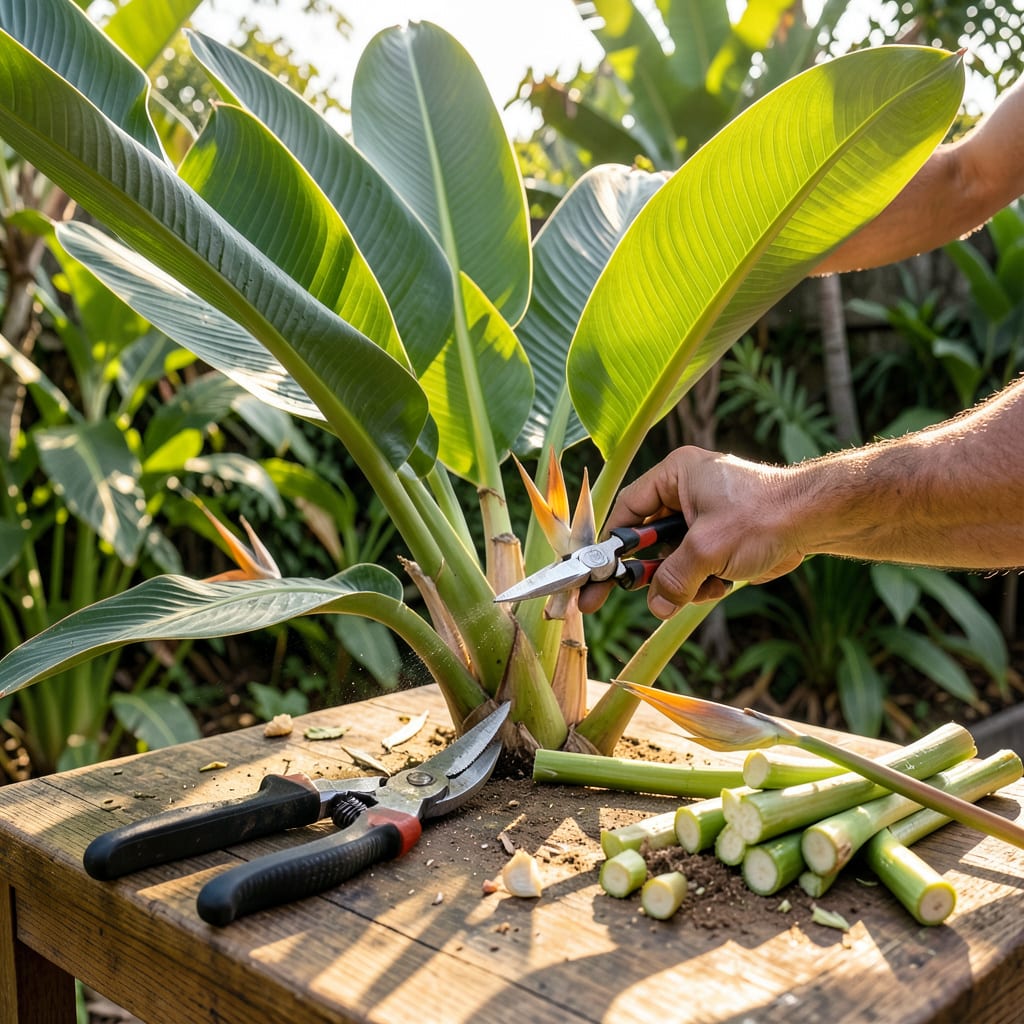
That first time I pruned my bird of paradise, I nearly chickened out. The leaves were massive, the stems looked indestructible, and I was convinced I’d ruin the plant. Spoiler: I didn’t—and neither will you. This isn’t surgery; it’s a straightforward reset that rewards you with bigger blooms and a plant that actually fits your space.
Here’s the thing—these tropical stunners want to be pruned. Left unchecked, they turn into leggy, leaf-choked monsters that flower less and less. Do it right, and you’ll get a bushier plant with more orange-and-blue blooms than ever. The best part? You only need three tools and about 20 minutes to transform yours.
📚 In This Guide
This method ensures vigorous growth and spectacular blooms—all while keeping your plant structurally sound for years.
Prune bird of paradise in early spring just before new growth begins, or immediately after flowering if you’re in a frost-free climate. This timing prevents stress during active growth periods while allowing wounds to heal quickly. I use sterilized bypass pruners (never anvil-style) and loppers for thicker stems—dull blades crush tissue and invite disease.
Inspect the plant first for dead, damaged, or crossing stems. You’ll recognize dead growth by its dry, brown color and brittle texture, while healthy stems remain firm and green. Mark problem areas with garden twine if needed—once you start cutting, it’s easy to lose track of your plan.
Begin by cutting dead stems at their base where they meet the main trunk. For diseased material (look for blackened tissue or oozing lesions), remove 6-8 inches below the affected area to ensure complete eradication. Always cut at a 45-degree angle just above an outward-facing bud—this prevents water pooling on the wound.
Real talk: Don’t hesitate with dead material. I’ve seen gardeners leave “just a little” dead growth, only to have it become an entry point for fungal infections. Collect all debris immediately and dispose of it in the trash (not compost)—many bird of paradise diseases persist in organic matter.
Remove one-third of the oldest stems at ground level, focusing on those growing inward or rubbing against others. This aggressive thinning might seem drastic, but it stimulates new basal growth and improves air circulation—which is critical for preventing bacterial leaf spot. You’ll notice the remaining stems thicken noticeably within weeks.
Here’s the thing—bird of paradise blooms on new growth, so this step directly impacts flower production. I prioritize removing stems thicker than 1 inch in diameter that haven’t flowered in two seasons. These are energy sinks that won’t contribute to next year’s display.
Cut back remaining stems by one-third to one-half their length, making cuts just above a leaf node. This encourages branching and prevents top-heavy plants from splitting in wind. For mature specimens, I maintain a balanced vase shape—wider at the base than the top—to ensure stability during summer storms.
Watch for the plant’s natural growth pattern. Bird of paradise produces flowers on the outer edges of clumps, so avoid shearing the entire plant uniformly. Instead, create a staggered height profile where outer stems are slightly longer than inner ones—this maximizes bloom potential while maintaining structure.
Rake all debris from the plant’s base—decaying matter attracts pests like mealybugs that target stressed plants. Apply a thin layer of mulch (no more than 2 inches) around the base, keeping it 3 inches away from the trunk to prevent rot. Water deeply after pruning to help the plant recover from shock.
You’ll see new growth emerge within 3-4 weeks if pruned correctly. Monitor for wilting or blackened cut edges, which indicate either over-pruning or fungal infection. I spray cuts with neem oil as a preventive measure—it’s the only time I recommend proactive fungicide use for this otherwise resilient plant.
Pruning bird of paradise properly makes all the difference between a struggling plant and one that bursts with vibrant blooms year after year.
Tool Preparation: Always sterilize your bypass pruners and loppers with rubbing alcohol before starting. I learned the hard way that even microscopic pathogens transferred from other plants can infect fresh cuts. Between cuts on different stems, wipe blades with alcohol-soaked cloth to prevent cross-contamination—this simple step prevents more fungal issues than any fungicide.
Disease Prevention: When removing diseased material in Step 2, that 6-8 inch buffer below the affected area isn’t arbitrary. Many bird of paradise pathogens travel internally through the plant’s vascular system. Cutting too close often leaves invisible infected tissue that will resurface later. I mark my cutting point with chalk before making the final cut to ensure accuracy.
Structural Balance: The vase shape mentioned in Step 4 isn’t just aesthetic—it’s structural engineering. I’ve seen mature plants split during summer storms when their center of gravity was too high. After cutting stems back by one-third to one-half, step back frequently to assess balance. The widest point should be about two-thirds up from the base, not at the top.
Recovery Monitoring: That 3-4 week window for new growth in Step 5 is your diagnostic timeline. If you don’t see fresh green shoots by week 4, investigate immediately. Check cut surfaces for blackening (fungal) or softness (bacterial). I keep a spray bottle of diluted neem oil (1 tsp per quart of water) ready for immediate treatment at the first sign of trouble.
Prune in late winter or early spring (February–March) before new growth starts. This timing minimizes stress and encourages vibrant blooms. Avoid pruning in fall or extreme heat—it can weaken the plant.
Yes! Cut back tall stems just above a leaf node to reduce height. Focus on older canes first—this promotes bushier growth. Avoid removing more than ⅓ of the plant at once to prevent shock.
Over-pruning or cutting flower stalks too early can delay blooms. Ensure it gets full sun (6+ hours) and fertilize with a low-nitrogen, high-phosphorus mix. Patience pays—blooms may take a season to return!
Remove brown, torn, or diseased leaves year-round using sterilized shears. This prevents pests and improves airflow. Just avoid heavy pruning outside the ideal season.
Try tying up wayward stems with garden tape or removing only spent flower stalks. For overgrown plants, divide the clump instead of pruning—this rejuvenates growth without drastic cuts.
