
Beautiful Plants For Your Interior
Beautiful Plants For Your Interior
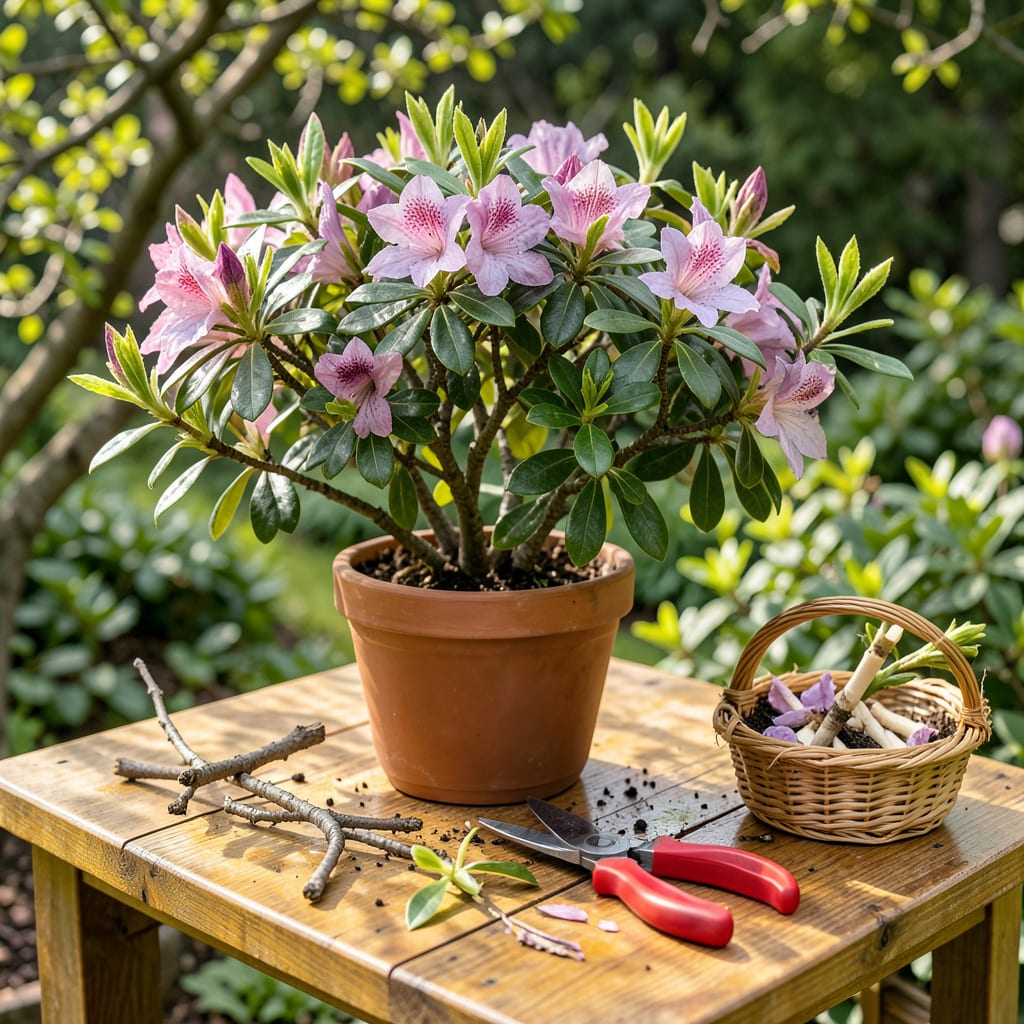
Three strategic snips can double your azalea blooms next spring. I learned this the hard way after years of hacking at my shrubs with no real plan—until I discovered the right timing and technique. Pruning azaleas isn’t about drastic cuts; it’s about gentle shaping at exactly the right moment in their growth cycle.
Do it right, and you’ll get bushier plants with more flowers than ever. The key is working immediately after the blooms fade—usually late spring—when the plant is primed to push new growth. No fancy tools required: just sharp pruners, a little patience, and knowing where to make each cut. Here’s how to do it without stressing the plant.
📚 In This Guide
Here’s my straightforward method for keeping azaleas healthy and blooming beautifully—no complicated techniques required.
Timing is everything with azaleas. Prune immediately after they finish blooming in spring, typically between late May and early July depending on your climate. You’ll know they’re done when 90% of flowers have faded and new leaf growth begins at the branch tips.
Never prune in fall or winter—you’ll cut off next year’s flower buds that form on old wood. If you miss the window, it’s better to wait until next year than risk losing blooms. I mark my calendar the moment the last flowers open so I don’t forget.
Start by cutting out any brown, brittle branches—these are dead and won’t recover. Make clean cuts at the base where the branch meets healthy wood. Next, look for branches with black spots, powdery mildew, or cankers (sunken, discolored areas).
Use sharp bypass pruners (not anvil style) and wipe the blades with rubbing alcohol between cuts to prevent spreading disease. I keep a small spray bottle of alcohol in my pruning kit for this exact purpose. Remove these problematic branches entirely, cutting back to the main stem if needed.
Stand back and examine the shrub’s shape. Remove about one-third of the oldest stems by cutting them at ground level. Focus on branches that cross each other or grow inward toward the center. You’re aiming for an open, vase-like structure that allows air and light to reach the interior.
I like to step inside the shrub occasionally to check my progress—what looks balanced from outside can still be crowded within. Make cuts at different heights to create a natural, layered appearance rather than a flat, sheared look that stresses the plant.
Now make selective cuts to maintain the azalea’s natural form. Never remove more than one-third of the total foliage in a single year. Cut just above a leaf node (where leaves emerge) at a 45-degree angle to encourage bushier growth. The new branch will grow in the direction the bud faces.
Avoid the temptation to create perfect symmetry. Azaleas look most beautiful when allowed to maintain their natural, slightly irregular shape. I often step away, view from different angles, then make one or two final adjustments rather than over-pruning.
Rake up all clippings immediately—fallen debris can harbor pests and diseases. Water the azalea deeply after pruning to help it recover, providing about 1 inch of water at the base. Apply a 2-3 inch layer of mulch (pine bark works well) to conserve moisture and protect shallow roots.
Hold off on fertilizing until 4-6 weeks after pruning to avoid stimulating tender new growth that might not harden off before winter. I use this time to monitor the plant for new growth patterns and make notes for next year’s pruning session.
Pruning azaleas doesn’t have to be complicated—here are the key insights I’ve learned that make all the difference in keeping your shrubs healthy and blooming beautifully.
Timing Precision: The window between late May and early July mentioned in Step 1 is absolutely critical. I learned this the hard way after pruning in August one year and losing all my blooms the following spring. Watch for those first signs of new leaf growth at the branch tips—that’s your green light to start pruning. If you’re unsure, wait until at least 90% of flowers have faded as the instructions suggest.
Tool Maintenance: The difference between clean cuts and ragged tears often comes down to your pruners. I can’t stress enough how important it is to use sharp bypass pruners (not anvil style) as mentioned in Step 2. Between each cut—especially when dealing with diseased wood—wipe your blades with rubbing alcohol. I keep a small spray bottle in my pruning kit specifically for this purpose. Dull blades crush stems rather than cutting cleanly, which can invite disease.
Structural Approach: When thinning in Step 3, resist the urge to just trim the outer edges. The goal is creating that open, vase-like structure that allows air and light to reach the interior. I’ve found it helpful to physically step inside larger shrubs occasionally—what looks balanced from outside can still be crowded within. Remove about one-third of the oldest stems at ground level, focusing on branches that cross or grow inward. This might feel aggressive, but it’s exactly what your azalea needs for long-term health.
Aftercare Details: The instructions in Step 5 mention watering deeply after pruning, and there’s a good reason for this. Azaleas have shallow root systems that dry out quickly, especially after the stress of pruning. That 1 inch of water at the base isn’t arbitrary—it’s the perfect amount to reach the roots without waterlogging. Follow it up with a 2-3 inch layer of mulch (pine bark works exceptionally well) to conserve moisture. This simple step makes a noticeable difference in how quickly your azalea recovers.
The ideal time is right after they finish blooming (late spring/early summer). This gives them time to set buds for next year. Avoid pruning in fall or winter—you’ll risk cutting off next season’s flowers!
Use sharp bypass pruners (not anvil-style) for clean cuts. Hedge shears can work for light shaping but may crush stems. Avoid dull tools—they cause jagged wounds that invite disease.
Yes, but do it gradually! Remove ⅓ of the oldest stems each year to rejuvenate. A drastic “buzz cut” may kill the plant. For severe cases, try renewal pruning over 2-3 seasons.
You likely pruned too late (after mid-summer) and removed next year’s flower buds. Stick to post-bloom pruning, and avoid heavy nitrogen fertilizer—it promotes leaves, not flowers.
Yes! Dwarf varieties (like ‘Girard’s Hot Shot’) or slow growers (like native azaleas) need minimal pruning. Always check the mature size before planting to reduce maintenance.
