
Beautiful Plants For Your Interior
Beautiful Plants For Your Interior
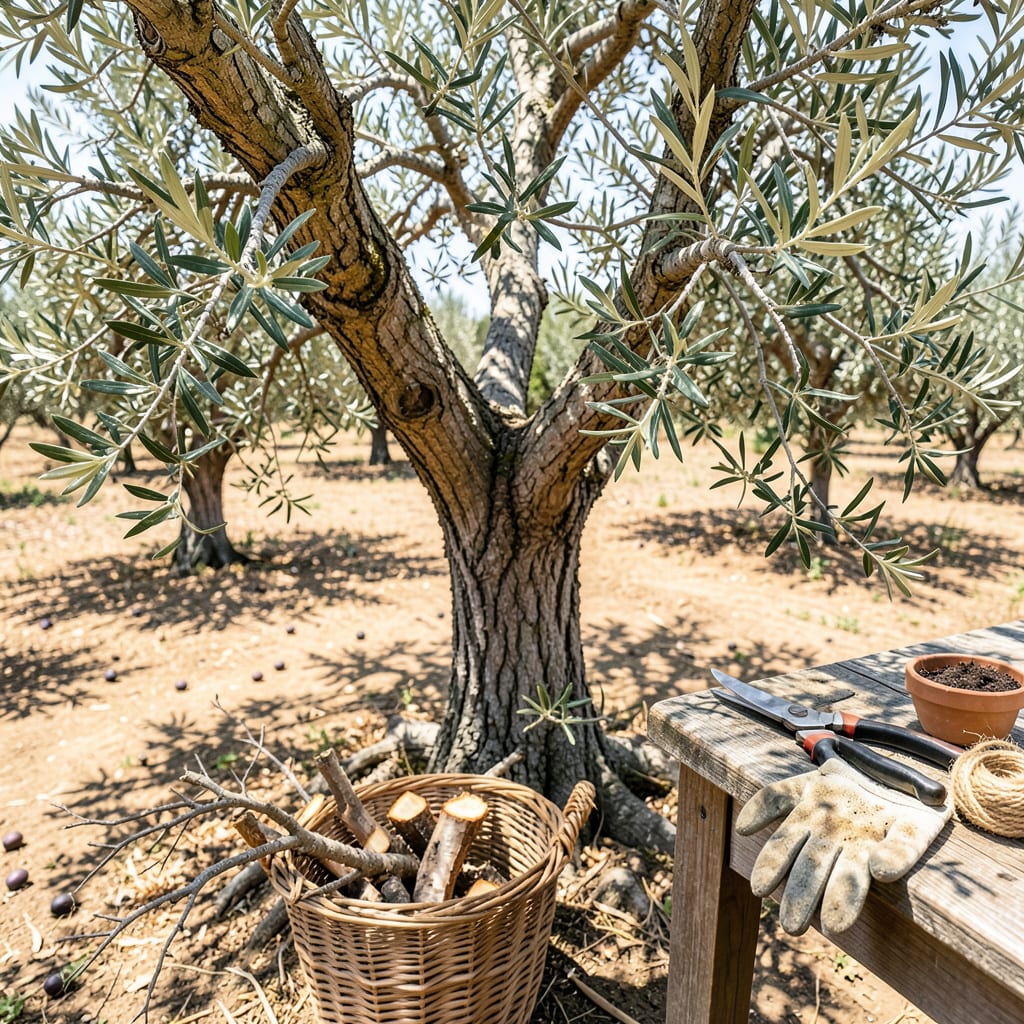
I used to think pruning olive trees was about hacking away at branches—until I saw what proper technique could do. A well-pruned olive tree doesn’t just look better; it produces more fruit, resists disease, and lives longer. The difference between a wild, overgrown mess and a thriving, productive tree comes down to a few key cuts at the right time.
Timing matters almost as much as technique. Prune too late, and you risk cutting off next year’s fruit. Prune too aggressively, and you stress the tree. After years of trial and error (and a few regrettable haircuts for my poor olives), I’ve landed on a method that keeps trees healthy and harvests consistently heavy. Here’s how to do it right—no guesswork, no wasted effort.
📚 In This Guide
Pruning transforms an olive tree from overgrown to productive—here’s how to do it with confidence and precision.
Late winter or early spring, just before new growth begins, is ideal for pruning olive trees. This timing minimizes stress while allowing wounds to heal quickly during the growing season. I always start by walking around the tree to identify dead, diseased, or crossing branches that need immediate removal.
Look for branches that show no signs of life—dry, brittle wood with peeling bark. Also note any limbs growing inward toward the center of the tree. These create shade and poor air circulation, which invites pests and disease. A healthy olive tree should have an open, vase-like shape that allows sunlight to reach all branches.
Begin with your sterilized pruning shears and remove all dead or diseased wood first. Cut back to healthy tissue, making clean cuts at a 45-degree angle just above an outward-facing bud or branch. This angle prevents water from pooling on the cut surface, which can lead to rot.
Next, tackle any crossing or rubbing branches. Where two branches cross, remove the weaker or less productive one entirely. I also thin out any suckers growing from the base of the tree—these sap energy from fruit production. Stand back frequently to assess your progress and maintain the tree’s natural shape.
Now focus on opening the center of the tree to improve air circulation and sunlight penetration. Remove about 20-30% of the inner branches, prioritizing those growing straight up or downward. The goal is a balanced structure where sunlight can reach all parts of the tree.
For mature trees, I maintain a height of 8-10 feet to make harvesting easier. Cut back the tallest branches to just above a lower lateral branch. Always make cuts just outside the branch collar (the swollen area where the branch meets the trunk) to promote proper healing.
Olive trees produce fruit on one-year-old wood, so strategic thinning encourages better yields. Remove about one-third of the previous year’s growth on fruit-bearing branches. This might seem counterintuitive, but it results in larger, higher-quality olives.
Focus on branches that are overly dense or have small, weak growth. I leave 6-12 inches of new growth on each branch to ensure plenty of fruiting wood for next season. After thinning, the remaining branches should be evenly spaced, allowing room for fruit development and air circulation.
Collect all pruned material from around the tree to prevent pest habitats. I like to chip the smaller branches for mulch, but avoid using any diseased wood. Apply a thin layer of compost around the base of the tree (keeping it 6 inches away from the trunk) to support recovery.
Water the tree deeply after pruning, providing about 1-2 inches of water to help it recover from the stress. Monitor the tree over the next few weeks for new growth—this is your sign that the pruning was successful. Expect to see fresh buds swelling within 2-3 weeks as the tree directs energy to productive new growth.
Pruning olive trees effectively requires both technique and observation—here’s how to avoid common pitfalls while maximizing your tree’s health and productivity.
Timing Precision: The late winter to early spring window mentioned in Step 1 isn’t just a suggestion—it’s critical for optimal healing. I’ve found that pruning just as the buds begin to swell (but before leaves emerge) gives the tree exactly the right conditions to seal wounds quickly. This timing also minimizes sap loss, which can attract pests if pruning is done too early in winter.
Cutting Technique: When making those 45-degree angle cuts in Step 2, here’s what nobody tells you—the angle should slope away from the bud, not toward it. This prevents water from running directly onto the bud, which can cause rot. I also recommend making the cut about 1/4 inch above the bud rather than flush with it, giving the bud room to grow without obstruction.
Canopy Balance: The 20-30% inner branch removal in Step 3 might seem aggressive, but I’ve learned this is where many gardeners under-prune. If you’re hesitant, start with 20% and assess how much light reaches the center. You should be able to see sunlight filtering through to the inner branches when you’re done. Remember, olive trees fruit best on wood that receives ample sunlight.
Recovery Monitoring: After completing Step 5, don’t just water and walk away. The 2-3 week window for new growth is your feedback mechanism. If you don’t see buds swelling by week 3, it might indicate either over-pruning or underlying health issues. In that case, I recommend applying a balanced fertilizer (10-10-10) to support recovery, keeping it that critical 6 inches away from the trunk to prevent burn.
The ideal time is late winter to early spring (February–March) before new growth starts. Avoid pruning in fall, as fresh cuts are vulnerable to frost damage. Light shaping can be done in summer, but avoid heavy pruning during extreme heat.
Never remove more than 20–25% of the canopy in a single year. Focus on dead, diseased, or crossing branches first. Over-pruning stresses the tree and reduces fruit production. If the tree is overgrown, spread pruning over 2–3 seasons.
For small branches (under ½-inch thick), sharp bypass pruners work fine. Use lopping shears for medium branches (½–1½ inches) and a pruning saw for thicker limbs. Avoid anvil pruners—they crush stems. Always sanitize tools with rubbing alcohol to prevent disease spread!
Fruit loss can happen if you pruned too aggressively (removing fruit-bearing wood) or at the wrong time. Olive trees fruit on 1-year-old wood, so avoid cutting all new growth. If the tree is young (under 3–4 years), it may not fruit yet—patience is key!
Yes! Try summer pinching (removing tip growth by hand) to slow expansion without major cuts. For container-grown trees, root pruning (every 2–3 years) limits size. Dwarf varieties like ‘Arbequina’ or ‘Koroneiki’ also stay naturally compact.
