
Beautiful Plants For Your Interior
Beautiful Plants For Your Interior
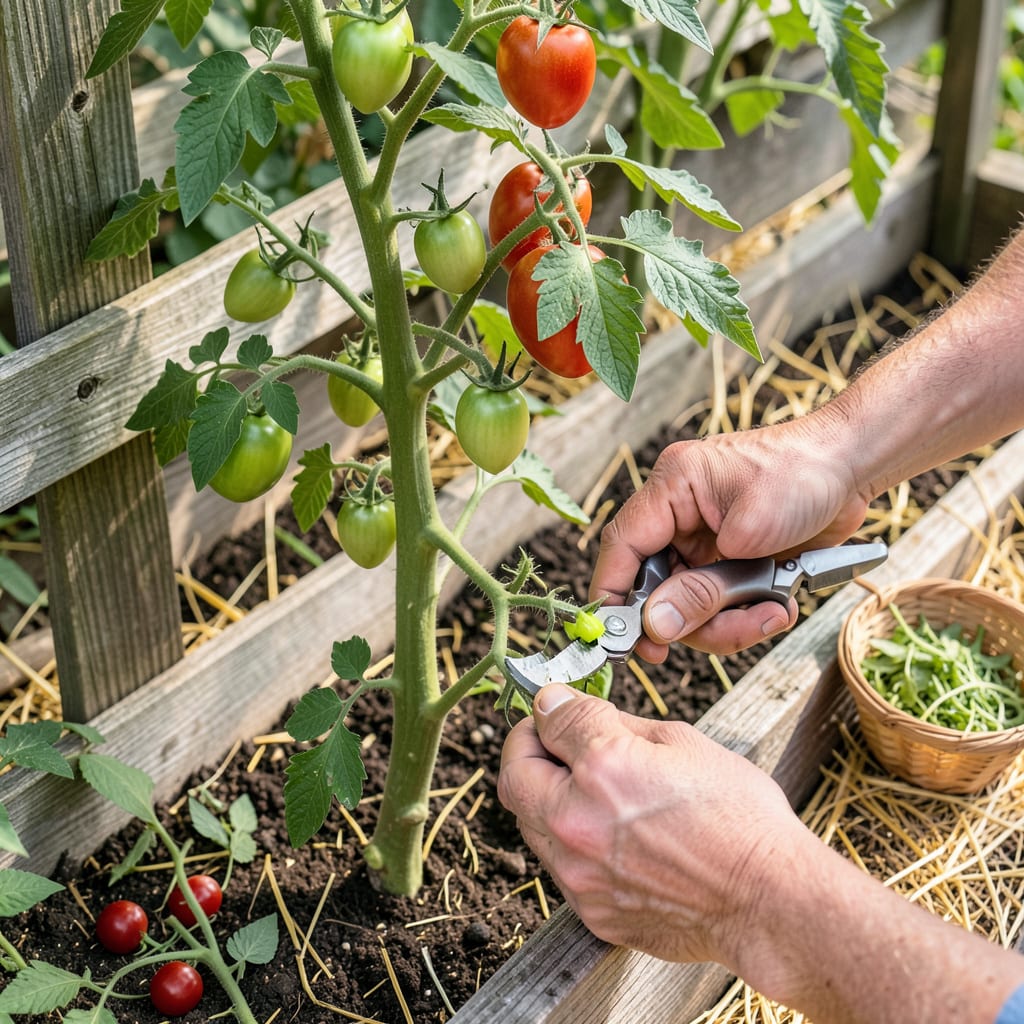
I used to think pruning tomato plants was optional—until I saw what happened when I finally did it right. The difference was shocking: bigger fruit, fewer diseases, and vines that actually stayed manageable. It’s not about hacking away at random; it’s about guiding the plant’s energy where it counts.
Timing and technique matter more than you’d think. Prune too late, and you stress the plant. Miss the suckers, and you end up with a jungle instead of a harvest. I’ll show you exactly where to cut, what to leave, and how to keep your tomatoes thriving—without the guesswork.
📚 In This Guide
Pruning isn’t complicated once you know what to look for—here’s how to do it without stressing your plants.
Start by locating the suckers—those small shoots that grow in the “V” where a branch meets the main stem. These steal energy from fruit production. On indeterminate tomatoes (vining types), I remove all suckers below the first flower cluster. Determinate varieties (bush types) need minimal pruning—just remove suckers that look diseased or crowded.
Use your fingers to gently pinch off suckers when they’re 2-4 inches long. They snap cleanly at this size. If you wait until they’re thicker, you’ll need pruners, which creates a larger wound. Always prune in the morning when plants are most hydrated—this helps them recover faster.
Strip away all leaves on the lower 12-18 inches of the stem. This prevents soil-borne diseases from splashing onto foliage during rain or watering. I use clean hands to avoid tearing the stems—just grasp the leaf base and pull downward with steady pressure. The leaves should come off with a satisfying snap.
You’ll see tiny white bumps where leaves were attached—these are normal and will callous over. Never remove more than 1/3 of the plant’s foliage at once, as this can shock the system. The goal is a clean stem with good airflow, not a bare skeleton.
Look for branches that cross or rub against each other—these create wounds that invite pests. Remove the weaker of the two branches by cutting just above a leaf node (the bump where leaves emerge). I angle my pruners slightly away from the node to prevent water from pooling on the cut surface.
Also remove any leaves or branches that block sunlight from reaching developing fruit. You want dappled sunlight to reach the center of the plant. If a branch is completely shaded by others, it’s not contributing to fruit production and should be removed.
After pruning, water deeply at the base to help the plant recover. I avoid overhead watering for 24-48 hours to let the cuts callous over. Check your plants every 5-7 days during growing season—new suckers appear constantly, especially after rain or heavy watering.
Watch for yellowing leaves or slowed growth—this often means you’ve pruned too aggressively. If this happens, hold off on further pruning until the plant recovers. The right balance means you’ll see larger fruit and healthier vines within 2-3 weeks.
Pruning tomato plants properly makes all the difference between a struggling plant and one that produces abundant fruit. Here’s what I’ve learned from years of trial and error.
The Timing Factor: That 2-4 inch sucker size mentioned in Step 1 is absolutely critical. I learned the hard way that waiting until suckers are larger means you’ll need pruners, which creates bigger wounds that take longer to heal. When they’re small, you can simply pinch them off with your fingers, leaving a tiny wound that callouses over quickly. This small detail prevents unnecessary stress on your plants.
Morning Pruning Advantage: The instructions mention pruning in the morning for good reason. Plants are most hydrated after a night’s rest, which helps them recover faster from pruning wounds. I’ve noticed that plants pruned in the morning show less wilting and bounce back more quickly than those pruned during the heat of the day. This simple timing adjustment makes a noticeable difference in plant health.
Airflow Balance: When removing those lower 12-18 inches of leaves in Step 2, remember that more isn’t always better. The goal is improved airflow, not a completely bare stem. I aim to remove just enough leaves to allow air circulation while still maintaining some foliage to protect the stem from sun scald. This balance helps prevent disease while keeping the plant strong.
Observation is Key: The 5-7 day checking interval in Step 4 isn’t just a suggestion—it’s crucial for catching new suckers before they get too large. I’ve found that suckers grow remarkably fast, especially after rain. By checking regularly, you can remove them when they’re still small and easy to pinch off, rather than dealing with thick, woody stems later that require pruners and create larger wounds.
Prune indeterminate tomatoes every 1-2 weeks during the growing season, starting when plants are 1-2 feet tall. Focus on removing suckers (small shoots between the main stem and branches) before they grow larger than 2-3 inches. Determinate varieties need minimal pruning—just trim lower leaves for airflow. Over-pruning can stress plants, so stick to a light, consistent schedule!
Sharp bypass pruners (or clean scissors for thin stems) work best—they make precise cuts without crushing tissue. Avoid dull tools, which can damage plants and invite disease. For thick stems, use pruners; for suckers or small leaves, scissors are fine. Always sanitize tools with rubbing alcohol between cuts!
Indeterminate tomatoes (vining, continuous harvest) thrive with aggressive pruning—remove suckers to direct energy to fruit. Determinate (bushy, one-time harvest) varieties need only light pruning: trim lower leaves for airflow, but avoid cutting suckers (it reduces yield). Check your seed packet to confirm the type!
Leggy growth often means too much shade or over-pruning. If you removed more than 1/3 of the foliage, the plant may struggle to photosynthesize. Solution: Provide full sun (6-8 hours), stake the plant for support, and avoid heavy pruning until it recovers. Next time, prune gradually!
Yes! If pruning feels overwhelming, try these:
