
Beautiful Plants For Your Interior
Beautiful Plants For Your Interior
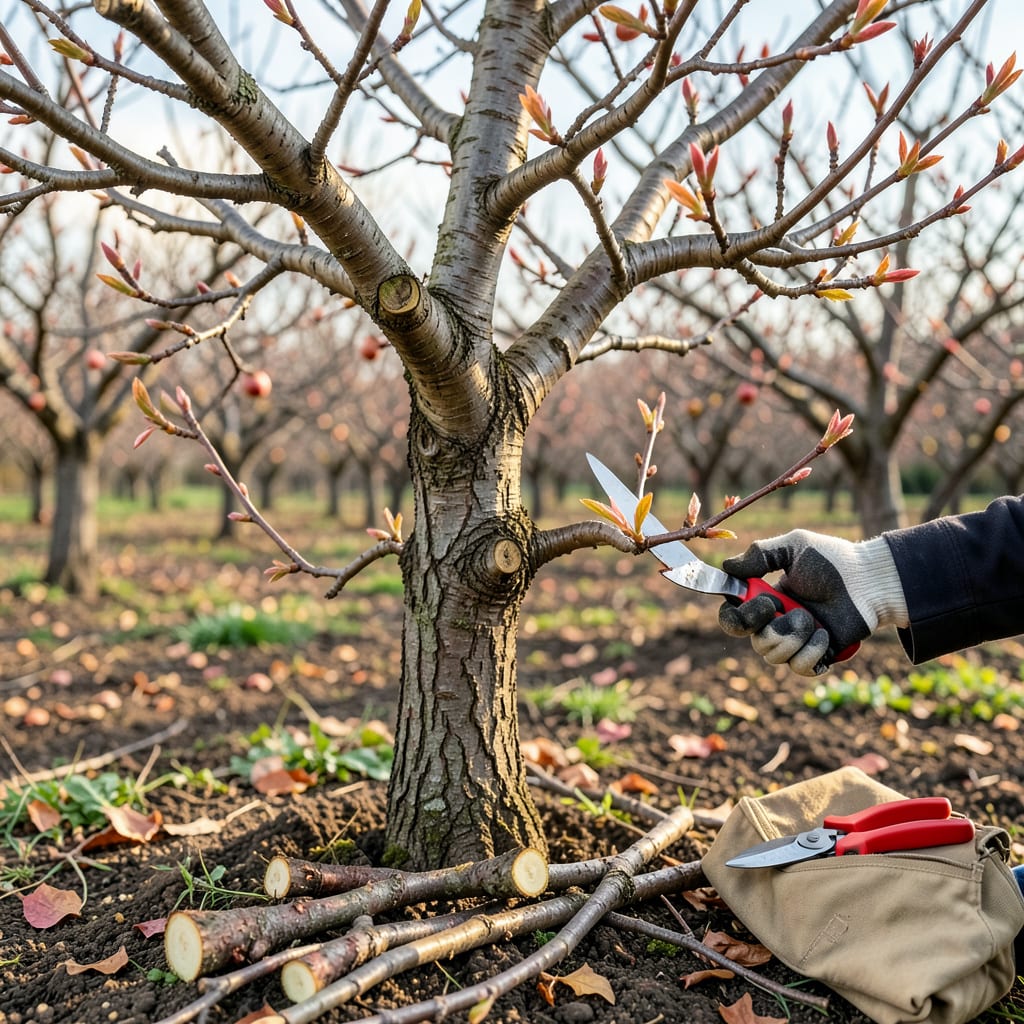
That first time I pruned my pomegranate tree, I nearly ruined it. Three years later, it’s producing twice the fruit—plump, jewel-toned, and bursting with juice. Pruning isn’t just about shaping; it’s about unlocking what that tree can really do. Left unchecked, branches tangle, energy wastes on weak growth, and fruit stays small and sparse.
Do it right, and you’ll see the difference in months: better airflow (which means fewer diseases), stronger branches that hold heavy fruit, and sunlight reaching every leaf. The best part? It takes less than an hour with the right cuts—and no, you don’t need to be an arborist. Here’s how to make every snip count.
📚 In This Guide
Here’s the method I use every year to keep my trees productive and healthy—no guesswork, just results.
Late winter is ideal, just as the tree begins to break dormancy but before new growth starts. In most regions, this means February to early March. You’ll see tiny leaf buds swelling on the branches—that’s your signal the tree is waking up and ready for pruning.
Avoid pruning in fall or during active growth. Fall cuts stimulate new growth that winter will kill, while summer pruning removes energy-producing leaves when the tree needs them most. I mark my calendar each year so I don’t miss this narrow window.
Start by cutting out any dead wood (gray, brittle branches with no buds) and diseased limbs (discolored, spotted, or oozing). Make clean cuts at a 45-degree angle just outside the branch collar—the slightly swollen area where the branch meets the trunk.
Next, look for branches that cross or rub against each other. These create wounds that invite pests and disease. Remove the weaker of the two branches entirely. You’ll notice the tree’s structure opens up immediately, allowing better air circulation.
Pomegranates fruit on new wood, so your goal is to encourage fresh growth. Remove about one-third of the oldest branches each year, focusing on those thicker than 1 inch in diameter. These older branches produce smaller, lower-quality fruit.
Step back frequently to assess the tree’s shape. You want an open vase-like structure that lets sunlight reach the center. I aim for branches spaced about 6-8 inches apart along the main trunk—this prevents shading and maximizes fruit production.
Shorten remaining branches by about one-third their length, cutting just above an outward-facing bud. This encourages the tree to grow outward rather than inward. Always leave at least 3-4 buds on each branch—these will become next year’s fruiting wood.
Pay special attention to suckers (vigorous vertical shoots) growing from the base or along main branches. Remove these completely—they steal energy but rarely produce good fruit. You’ll recognize them by their straight, fast growth and lack of side branches.
Rake up and dispose of all pruned material immediately—don’t compost it if you suspect disease. I spray my pruners with rubbing alcohol between cuts when removing diseased wood to prevent spreading pathogens.
Watch for new growth to emerge in 2-3 weeks. If you see multiple shoots sprouting from one cut, thin to the strongest one. This focused energy produces better fruit. The first flowers will appear on this new growth, so you’ll know quickly if your pruning was effective.
Pruning isn’t just about cutting—it’s about setting your tree up for seasons of success. Here’s what I’ve learned from years of shaping pomegranates.
Timing Precision: That February to early March window mentioned in Step 1 is everything. I once pruned two weeks late when buds had already opened, and the tree spent all season recovering instead of fruiting. Watch for those tiny leaf buds swelling—they’re your green light to start. Don’t go by calendar dates alone; let the tree tell you when it’s ready.
Cutting Technique: The 45-degree angle cut in Step 2 isn’t just for looks—it prevents water from pooling on the cut surface, which can lead to rot. I use bypass pruners (not anvil-style) for cleaner cuts that heal faster. When removing crossing branches, always cut the weaker one completely rather than trimming both—this prevents creating two weak points instead of one strong structure.
Thinning Strategy: In Step 3, when removing one-third of the oldest branches, focus first on any branches growing inward toward the center. These create shade and poor air circulation. I use the “6-8 inches apart” spacing as a guide, but adjust if you notice some branches are significantly thicker than others—they’re likely older and less productive. The goal is a tree that looks like an open umbrella when viewed from above.
Bud Management: Those 3-4 buds you’re leaving in Step 4 should be plump and healthy-looking. If you’re working with a younger tree, you might only leave 2-3 buds to encourage more vigorous growth. For mature trees, I sometimes leave an extra bud or two on the strongest branches—they can handle the additional fruit load. The outward-facing bud is crucial; cutting above an inward-facing one will create future shading problems.
The ideal time is late winter or early spring (February–March) before new growth starts. Avoid pruning in fall—this can stimulate tender growth vulnerable to frost. Light pruning for shape can also be done in summer after fruiting.
Never remove more than 20–25% of the canopy in a single year. Focus on dead/diseased wood, suckers, and crossing branches first. Over-pruning stresses the tree and reduces fruit production. Young trees need minimal pruning—just shape them!
Yes! Dwarf varieties (like ‘Nana’) stay compact naturally, but standard trees can be kept small with annual pruning. Use the “open vase” method—remove inward-growing branches to encourage a shorter, bushier shape. Container-growing also limits size.
Common causes: Over-pruning (removed fruit-bearing wood), pruning at the wrong time (cut off flower buds), or excessive nitrogen (promotes leaves, not fruit). Wait a year—trees often rebound. If no fruit by year 3, check soil/pollination.
