
Beautiful Plants For Your Interior
Beautiful Plants For Your Interior
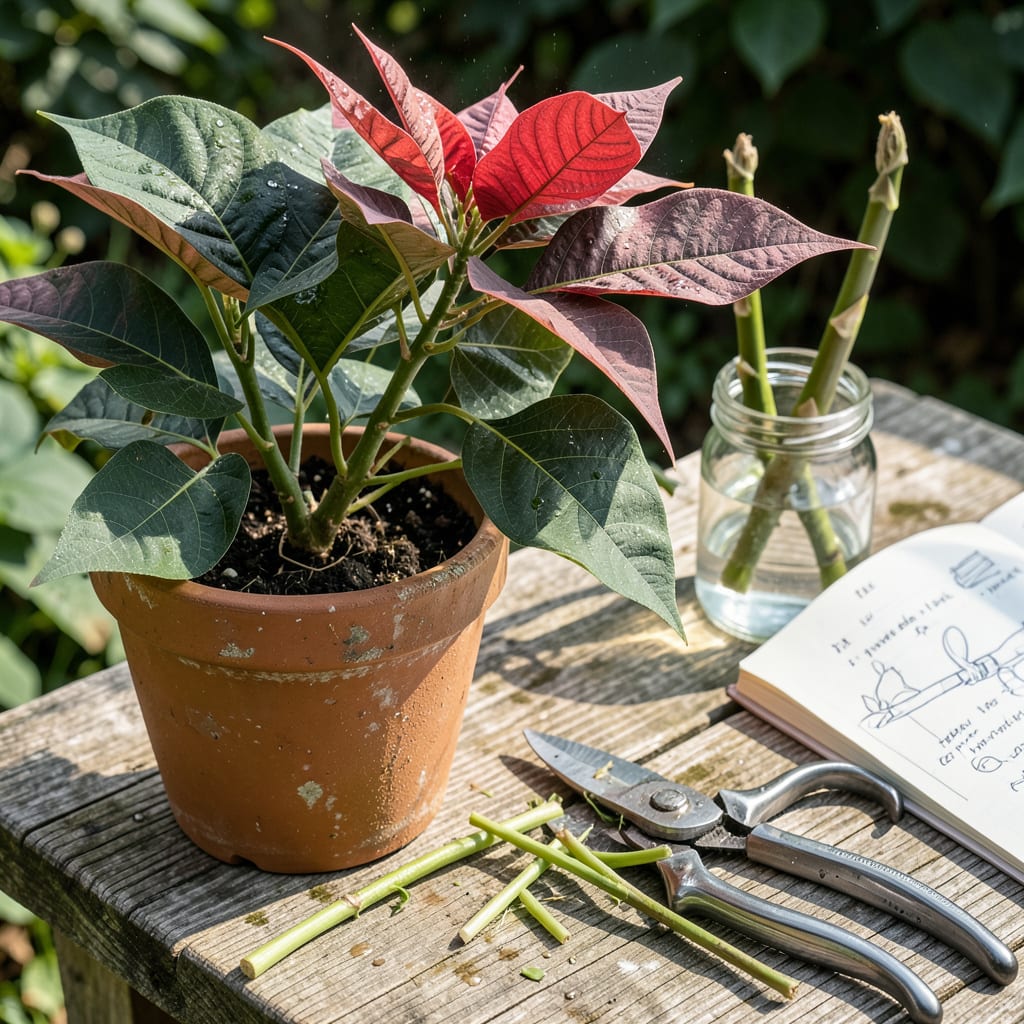
That leggy poinsettia from last Christmas? It could be twice as full next holiday season—if you prune it right. I used to toss mine after the holidays until I learned this simple technique that transforms scraggly plants into bushy showstoppers. Timing matters most: do it too late and you’ll cut off next year’s blooms; too early and the plant won’t have energy to regrow.
You’ll need just three things: sharp pruners, rubbing alcohol (to sterilize), and 10 minutes. The cuts aren’t complicated—focus on removing about one-third of the plant’s height, always just above a leaf node. What grows back will be denser, with more branches for those iconic red bracts. Best part? Those cuttings root easily in water, giving you free plants for next season.
📚 In This Guide
Here’s my simple method for pruning poinsettias—timed perfectly to give you those show-stopping holiday blooms next year.
Start pruning in early spring, right after the holiday season when the colorful bracts (those vibrant red, pink, or white leaves) begin to fade. This is when the plant shifts energy from blooming to new growth. I like to wait until March or April, but no later—delaying too long weakens the plant.
Check the stems: they should be firm and green, not soft or shriveled. If you see new green growth emerging at the base, that’s your signal to begin. Pruning at this stage ensures the plant has time to regrow strong branches before summer.
Using clean, sharp pruners, trim each stem back to about 4-6 inches from the soil line. Cut just above a leaf node (the small bump where leaves emerge)—this is where new branches will sprout. I make my cuts at a 45-degree angle to prevent water from pooling on the stem, which can cause rot.
Don’t worry if the plant looks drastic afterward; this is normal. You’ll see new growth within 2-3 weeks if conditions are right. Remove any weak or spindly stems entirely—they won’t contribute to a full, healthy plant.
Once new growth reaches 6-8 inches long, pinch back the tips of each stem by about 1 inch. This forces the plant to branch out, creating that lush, full shape poinsettias are known for. I repeat this every 4-6 weeks until mid-August—this timing is critical for holiday blooms.
Keep the plant in bright, indirect light and water when the top inch of soil feels dry. Overwatering now leads to weak growth, so let the soil dry slightly between waterings. A balanced fertilizer every 2-3 weeks supports strong development.
Starting in early October, poinsettias need 12-14 hours of complete darkness daily to trigger blooming. Move the plant to a dark closet or cover it with a box from 5 p.m. to 8 a.m.—any light interruption prevents color change. During the day, return it to bright, indirect light.
Continue this routine for 8-10 weeks. You’ll notice the bracts beginning to color up around late November, just in time for the holidays. Reduce watering slightly now to concentrate the plant’s energy on blooming.
Pruning poinsettias might seem intimidating, but these practical insights will help you achieve that full, vibrant plant you’re dreaming of next holiday season.
Timing is Everything: The early spring window mentioned in Step 1 is absolutely critical. I learned this the hard way after pruning too late one year—my plant produced weak, sparse growth that never fully recovered. Watch for those first signs of new green growth at the base; that’s nature’s perfect signal that your plant is ready for its spring haircut. Waiting until March or April gives your poinsettia exactly the right amount of time to develop strong new branches before summer’s heat arrives.
The Right Cut Makes All the Difference: When you’re trimming stems back to 4-6 inches in Step 2, take an extra moment to really examine where you’re cutting. That 45-degree angle isn’t just for looks—it’s functional. I’ve found that cutting too flat allows water to collect on the stem surface, which can lead to rot. Also, don’t be shy about removing those weak, spindly stems completely. They’ll only drain energy from the healthier growth.
Summer Pinching Strategy: The every 4-6 weeks pinching schedule in Step 3 is what creates that lush, bushy shape we all love. Here’s what nobody tells you—this timing is based on the plant’s natural growth cycles. If you pinch too early (before stems reach 6-8 inches), you’ll get lots of small, weak branches. Wait too long, and you’ll have a leggy plant that flops over. I set calendar reminders for mid-June and early August to stay on track.
Darkness Discipline: Those 12-14 hours of complete darkness in Step 4 are non-negotiable for blooming. I made the mistake of using a sheer cloth cover my first year—enough light leaked through to prevent proper color development. Now I use a cardboard box that completely blocks all light. Even a quick peek with a flashlight can disrupt the process, so commit to the full 8-10 weeks of this routine starting in early October.
The ideal time is late winter or early spring (February–March), after the holiday season. This gives your plant time to recover and regrow before fall blooming. Avoid pruning in summer or fall, as it may remove flower buds.
Leggy poinsettias benefit from a hard prune—cut stems back to 4–6 inches above the soil. This encourages bushier growth. Just ensure you prune at the right time (see above) and use clean shears to prevent disease.
Blooming requires short-day conditions (12+ hours of darkness daily for 8–10 weeks starting in October). If pruned correctly but still no blooms, check light exposure, temperature (60–70°F), and fertilizer use. Lack of darkness is the #1 culprit!
Yes! Poinsettias secrete a mildly irritating sap that can cause skin irritation or allergic reactions. Wear gloves and wash your hands afterward. If sensitivity occurs, rinse the area with soap and water.
You bet! Dip 3–4-inch stem cuttings in rooting hormone, plant in moist potting mix, and keep warm (70°F+) with indirect light. Cover with plastic to retain humidity. Roots should form in 2–3 weeks. Pro tip: Use cuttings from healthy, pest-free plants!
