
Beautiful Plants For Your Interior
Beautiful Plants For Your Interior
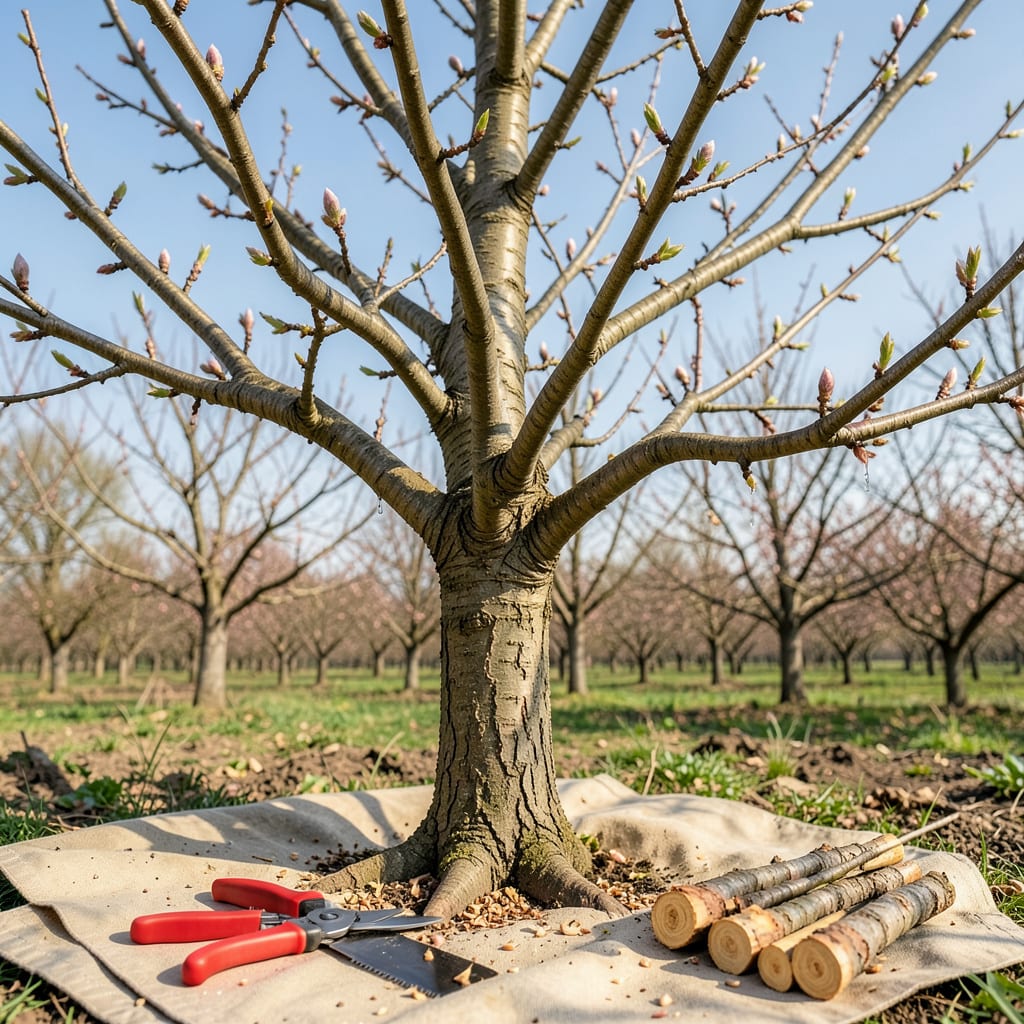
That first cut feels terrifying—I get it. Standing under a peach tree with pruners, wondering if you’re about to ruin next year’s harvest. But here’s the truth: proper pruning is what separates a struggling tree from one that explodes with healthy fruit and resists disease like a champ. My first attempt looked like a raccoon had attacked it, but the tree bounced back stronger than ever.
Timing and technique matter more than perfection. Do it in late winter before buds swell, and focus on three things: removing dead wood, opening the center for sunlight, and shaping for future growth. The tree tells you what to cut if you know where to look—no horticulture degree required. You’ll see the difference by summer in bigger, sweeter peaches and a tree that practically thanks you.
📚 In This Guide
First-time pruning can feel intimidating, but this method ensures your tree stays productive and disease-free for years.
Prune in late winter or early spring—just as buds begin to swell but before they open. This timing minimizes stress while allowing wounds to heal quickly as growth resumes. I use sharp bypass pruners (cleaned with rubbing alcohol) and a small pruning saw for thicker branches.
Avoid pruning in fall, as fresh cuts won’t harden off before winter, leaving the tree vulnerable to frost damage. Check the weather forecast too—you want 3-5 dry days after pruning to prevent fungal infections from entering fresh wounds.
Start by cutting any dead wood (dry, brittle branches) back to healthy tissue. Look for blackened or shriveled bark—these branches won’t recover. Next, remove branches showing signs of disease like oozing cankers or powdery mildew.
Then tackle crossing branches that rub against each other. These create wounds that invite pests and disease. Cut the weaker of the two branches at its base. You’ll feel the difference—healthy wood is firm and green under the bark, while dead wood feels hollow or crumbly.
Peach trees need an open “vase” shape to prevent fungal issues. Remove 1-2 large inward-growing branches from the center. Cut just outside the branch collar (the swollen area where the branch meets the trunk) at a 45-degree angle away from the tree.
Step back frequently to assess your progress. You want sunlight to reach the center of the tree—this improves fruit quality and reduces peach leaf curl. I aim to remove no more than 20% of the canopy in the first pruning to avoid shocking the tree.
Focus on creating strong scaffold branches (the main structural limbs). Keep 3-5 well-spaced branches radiating outward, each at least 6-8 inches apart vertically on the trunk. Shorten these by cutting back to an outward-facing bud.
Make each cut 1/4 inch above a bud, sloping down and away from it. This prevents water from pooling on the cut surface. You’ll see new growth emerge exactly where you made these cuts, so choose buds that face the direction you want new branches to grow.
Remove all cut material from around the tree—these can harbor pests and diseases. Apply a thin layer of horticultural oil spray to the cuts if you’re in a humid climate, but avoid heavy sealants that can trap moisture.
Watch for new growth in 4-6 weeks. If you see excessive suckers (vigorous vertical shoots) forming at the base, rub them off while they’re small. Your goal is a balanced tree with fruit-bearing branches that are strong enough to support heavy peaches without breaking.
Pruning your peach tree for the first time doesn’t have to be stressful—these practical insights will help you avoid common pitfalls.
Timing is Everything: The window for pruning in Step 1—when buds begin to swell but haven’t opened—is crucial. I’ve found that late February to early March works best in most climates. If you miss this window and prune too early, the tree won’t heal properly; too late, and you’ll remove potential fruit-bearing wood. Check your local agricultural extension for exact timing in your region.
Tool Maintenance Matters: In Step 1, cleaning your pruners with rubbing alcohol isn’t just good practice—it’s essential. I learned this the hard way after spreading disease between trees. Make a habit of wiping blades between every few cuts, especially when moving from diseased branches to healthy ones. A quick spray bottle with 70% isopropyl alcohol makes this easy.
The 20% Rule: Step 3 mentions removing no more than 20% of the canopy, and this is non-negotiable for first-time pruning. I use this trick: after making cuts, step back and visually divide the tree into fifths. If you’ve removed more than one of those sections, you’ve gone too far. Over-pruning stresses the tree and can actually reduce fruit production.
Cut Placement Precision: The instructions in Step 4 about cutting 1/4 inch above an outward-facing bud are specific for good reason. I’ve ruined cuts by going too close (which kills the bud) or too far (which leaves stubs that die back). Practice on less important branches first to get the feel for the right distance. Remember, the angle should slope away from the bud to prevent water pooling.
Prune in late winter or early spring (just before buds swell) for the best results. This timing minimizes disease risk and promotes vigorous new growth. Avoid pruning in fall—it can leave wounds vulnerable to frost damage and fungal infections.
Remove about 30-40% of last year’s growth to shape the tree and improve airflow. Focus on cutting back competing branches and thinning crowded areas. Over-pruning can stress the tree, so stick to the “less is more” rule for beginners.
Don’t panic! Peach trees are resilient. If you cut too much, the tree may grow back aggressively (but weaker). If you miss a branch, prune it next season. Avoid leaving jagged cuts—clean cuts heal faster and reduce disease risk.
You can use sharp household scissors for small branches, but bypass pruners (or loppers for thicker limbs) give cleaner cuts and reduce damage. Avoid dull tools—they crush stems, slowing healing. Sanitize tools with rubbing alcohol to prevent spreading disease.
It’s normal! Pruning exposes the tree’s structure temporarily, but it encourages stronger, fruit-bearing growth. If the tree looks sparse, give it a few weeks—new shoots will emerge. If branches ooze sap, it’s a natural healing response (not a problem).
