
Beautiful Plants For Your Interior
Beautiful Plants For Your Interior
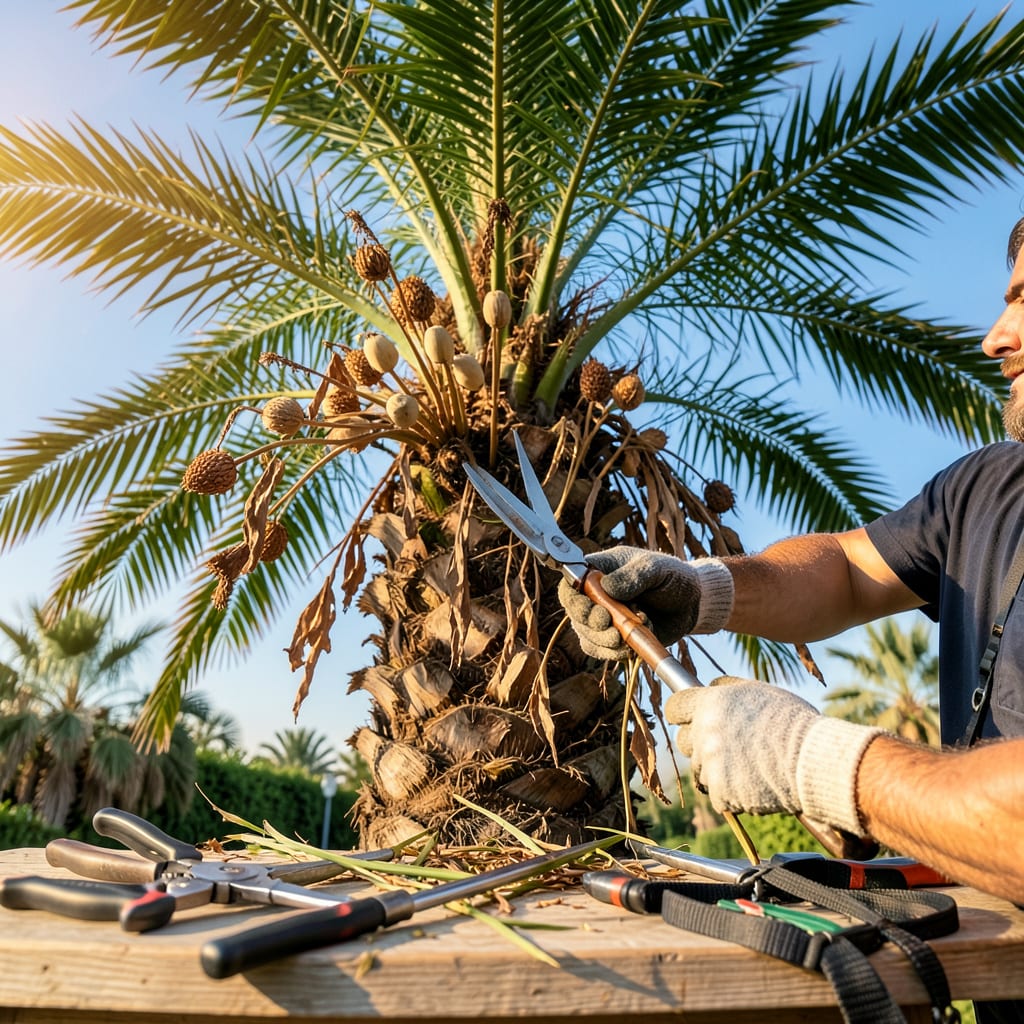
I used to think palm trees were maintenance-free until I saw what proper pruning could do. A well-timed trim doesn’t just make your palm look better—it prevents pests, reduces fire hazards, and actually boosts its health by letting sunlight reach the heart of the tree. The difference between a neglected palm and one that’s been pruned correctly is shocking.
Here’s the thing—most people either prune too aggressively (hello, “hurricane cut” disasters) or not enough, leaving dead fronds that become pest hotels. I’ve learned the hard way that timing matters just as much as technique. Do it right, and your palm will reward you with stronger growth and fewer problems for years to come.
📚 In This Guide
Pruning palms properly keeps them thriving while protecting your property—here’s how to do it safely and effectively.
Start by examining the palm from all angles. Look for completely brown, dead fronds hanging downward—they’re ready for removal. Never trim green fronds, even if they’re slightly yellowing, as they still provide nutrients. I always check for flower stalks or seed pods too; these should come off unless you want messy fruit.
Note any fronds growing horizontally or downward—they’re typically dead and pose safety risks. Stand back and visualize which cuts will improve both appearance and safety. Remember that palms don’t heal like other trees, so every cut is permanent. This is the moment that matters: removing only what’s necessary.
You’ll need a sharp pruning saw (for thick frond bases) and lopping shears (for smaller growth). I use a pole saw for taller palms to avoid climbing. Always disinfect blades with rubbing alcohol before starting—this prevents disease spread between trees. Wear gloves, safety goggles, and long sleeves because palm fronds have sharp edges.
Have a tarp ready to collect debris—palm fronds are heavy and messy. If working above shoulder height, secure a ladder stabilizer or work with a partner. Real talk: more accidents happen from unstable footing than from the actual cutting. Set up everything within arm’s reach before climbing.
Cut fronds 1-2 inches from the trunk, leaving the base collar intact. Never cut flush with the trunk—this damages the palm’s growth point. For flower stalks, remove them where they emerge from the frond base. I make cuts at a slight angle so water runs off instead of pooling, which prevents rot.
Work methodically from the bottom up, removing dead fronds first. You’ll feel resistance as you cut through the thick base—let the tool do the work. Don’t force it. Between cuts, step back to check your progress. The goal is a clean, natural shape that maintains the palm’s structural integrity.
Remove all cut fronds from the area immediately—they’re heavy and can damage lawns or create tripping hazards. I use a rake to gather small debris and a broom for any remaining dust. Check the trunk for any jagged edges from cutting and smooth them gently with a hand file if needed.
Stand back and examine the palm’s new silhouette. You should see a balanced crown with no stubs or ragged edges. Water the base thoroughly after pruning—this helps the tree recover from stress. Healthy palms will show new growth within 4-6 weeks if pruned correctly.
Most palms need pruning 1-2 times yearly, typically in early spring and late summer. Mark your calendar based on your palm species—some grow faster than others. I inspect mine monthly for dead fronds between prunings. This prevents the buildup that attracts pests.
Watch for signs of over-pruning like slowed growth or yellowing fronds. If you notice these, scale back next time. The key is consistency: small, regular prunings are better than dramatic cuts. Your palm will reward you with stronger growth and fewer safety hazards over time.
Pruning palms isn’t just about making cuts—it’s about understanding the tree’s needs and working with its natural growth patterns. Here’s what I’ve learned from years of maintaining healthy palms.
The Assessment Secret: In Step 1, when you’re examining the tree, pay special attention to fronds that are only partially brown. These are still providing nutrients to the palm. I’ve found that removing fronds too early can actually stress the tree and slow its growth. Look for fronds that are completely brown and hanging downward—those are the ones ready to come off. Also, check for any fronds that are growing at odd angles; these often indicate dead growth that could become a safety hazard.
Tool Preparation Matters: Before you start cutting in Step 2, take time to properly prepare your tools. I always sharpen my pruning saw and loppers before each use—a dull blade can tear the fronds instead of making clean cuts. Disinfecting with rubbing alcohol isn’t just a suggestion; it’s crucial for preventing disease spread between trees. And don’t overlook safety gear: palm fronds have surprisingly sharp edges that can cause nasty cuts if you’re not wearing proper gloves and long sleeves.
Cutting Technique Breakthrough: When making cuts in Step 3, the 1-2 inch distance from the trunk is critical. I learned the hard way that cutting too close damages the growth point, while leaving too much creates an entry point for pests. Make your cuts at a slight downward angle so water runs off—this simple trick prevents water from pooling at the cut site, which can lead to rot. Work from the bottom up, removing dead fronds first, and always step back periodically to check your progress and maintain the palm’s natural shape.
Post-Pruning Care: After completing Step 4, don’t skip the watering step. I’ve noticed that palms recover much faster when given a thorough watering immediately after pruning. This helps reduce stress and encourages new growth. The 4-6 week timeline for new growth mentioned in the instructions is accurate, but proper post-pruning care can help your palm reach that milestone sooner. Also, be diligent about removing all debris—palm fronds can harbor pests if left on the ground.
If your palm is under 15 feet tall and you have the right tools (pruning saw, gloves, safety gear), DIY pruning is doable. For taller trees or near power lines, always hire a certified arborist—safety first! Pros also handle tricky species (like Canary Island Date Palms) that need expert care.
When’s the best time of year to prune a palm tree?
Late spring to early summer (May–July) is ideal—warm weather helps palms recover fast. Avoid pruning during hurricane season (if applicable) or winter dormancy. For flowering palms, prune after blooms fade to avoid stressing the tree. Follow the “9-to-3 rule“: Never remove fronds above the 9 o’clock or below the 3 o’clock positions (imagine a clock face!). Over-pruning starves the palm—only cut dead, yellow, or damaged fronds. Green fronds = food for the tree! Brown tips often signal underwatering, salt burn, or nutrient deficiency—not a pruning issue! Trim only the dead portions (leave green areas), then check soil moisture and fertilize with palm-specific nutrients (like magnesium or potassium). Yes! Low-maintenance options include: Always research mature size before planting!
2
How much can I trim without harming the palm?
3
What if my palm tree has brown tips instead of dead fronds?
4
Are there palm tree alternatives that need less pruning?
