
Beautiful Plants For Your Interior
Beautiful Plants For Your Interior
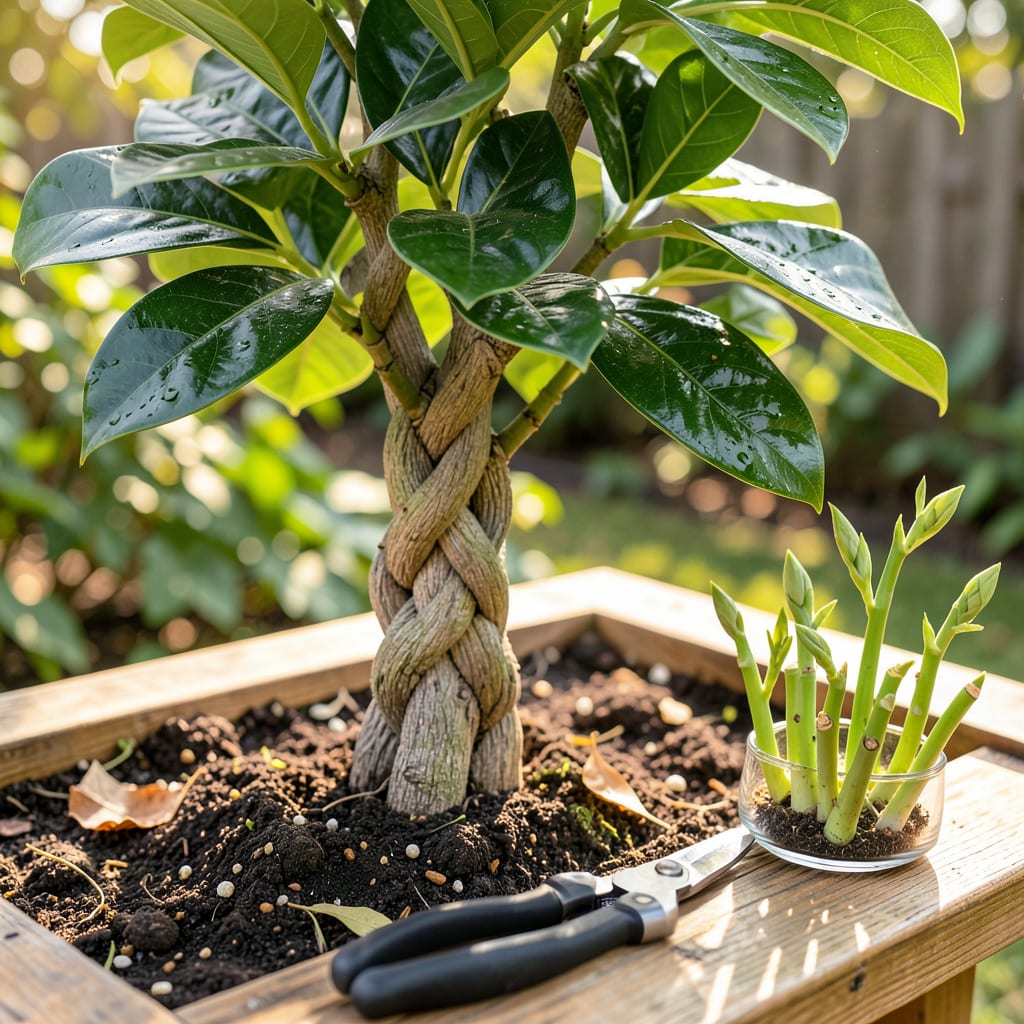
That money tree in your living room could be twice as lush with one simple session. I used to avoid pruning mine—afraid I’d ruin its shape or stunt its growth—until I learned the right cuts actually trigger new branches and fuller foliage. This isn’t about hacking away blindly; it’s about strategic snips that encourage your Pachira aquatica to grow exactly how you want it.
Timing and technique make all the difference. Prune in early spring just as growth resumes, and you’ll see fresh shoots within weeks. The process takes less than 20 minutes with basic tools, and the payoff is a healthier plant that fills out beautifully. No green thumb required—just follow the natural growth patterns and let the plant do the rest.
📚 In This Guide
Pruning your money tree is simpler than you think—just follow these clear steps for healthy growth and that signature full shape.
Start by examining your money tree for long, leggy branches or stems growing inward toward the center. These are your primary targets. I always look for nodes (the small bumps where leaves emerge) because cutting just above a node encourages bushier regrowth.
Never remove more than 25% of the foliage in one session—this prevents shocking the plant. Focus first on any yellowing or damaged leaves, as these drain energy from healthy growth. If two branches cross and rub, remove the weaker one to prevent wounds that invite disease.
Use sharp, clean pruning shears to make cuts at a 45-degree angle, about ¼ inch above a leaf node. This angle prevents water from pooling on the cut surface, which can lead to rot. Always cut away from the main stem to avoid accidentally damaging the trunk.
Avoid leaving stubs, as they become entry points for pests and pathogens. If you’re removing an entire branch, cut it flush with the main stem without damaging the surrounding bark. I like to step back after each cut to assess the plant’s shape—it’s easier to remove more later than to fix over-pruning.
Money trees naturally grow in a braided form, so maintain this structure by keeping the canopy evenly distributed. Trim back any branches that extend significantly beyond the others to create a rounded, symmetrical shape. This isn’t just about aesthetics—balanced growth prevents the plant from becoming top-heavy and unstable.
Pay special attention to the top of the plant. If one stem is growing much taller than its braided companions, trim it back to match the others. This encourages the energy to distribute evenly throughout the plant, resulting in fuller, more uniform growth over time.
After pruning, remove all cuttings from around the base of the plant to prevent pest attraction. Wipe your pruning shears with rubbing alcohol between cuts if you’re working with multiple plants—this prevents disease transmission. I always give my money tree a light misting after pruning to help it recover from the stress.
Place your plant in bright, indirect light for the next 2-3 weeks and reduce watering slightly—this gives the plant time to heal without the stress of rapid new growth. You’ll see new shoots emerging from the nodes you cut above within 4-6 weeks, which is your sign that the pruning was successful.
Money trees grow relatively slowly, so you’ll only need to prune 2-3 times per year to maintain the shape. I recommend light maintenance pruning in early spring and again in mid-summer. Always step back and view the plant from multiple angles before making cuts—what looks balanced from one side might appear uneven from another.
Between pruning sessions, simply pinch off any new growth that disrupts the shape. This gentle maintenance prevents the need for dramatic cuts later. Remember that money trees respond well to pruning—each cut you make will ultimately result in two new branches, creating that lush, full appearance that makes these plants so striking.
Pruning a money tree becomes much easier when you know these key insights from years of experience.
Precision Matters: In Step 2, that 45-degree angle cut isn’t just for looks—it’s crucial for preventing water from pooling on the cut surface, which can lead to fungal growth. I’ve found that cutting exactly ¼ inch above a leaf node (as mentioned in the instructions) gives the best results for new growth. Always cut away from the main stem to avoid accidentally damaging the trunk, which can stunt the plant’s growth.
The 25% Rule: Step 1 emphasizes never removing more than 25% of the foliage in one session, and I can’t stress this enough. I learned this the hard way after over-pruning a money tree that then took months to recover. Focus first on removing yellowing or damaged leaves, as these drain energy from healthy growth. If two branches cross, remove the weaker one to prevent wounds that could invite disease.
Aftercare is Everything: Step 4’s advice about placing your plant in bright, indirect light for 2-3 weeks after pruning is critical. This isn’t just about light—it’s about giving the plant time to heal without the stress of rapid new growth. I always reduce watering slightly during this period and give the plant a light misting to help it recover. You’ll see new shoots emerging from the nodes within 4-6 weeks, which confirms your pruning was successful.
Symmetry Secret: When shaping your money tree in Step 3, remember that balanced growth isn’t just about aesthetics—it prevents the plant from becoming top-heavy and unstable. I always step back and view the plant from multiple angles before making cuts. What looks balanced from one side might appear uneven from another. Pay special attention to the top of the plant, and if one stem is growing much taller than its braided companions, trim it back to match the others.
Prune in early spring (March–April) when the plant is entering active growth. Avoid pruning in winter (dormancy) or late fall, as cuts heal slower. Light trimming for shape can be done year-round, but major pruning should align with the growing season for faster recovery and lush regrowth.
Hold off on heavy pruning for trees under 2–3 feet tall. Focus on removing dead/damaged leaves or minor shaping. Young plants need energy to establish roots and stems—over-pruning can stunt growth. Wait until it’s mature (3+ years) for structural cuts.
Pruning involves cutting branches/stems with shears for shape or health, while pinching is gently removing new growth tips (with fingers) to encourage bushiness. Use pinching for light shaping and pruning for major corrections. Both methods redirect energy but serve different goals!
Drooping often means over-pruning (removed >30% of foliage) or poor aftercare. Check for:
Healthy stem cuttings (4–6 inches long) can root in water or moist soil. Remove lower leaves, dip the cut end in rooting hormone (optional), and place in filtered light. Change water weekly if propagating in water—roots should appear in 4–6 weeks. Free plants!
