
Beautiful Plants For Your Interior
Beautiful Plants For Your Interior
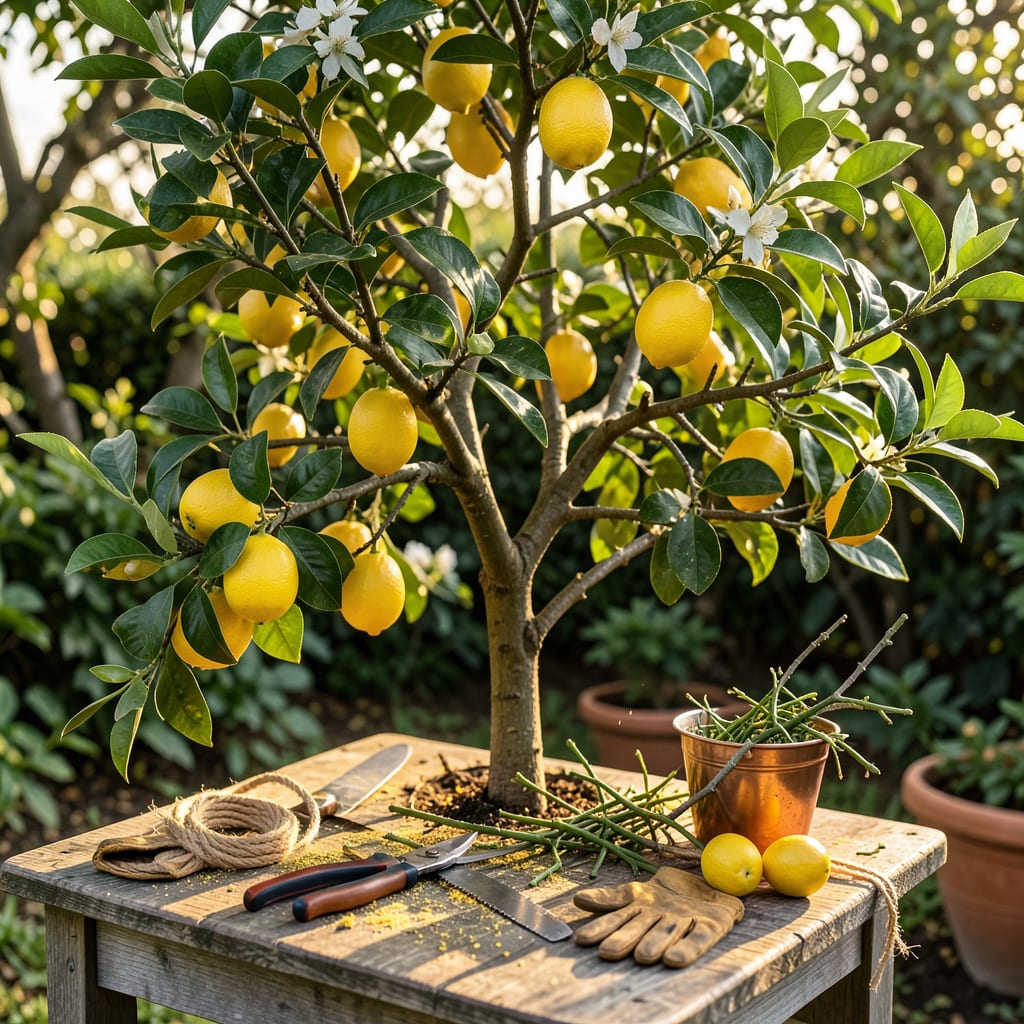
That first time I hesitated with pruners in hand, I nearly talked myself out of it. Would cutting branches actually help my Meyer lemon tree, or would I ruin years of growth? Turns out, strategic pruning is the secret to bigger harvests and healthier trees—when you know exactly where to make each cut.
Timing matters just as much as technique. Prune too late in summer and you risk sunburned branches; do it wrong in winter and you might lose next year’s fruit. I’ll walk you through the simple seasonal rules that keep my tree producing dozens of lemons annually, without the stress of guessing what to trim or when.
📚 In This Guide
Pruning at the right time with the right technique keeps your tree productive and healthy for years.
Meyer lemons bloom and fruit year-round in warm climates, but the ideal pruning window is late winter or early spring—just after the last hard frost but before new growth starts. In cooler zones where you bring the tree indoors, prune in early spring as you transition it outside.
Look for the natural pause between harvest cycles when the tree isn’t actively flowering. You’ll see fewer blossoms and the current crop of lemons nearing maturity. Avoid pruning during extreme heat or when the tree is stressed from drought—wait until temperatures stay between 60-80°F for best recovery.
Start with your sanitized pruning shears and cut any dead wood back to living tissue—you’ll recognize it by its brown, brittle texture. Next, remove branches showing signs of disease (look for black spots, oozing sap, or unusual leaf discoloration). Always make cuts at a 45-degree angle just above a healthy bud or branch junction.
Then tackle crossing branches that rub against each other, creating wounds where pests and diseases enter. I like to step back frequently and view the tree from all angles—what looks fine from one side might reveal problematic branches from another. Don’t remove more than 20% of the foliage in one session to avoid shocking the tree.
Open up the center of the tree by removing 1-2 inward-growing branches from each main scaffold. This lets sunlight reach the inner leaves and improves air circulation, which reduces fungal issues. I aim for a shape that lets me see through the tree when looking at it from the side—like an open vase.
Focus on cutting branches that grow straight up (called “water sprouts”) or straight down—they won’t produce good fruit. Make thinning cuts where the branch meets the trunk or a larger limb, being careful not to leave stubs. You’ll know you’ve thinned enough when all remaining branches receive dappled sunlight throughout the day.
Shorten overly long branches by cutting just above a leaf node that faces outward—this directs new growth away from the center. I leave 4-6 inches of growth from the previous year’s pruning point, as this is where flower buds form. Avoid cutting the very tips of branches where most blossoms appear.
Step back frequently to assess balance. The tree should look symmetrical when viewed from all sides, with no single branch dominating. I like to make my final cuts at varying lengths to create a staggered effect—this prevents all new growth from competing for the same space and results in more fruiting sites over time.
Collect all pruned material immediately and dispose of it away from your garden—don’t compost diseased wood. Wipe your shears with rubbing alcohol between cuts if you noticed any fungal issues. Water the tree deeply after pruning to help it recover, but don’t fertilize for 2-3 weeks—let the plant focus on healing first.
Watch for new growth to emerge within 3-4 weeks—this confirms you pruned at the right time. If you see dieback on any cuts, you may have pruned too aggressively or at the wrong time. The tree should produce its next flush of blossoms within 6-8 weeks after proper pruning, setting you up for another bountiful harvest.
Pruning your Meyer lemon tree doesn’t have to be intimidating—these practical insights will help you avoid common pitfalls and achieve better results.
The Timing Factor: In Step 1, the ideal pruning window of late winter or early spring isn’t arbitrary. This timing aligns with the tree’s natural growth cycle when it’s not actively flowering but has enough energy reserves to recover. I’ve found that pruning during this window results in more vigorous new growth within those 3-4 weeks mentioned in Step 5. If you’re in a cooler climate, wait until you’re consistently seeing temperatures between 60-80°F before making your cuts.
Sanitation Matters: The instruction in Step 2 about using sanitized pruning shears is more important than you might think. I learned this the hard way after spreading fungal issues between plants. Always wipe your shears with rubbing alcohol between cuts, especially if you notice any diseased branches. This simple step prevents cross-contamination and saves you from bigger problems down the road.
Visual Assessment Technique: When thinning the canopy in Step 3, here’s what I do: I stand back about 6 feet from the tree and squint slightly. This helps me see the overall shape more clearly and identify areas that need more light penetration. The “open vase” shape mentioned in the instructions isn’t just aesthetic—it ensures every branch gets enough sunlight for fruit production. Don’t be afraid to remove those 1-2 inward-growing branches from each main scaffold; it makes a noticeable difference in fruit quality.
Recovery Monitoring: After completing Step 5, don’t just walk away and forget about your tree. Check the pruned areas daily for the first week, looking for signs of stress or dieback. I keep a spray bottle with water handy to mist the cut areas if we have particularly dry or windy days. Remember that new growth should appear within 3-4 weeks—if you don’t see any by then, you might have pruned too aggressively or at the wrong time of year.
The ideal time is late winter or early spring (just before new growth starts) . Avoid pruning in fall—it can stimulate tender growth vulnerable to frost. Light shaping can be done year-round, but save major cuts for dormancy to minimize stress.
Yes, but avoid heavy pruning during active fruiting—it may drop lemons prematurely . Stick to light trimming (deadwood, suckers) and wait until after harvest for major cuts. Always sterilize tools to prevent disease spread.
Never remove more than 20–25% of the canopy in one session . Over-pruning shocks the tree and reduces yields. Focus on opening the center for airflow, removing crossed branches, and thinning dense areas gradually over seasons.
Over-pruning (especially removing flower buds) or pruning at the wrong time can delay blooms . Ensure it gets 6+ hours of sun, fertilize with citrus-specific food, and avoid nitrogen-heavy fertilizers until after flowering.
Yes! Try container growing (dwarf rootstocks stay compact) or root pruning (trimming roots every 2–3 years when repotting) . Pinch back new growth tips to encourage bushiness without major cuts.
