
Beautiful Plants For Your Interior
Beautiful Plants For Your Interior
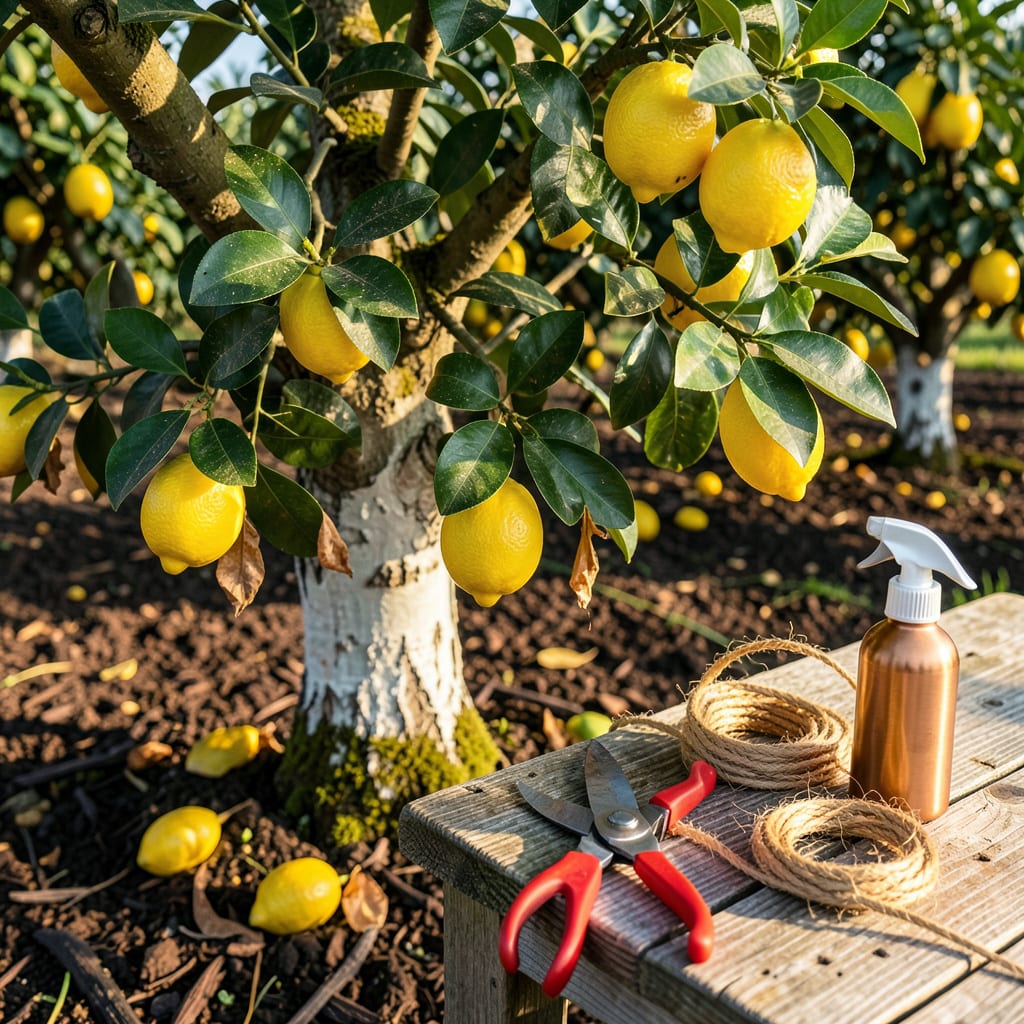
That first time I pruned my lemon tree, I nearly talked myself out of it. Snipping branches from a healthy plant feels wrong—until you see the results. A well-pruned lemon tree doesn’t just look better; it produces more fruit, resists disease, and lives longer. The difference between a wild, leggy tree and one with an open, productive canopy is staggering.
Timing and technique matter more than you’d think. Do it right in late winter or early spring, and you’ll get a flush of new growth exactly when the tree needs it. I’ve seen pruned trees bounce back with twice the lemons the following season—all from making just a few strategic cuts. No green thumb required, just the right approach.
📚 In This Guide
Pruning transforms a scraggly lemon tree into a productive powerhouse—here’s how I do it without stressing the plant.
Prune lemon trees in late winter or early spring, just before new growth starts. This timing minimizes stress and gives cuts time to heal before summer heat. I avoid pruning in fall or winter’s coldest months, as frost can damage fresh cuts.
Start by walking around the tree to identify dead, diseased, or crossing branches. Look for brown, brittle wood (dead), oozing sap (disease), or branches rubbing together (future wounds). Mark these with ribbon or chalk for easy reference.
Begin with the “three D’s”: dead, damaged, and diseased wood. Use clean, sharp pruners to cut these branches back to the branch collar (the swollen area where the branch meets the trunk). Never leave stubs—they invite rot and pests.
Next, tackle crossing branches. Remove the weaker of the two entirely, or shorten both to prevent rubbing. I also thin out any vertical shoots (called “water sprouts”) growing straight up—they drain energy without producing fruit.
Lemon trees fruit best when sunlight penetrates the center. Thin the canopy by removing one-third of the oldest branches each year, focusing on those growing inward. Aim for an open, vase-like shape that lets air circulate freely.
Step back often to check your progress. You want to see dappled sunlight reaching the inner branches when you look up through the tree. If the center is still too dense, remove a few more strategic branches—just don’t take more than 20% of the foliage in one session.
After thinning, shorten the remaining branches by one-third to one-half. Cut just above an outward-facing bud to encourage growth away from the tree’s center. This step stimulates new fruiting wood—lemon trees produce best on 1-2 year old branches.
Make each cut at a 45-degree angle, about ¼ inch above the bud. This prevents water from pooling on the cut surface. I always sanitize my pruners with rubbing alcohol between cuts to avoid spreading disease.
Rake up all fallen debris and dispose of it (don’t compost diseased wood). Apply a thin layer of mulch around the base, keeping it 6 inches away from the trunk to prevent rot. Water deeply to help the tree recover from stress.
Watch for new growth over the next 4-6 weeks. If you see excessive suckers (fast-growing vertical shoots), pinch them off early. The goal is balanced regrowth—not a jungle of unproductive branches. Your tree should look tidy but not stripped bare.
Pruning lemon trees is as much art as it is science—here’s what I’ve learned from years of shaping these citrus beauties.
Timing is Everything: The late winter or early spring window mentioned in Step 1 isn’t just a suggestion—it’s critical. I once pruned in late fall and lost several branches to frost damage. That 4-6 week regrowth period after pruning (Step 5) needs warm but not scorching weather to establish properly. If you live in a climate with unpredictable springs, watch the forecast and aim for a stretch of mild weather.
The Branch Collar Rule: In Step 2, cutting back to the branch collar isn’t just about aesthetics—it’s about healing. I’ve seen gardeners leave stubs thinking they’re being gentle, but those stubs become entry points for fungus. The collar contains specialized cells that compartmentalize decay. Make your cut just outside this swollen area, and you’ll see the wound callus over much faster.
Sunlight Strategy: When shaping the canopy in Step 3, think like a photographer. You want that dappled sunlight pattern because lemon trees produce fruit on wood that gets partial sun, not full shade or blistering exposure. I use this trick: hold my hand about 12 inches above an inner branch—if I see distinct shadow edges, that branch is getting the right light. If the shadow is fuzzy or nonexistent, that area needs thinning.
Tool Sanitation: The rubbing alcohol wipe mentioned in Step 4 isn’t overkill. I learned this after spreading citrus canker between trees. Keep a small spray bottle of 70% isopropyl alcohol and spritz your pruners between every few cuts, especially when moving from one tree to another. It takes 10 seconds and saves months of heartache.
The ideal time is late winter to early spring (before new growth starts) . Avoid pruning in fall—it can stimulate tender growth vulnerable to frost. Light pruning for shape can be done year-round, but major cuts should align with dormancy for faster healing.
Yes, but minimize heavy pruning during active fruiting to avoid stressing the tree. Remove only dead/diseased branches or suckers. If harvesting, wait until after picking lemons to prune—this prevents wasting energy on dropped fruit.
Pruning involves cutting larger branches (¼–½ inch thick) for shape/health, while pinching back is snipping new growth tips (with fingers or shears) to encourage bushiness. Use pinching for young trees; reserve pruning for mature trees needing structural work.
Leggy trees need selective heading cuts. Trim back the longest branches by ⅓, just above a leaf node facing outward. This redirects growth horizontally. Combine with pinching new tips to promote density. Ensure it gets 6+ hours of sun daily to prevent stretch.
Over-pruning stresses the tree, but it can recover! Stop further cuts, water deeply (1–2x/week), and apply a balanced fertilizer (10-10-10). Shield from direct sun for a week if leaves wilt. New growth should appear in 4–6 weeks—if not, check for disease.
