
Beautiful Plants For Your Interior
Beautiful Plants For Your Interior
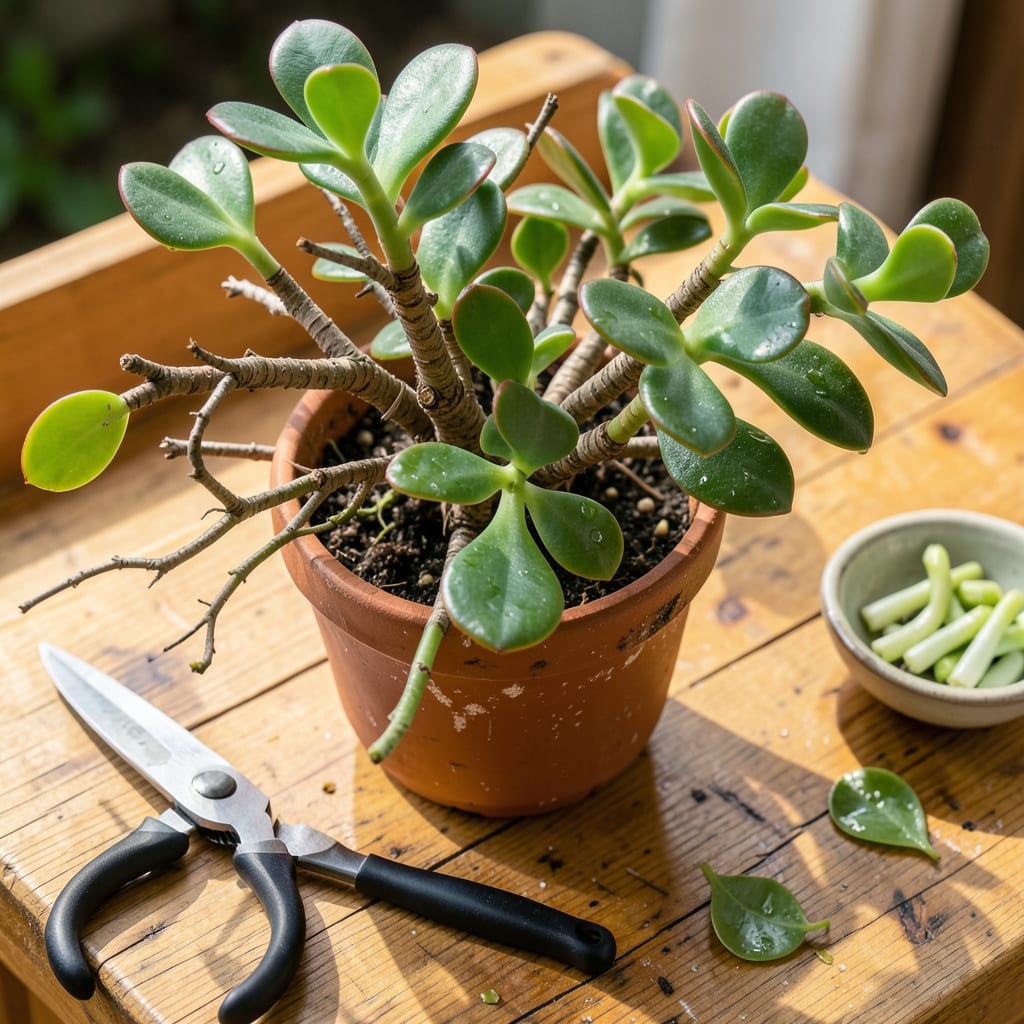
That leggy jade plant on your windowsill? It’s begging for a haircut. Pruning isn’t just about looks—it’s how you turn a stretched-out succulent into a thick, compact beauty that grows twice as fast. I used to let mine get wild until I realized three strategic cuts could transform its shape in weeks.
Timing matters more than you think. Do it right in early spring, and you’ll trigger explosive new growth where you want it. The best part? Every snip gives you free cuttings to propagate. No fancy tools required—just sharp shears and 10 minutes of your time. Here’s exactly where to cut and why.
📚 In This Guide
This simple method will transform your leggy jade into a bushy, vibrant plant with minimal effort.
Start by examining your jade plant for long, bare stems or branches growing unevenly. Look for areas where leaves have dropped or where the plant looks sparse. These are your primary targets for pruning. I always begin with the tallest, most overgrown stems first—they’re stealing energy from the rest of the plant.
Check for any damaged or diseased branches too. You’ll recognize these by their discolored leaves or soft, mushy texture. Removing these first prevents potential problems from spreading. Healthy branches you’ll prune should be at least 4-6 inches long to ensure they can support new growth after cutting.
Using sharp, clean pruning shears, make your cuts just above a leaf node (the small bump where leaves grow). This is where new branches will sprout. I angle my cuts slightly outward to prevent water from pooling on the cut surface, which could lead to rot.
Never cut more than one-third of the plant at once—this stresses the jade and slows recovery. For thick stems, you might need to make two cuts: first a shallow notch, then the full cut. This prevents the branch from splitting and damaging the main stem. Always step back after each cut to assess the plant’s shape.
After pruning, place your jade in bright, indirect light for a few days. Direct sun immediately after pruning can scorch the fresh cuts. I’ve found that maintaining 65-75°F temperatures during this recovery period gives the best results.
Wait 2-3 weeks before watering to allow the cuts to callous over. You’ll know it’s time to water when the soil feels completely dry and the cut ends have developed a slightly hardened appearance. This patience prevents rot and gives your plant time to redirect energy to new growth points.
Don’t discard those healthy cuttings! Let them dry (callous) for 2-3 days in a warm, dry place. You’ll notice the cut ends develop a slightly wrinkled, hardened surface—that’s your signal they’re ready for planting.
Dip the calloused ends in rooting hormone (optional but helpful) and plant in a well-draining cactus mix. Keep the soil barely moist and place in bright, indirect light. Within 3-4 weeks, you should see new roots forming. This gives you free jade plants while keeping your original plant healthier through pruning!
Pruning your jade plant doesn’t have to be intimidating—these practical insights will help you avoid common pitfalls while encouraging healthier growth.
Pruning Strategy: When identifying branches in Step 1, focus on creating a balanced shape rather than just removing length. I like to visualize the plant’s ideal silhouette before making cuts. This prevents over-pruning one area while neglecting others. Remember that 4-6 inch minimum length for healthy branches—this ensures each remaining stem has enough energy to support new growth without becoming weak or spindly.
Cutting Technique: The slight outward angle mentioned in Step 2 makes a bigger difference than you might think. I’ve found that cutting at about a 45-degree angle works best—steep enough to prevent water pooling but not so sharp that it creates an unstable surface for new growth. For thicker stems, that two-cut method (shallow notch first) really does prevent splitting. I learned this after ruining several cuttings by rushing the process.
Recovery Conditions: The 65-75°F temperature range in Step 3 isn’t just a suggestion—it’s crucial for callous formation. I once tried propagating cuttings in a cooler room and they took nearly twice as long to root. If your home runs cool, consider placing cuttings near a warm (not hot) spot like above the fridge or on a seedling heat mat. Just be sure to maintain that bright, indirect light to prevent etiolation while they recover.
Propagation Timing: When callousing cuttings in Step 4, resist the urge to plant them early. Those 2-3 days of drying are essential—you’ll actually see the cut ends change from white and moist to slightly wrinkled and hardened. I’ve had best success when the calloused area looks almost like dried leather. This patience prevents rot when you plant and gives your new jade plants the strongest start possible.
Prune in early spring or late winter (just before new growth starts) for best results. Avoid pruning in fall or winter—your plant is dormant and may heal slowly. Light trimming for shape can be done year-round, but major cuts should wait for the growing season.
Leggy growth often means your plant needs more sunlight, not a pruning mistake! After trimming, move it to a brighter spot (south-facing window or grow light). Rotate the pot weekly for even growth. New branches will sprout thicker with proper light.
For small trims, pinching leaves with clean fingers works fine! But use sterilized pruning shears (or sharp scissors) for thicker stems to avoid crushing the plant. Always wipe tools with rubbing alcohol before/after to prevent disease.
Prune the top 1/3 of the plant to reduce weight, then stake it with a bamboo stick or trellis for support. Let cuts callus for 1–2 days before watering. Propagate the cuttings! To prevent future flopping, rotate the plant regularly and ensure it gets 6+ hours of sunlight daily.
Pruning alone won’t guarantee flowers—jade plants bloom best when mature (4+ years old) and stressed slightly (cool nights, less water in winter). Focus on healthy pruning to redirect energy, then provide a winter rest period (50–55°F nights) to boost flowering chances.
