
Beautiful Plants For Your Interior
Beautiful Plants For Your Interior
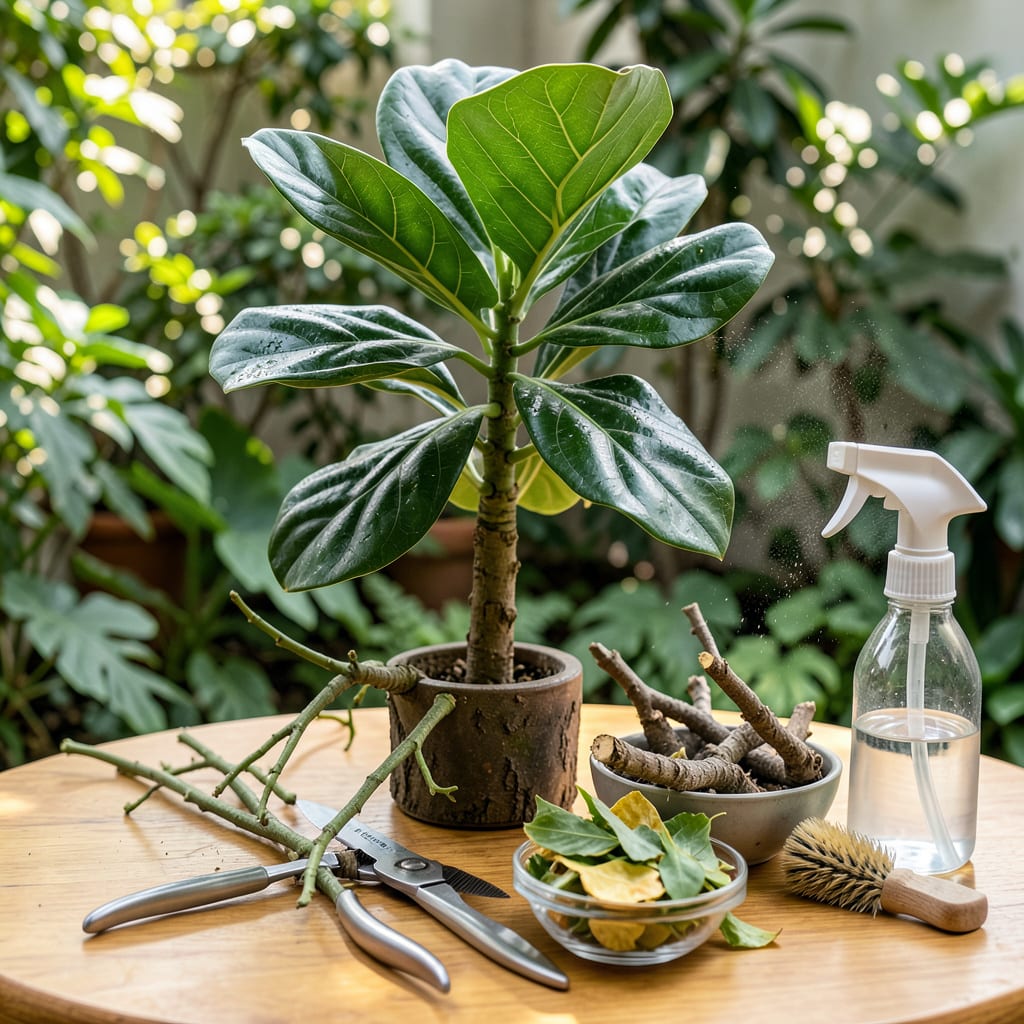
That moment when your fiddle leaf fig starts looking more like a lanky teenager than a lush statement plant? Been there. Pruning transformed mine from a scraggly mess into a full, vibrant centerpiece—no green thumb required. The secret isn’t just cutting back; it’s cutting strategically to trigger new growth exactly where you want it.
Timing matters: late spring or early summer, when your plant is actively growing, gives the best results. You’ll need sharp pruners, a clean workspace, and about 20 minutes to reshape years of growth. What you remove today becomes tomorrow’s bushier branches—plus, those cuttings? Free baby plants if you’re up for propagating.
📚 In This Guide
This method transforms leggy plants into full, shapely specimens—no guesswork, just proven technique.
Stand back and examine your fiddle leaf fig from all angles. Look for leggy stems (long stretches between leaves), crossing branches that rub together, or yellowing leaves that need removal. I always start by identifying the main stem—this is your plant’s backbone and shouldn’t be cut unless absolutely necessary.
Decide where you want new growth to appear. Every cut you make will stimulate branching below that point. For a bushier plant, I target cuts just above a leaf node (the small bump where leaves emerge). Never remove more than 25% of the foliage in one session—this prevents shock and maintains the plant’s energy balance.
Use sharp, clean pruning shears to make 45-degree angle cuts just 1/4 inch above a leaf node. This angle prevents water from pooling on the cut surface, which can lead to rot. I always wipe my shears with rubbing alcohol between cuts to prevent spreading any potential bacteria between plants.
For thicker stems (over 1/2 inch diameter), you may need to make a two-step cut. First, cut halfway through the stem from underneath, then finish the cut from the top. This prevents the bark from tearing. You’ll hear a clean snap when done correctly—no frayed edges or crushed tissue.
Step back frequently as you work to maintain visual balance. I aim for a rounded, vase-like shape that’s wider at the bottom than the top. This allows light to reach all leaves evenly. If one side looks heavier, make corresponding cuts on the opposite side to maintain symmetry.
Pay special attention to the plant’s interior. Remove any branches growing toward the center—these create congestion and block airflow. You should be able to see through the plant’s canopy when you’re finished. This open structure prevents fungal issues and encourages even growth throughout the plant.
After pruning, your fiddle leaf fig will need extra care. I increase humidity around the plant for 2-3 weeks by misting daily or using a pebble tray. This helps reduce stress from the sudden loss of foliage. Keep the plant in bright, indirect light but avoid direct sun, which can scorch the freshly exposed inner leaves.
Expect to see new growth within 4-6 weeks. The cut stems will develop small bumps where new branches will emerge. Resist the urge to fertilize immediately—wait until you see new leaf growth before applying a balanced houseplant fertilizer. This gives the plant time to heal and redirect its energy properly.
Pruning isn’t a one-time event—it’s an ongoing conversation with your plant. I check my fiddle leaf fig every 6-8 weeks during the growing season (spring through early fall) for new growth that needs direction. Pinch back any new stems that grow longer than 6-8 inches to maintain the shape you’ve created.
Rotate your plant quarter turn weekly to ensure even growth. You’ll notice the plant naturally grows toward the light source, so this rotation prevents lopsided development. Over time, this consistent attention creates that perfect, magazine-worthy silhouette that makes fiddle leaf figs so stunning in any space.
Pruning your fiddle leaf fig doesn’t have to be intimidating—these practical insights will help you avoid common pitfalls and achieve that lush, magazine-worthy shape.
Tool Preparation: Before you begin, sterilize your pruning shears with rubbing alcohol. This simple step prevents bacterial transfer that could lead to infections at cut sites. I learned this the hard way after losing a few stems to rot from unsterilized tools. Also, test your shears on a small branch first—dull blades crush stems instead of making clean cuts.
The 25% Rule: It’s tempting to remove lots of foliage for dramatic results, but never exceed the 25% limit mentioned in Step 1. I once over-pruned and my plant went into shock, dropping healthy leaves for weeks. If your plant is very leggy, spread the pruning over multiple sessions spaced 6-8 weeks apart. This gives your plant time to recover between sessions.
Angle Awareness: Those 45-degree angle cuts in Step 2 aren’t just for aesthetics—they serve a critical function. The sloped surface allows water to run off rather than pool, which prevents stem rot. I’ve found that making the cut slightly steeper (closer to 60 degrees) works even better for larger stems over 1/2 inch diameter, as it creates more surface area for new growth to emerge.
Recovery Environment: The 2-3 weeks of increased humidity mentioned in Step 4 are crucial for recovery. I use a clear plastic bag loosely draped over smaller plants (with holes for airflow) to create a mini greenhouse effect. For larger plants, a humidifier placed nearby works wonders. Just be sure to remove any condensation that forms on leaves to prevent fungal issues.
Spring or early summer is ideal —your plant is actively growing, so it’ll recover faster and push out new growth. Avoid pruning in fall or winter when growth slows. If you spot dead or damaged leaves, remove them anytime to keep your plant healthy.
Never remove more than 20-30% of the foliage at once—over-pruning stresses the plant. Focus on leggy stems, dead leaves, or branches blocking light. If your fig is overgrown, prune in stages over a few months for safer results.
Healthy stem cuttings (4-6 inches long with 2-3 leaves) can root in water or moist soil. Remove lower leaves, dip the end in rooting hormone (optional), and place in bright, indirect light. Roots typically form in 3-6 weeks.
Drooping is normal for 1-2 weeks—it’s adjusting to the change. Ensure it gets bright, indirect light and consistent watering (not soggy!). If drooping persists, check for overwatering or pests. A little stress is okay, but wilting + yellow leaves = red flags.
Yes! Rotate your plant weekly for even light exposure, which encourages balanced growth. You can also pinch back new growth tips (just the top 1-2 leaves) to promote branching without major pruning. Fertilize monthly in growing season for fuller foliage.
