
Beautiful Plants For Your Interior
Beautiful Plants For Your Interior
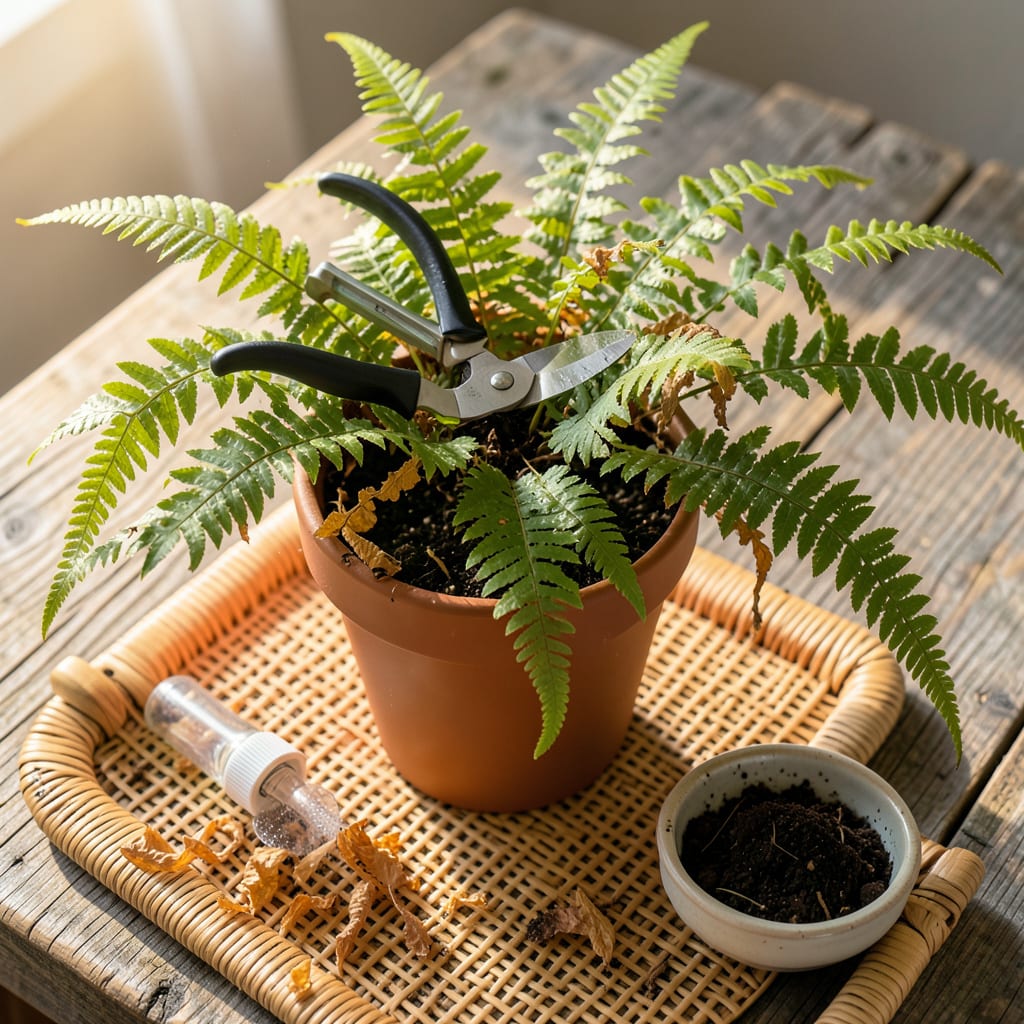
That first time I pruned my fern, I nearly chickened out. Snipping those fronds felt like giving a bad haircut—but the difference was shocking. Within weeks, my once-leggy plant exploded with fresh, vibrant growth. Pruning isn’t about making ferns smaller; it’s about making them stronger and more beautiful.
Timing and technique matter more than fancy tools. Do it right in early spring or after the growing season, and you’ll remove dead weight while encouraging new fronds. The secret? Cut at the base, never mid-stem, and always leave the emerging fiddleheads untouched. Your fern will reward you with lush, full foliage that looks like it belongs in a jungle—not your living room.
📚 In This Guide
This simple process will keep your ferns looking full and vibrant—no complicated tools or techniques required.
Start by examining your fern carefully. Look for any fronds (the leafy stems) that are completely brown, yellow, or crispy—these are dead and won’t recover. I also remove any fronds that are mostly green but have significant brown patches, as these areas won’t regrow healthy tissue.
Check for fronds that are significantly smaller or weaker than others, as these may be draining energy from the plant. Healthy fronds should be uniformly green, firm to the touch, and stand upright without support. If you see any fronds lying flat or drooping excessively, they’re likely candidates for removal.
Before making any cuts, wipe your pruning shears or scissors with rubbing alcohol. This prevents spreading any potential diseases between plants. I keep a small spray bottle of alcohol nearby to clean the blades between cuts if I’m working with multiple ferns.
Position yourself so you can see the base of the frond clearly. You’ll want to cut as close to the soil line as possible without damaging the crown (the central growing point where new fronds emerge). Never pull or tear fronds—this can rip the plant tissue and create entry points for disease.
Using your clean shears, make a single, decisive cut at the base of each frond you’re removing. Cut at a slight angle to allow water to run off the stem rather than pooling. I find it helps to support the frond with one hand while cutting to prevent it from pulling on the plant.
Work your way around the plant systematically rather than randomly. This helps you maintain the fern’s natural shape and prevents over-pruning in one area. Step back occasionally to assess your progress—you should be removing no more than one-third of the fronds at a time to avoid shocking the plant.
After pruning, gently remove all the cut fronds from around the base of the plant. Leaving this debris can create a damp environment that attracts pests. I like to use a soft brush or my hands to clear away any remaining small pieces.
Give your fern a thorough but gentle watering after pruning. This helps the plant recover from the stress of pruning and encourages new growth. You’ll typically see fresh fronds beginning to unfurl within 2-3 weeks if the plant is healthy and getting proper light and moisture.
Check your fern every 4-6 weeks for any new dead or damaged fronds. Regular, light pruning is much better than waiting until the plant looks overgrown. I’ve found that ferns pruned consistently produce fuller, more vibrant growth over time.
Pay attention to how your fern responds after each pruning session. If you notice slower regrowth or more brown fronds appearing, you may be pruning too aggressively. Healthy ferns should maintain their size or grow slightly larger with each growing season when pruned properly.
Pruning ferns properly makes all the difference between a struggling plant and one that thrives with lush growth. Here’s what I’ve learned from years of keeping ferns healthy and vibrant.
Precision Matters: In Step 3, when making your cuts, always use sharp, clean shears and cut at that slight angle mentioned. This isn’t just about aesthetics—it prevents water from pooling at the cut site, which can lead to rot. I’ve found that supporting the frond with my free hand while cutting gives me cleaner cuts and prevents accidental tearing that could damage the plant’s crown.
The One-Third Rule: It’s tempting to remove all the unsightly fronds at once, but resist the urge. As mentioned in Step 3, never remove more than one-third of the fronds in a single pruning session. I learned this the hard way after over-pruning a Boston fern that then took months to recover. The plant needs enough healthy fronds to continue photosynthesizing and supporting new growth.
Post-Pruning Care: After you’ve finished Step 4, don’t skip that thorough watering. Pruning is stressful for plants, and that water helps them recover. I’ve noticed my ferns bounce back faster when I water them immediately after pruning. Just be gentle—think of it as giving your plant a soothing drink after a haircut rather than a heavy downpour.
Scheduling Wisdom: The 4-6 week schedule mentioned in Step 5 isn’t arbitrary. Ferns grow continuously during their active season, and regular light pruning encourages bushier growth. I mark my calendar after each pruning session so I don’t forget. If you wait too long between sessions, you’ll end up having to remove more fronds at once, which can shock the plant.
While light pruning can be done year-round, the best time is early spring before new growth starts. Avoid heavy pruning in fall or winter, as ferns are dormant and may not recover well. For indoor ferns, trim as needed to remove dead fronds—just avoid overdoing it during low-light months!
Pruning involves cutting back entire fronds (healthy or dead) to shape the plant or encourage growth. Deadheading is just removing brown, crispy, or spent fronds at the base. Think of deadheading as a quick cleanup and pruning as a full “haircut” for your fern!
Don’t panic! Ferns often look thin immediately after pruning, but new growth (called fiddles) should appear in 2–4 weeks. If no growth appears, check for overwatering, poor light, or root issues. A little fertilizer (diluted to half-strength) can give it a boost.
Most ferns benefit from occasional pruning, but low-maintenance varieties like Japanese painted fern or autumn fern need minimal trimming. If you prefer “set-and-forget” plants, opt for these or slow-growing types like the bird’s nest fern. Still, remove dead fronds to keep them tidy!
Unfortunately, most ferns don’t root from frond cuttings like other plants. However, you can divide mature ferns at the roots (best done in spring) or collect spores from the undersides of fronds for propagation. For beginners, division is the easiest method!
