
Beautiful Plants For Your Interior
Beautiful Plants For Your Interior
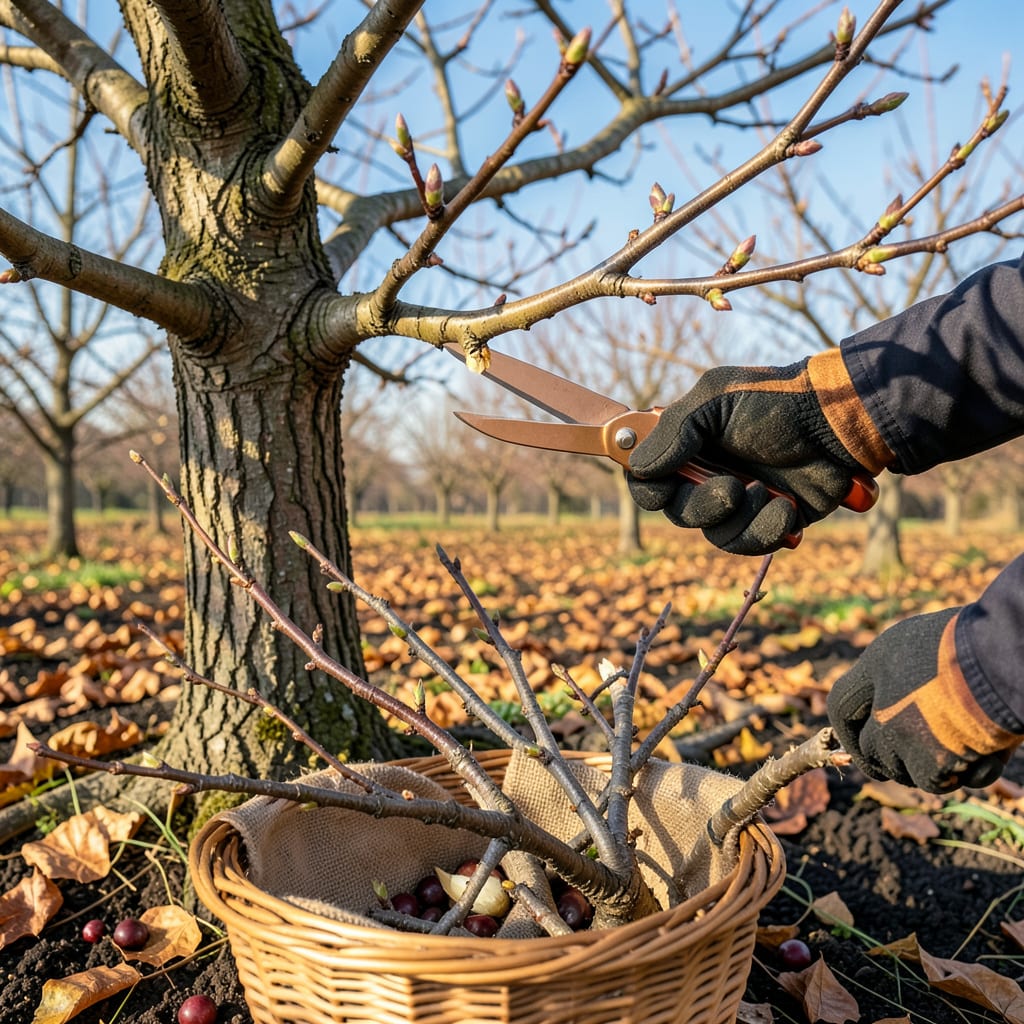
That first time I stood under my overgrown cherry tree, pruners in hand, I froze. What if I cut wrong and ruined next year’s harvest? Turns out, pruning isn’t about hacking away—it’s about making three strategic cuts that transform a tangled mess into a productive, disease-resistant tree.
Done right in late winter, you’ll see the difference by spring: more sunlight reaching developing fruit, better air circulation to prevent rot, and a shape that actually supports heavy cherry clusters. The tree tells you where to cut—discolored branches, crossing limbs, those stubborn vertical shoots. I’ll show you exactly how to read those signals.
📚 In This Guide
Pruning at the right time with proper technique ensures vigorous growth and abundant fruit—here’s how I do it every year.
Timing is everything with cherry trees. I prune sweet cherries in late summer (after harvest) to avoid silver leaf disease, while sour cherries tolerate late winter pruning before buds swell. Never prune when leaves are present—the tree’s energy is focused on fruit production, not wound healing.
Check the forecast for 3-5 days of dry weather after pruning. Wet conditions invite fungal infections through fresh cuts. I keep a notebook with my tree’s flowering dates—pruning 4-6 weeks after bloom gives me the perfect window for sweet varieties.
Start with your sanitized pruning tools (I use rubbing alcohol between cuts). First eliminate all dead wood—it appears gray and brittle, with no green cambium when scratched. Next target diseased branches showing cankers or oozing sap, cutting 6-8 inches below visible symptoms.
Then address crossing branches that rub bark away. I trace each branch to its origin and remove the weaker one where they intersect. Look for branches growing inward toward the trunk—they’ll never produce quality fruit. Make clean cuts at a 45-degree angle just outside the branch collar (that swollen ring where branch meets trunk).
Cherry trees fruit on one-year-old wood, so I focus on maintaining a balance of productive branches. Remove about 20% of the oldest branches each year, starting with those growing straight up (water sprouts) or straight down. These never bear good fruit and block airflow.
I aim for an open vase shape, leaving 6-8 main scaffold branches spaced evenly around the trunk. Thin secondary branches to 4-6 inches apart—this spacing allows sunlight to penetrate and fruit to color evenly. Step back frequently to check your progress; it’s easy to over-thin when you’re focused on individual branches.
Now address the tree’s overall structure. I shorten last year’s growth by about one-third, cutting just above an outward-facing bud. This encourages horizontal growth that will bear more fruit. Never leave stubs—each cut should be made to a healthy bud or branch junction.
For young trees, I establish a strong central leader by removing competing vertical branches. On mature trees, I maintain height by cutting back the topmost branches to lateral shoots. Always make your final cut at a downward angle so water runs off, not into the wound. I finish by applying a thin coat of pruning sealant to cuts larger than 1 inch in diameter.
Remove all pruned material from the area immediately—fallen branches can harbor pests and diseases. I compost healthy wood but burn or trash anything diseased. Water the tree deeply after pruning to help it recover, applying 5 gallons slowly at the drip line.
Monitor the tree over the next 2-3 weeks for signs of stress: wilting leaves or oozing sap indicate problems. New growth should appear at your cut sites within 4-6 weeks—this confirms you’ve pruned at the right time and severity. I keep a photo record each year to track how different pruning approaches affect fruit production.
Pruning cherry trees effectively requires attention to detail and understanding the tree’s growth patterns. Here’s what I’ve learned through years of experience.
Timing Precision: The 4-6 week window after bloom for sweet cherries mentioned in Step 1 is absolutely critical. I’ve found that pruning too early can stimulate excessive new growth that’s vulnerable to frost, while pruning too late may interfere with next year’s fruit bud formation. Keep a garden journal to track your tree’s specific flowering dates each year – this helps you hit that perfect timing consistently.
Tool Sanitation Protocol: When Step 2 mentions sanitizing tools, I can’t emphasize enough how important this is. I use a 70% isopropyl alcohol solution and actually keep a spray bottle with me during pruning. Between every single cut on diseased wood, I spray and wipe my tools. This prevents spreading pathogens like silver leaf fungus that can devastate cherry trees. The extra 30 seconds per cut saves years of potential problems.
Structural Assessment: Before making any cuts in Step 3, I recommend doing a full 360-degree assessment of your tree. Stand back about 15 feet and visually divide the tree into quadrants. This helps identify where you have too much density and where sunlight isn’t penetrating. I often take photos from different angles to compare before and after – you’ll be surprised how much this improves your thinning decisions.
Cutting Technique: The 45-degree angle cuts mentioned in Step 4 aren’t just for aesthetics. I’ve learned that this specific angle maximizes water runoff while minimizing the surface area of the wound. When making these cuts, position yourself so you’re looking directly at the branch collar – this gives you the best perspective to make that perfect angle. Also, resist the urge to “clean up” the cut with additional trimming; ragged edges actually heal faster than overly smooth cuts.
The ideal time is late winter or early spring (before buds swell) for sweet cherries, and summer (after harvest) for tart cherries. Avoid pruning in fall—it increases disease risk.
Nope! Young trees (1–3 years) need light structural pruning to shape the scaffold branches. Focus on removing competing leaders and weak growth. Mature trees tolerate heavier thinning.
Thinning is always safer for cherry trees.
Disinfect tools with rubbing alcohol between cuts, prune in dry weather, and avoid wet conditions. Seal large cuts (>1 inch) with pruning sealer.
Yes! Try summer pinching—gently snip new growth tips to control size without heavy cuts. Dwarf varieties also respond well to espalier training (flat against a wall).
