
Beautiful Plants For Your Interior
Beautiful Plants For Your Interior
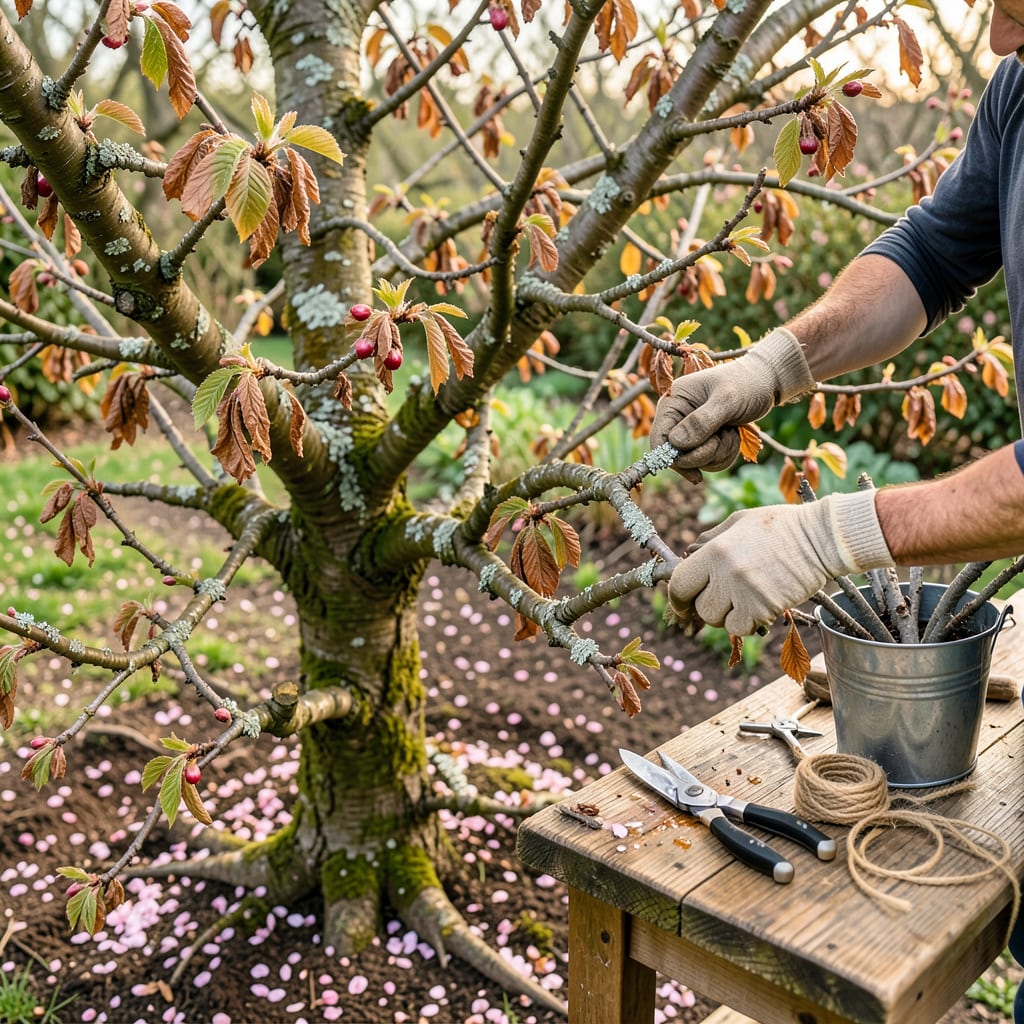
That overgrown cherry tree in your yard isn’t just a mess—it’s a ticking time bomb. Left unpruned, it’s vulnerable to disease, weak fruit production, and branches that could snap under their own weight. I’ve seen neglected trees bounce back spectacularly with the right cuts at the right time, and yours can too.
Late winter is your golden window—before buds swell but after the worst cold. We’ll tackle this in stages: first removing what’s dead or dangerous, then opening up the canopy for light and air. The goal isn’t perfection this season, but setting your tree up for healthier growth and better harvests next year. No guesswork, just proven steps.
📚 In This Guide
Reviving a neglected cherry tree takes patience, but this method brings back health and productivity without harming the plant.
Stand back and observe the tree’s overall shape. Look for dead, diseased, or broken branches—these are your first targets. I always start by removing anything that’s clearly lifeless (gray, brittle wood) or showing signs of disease (black spots, oozing sap). These branches won’t recover and only drain the tree’s energy.
Next, identify crossing branches that rub against each other and water sprouts (those fast-growing vertical shoots). Note where the tree looks overly dense—your goal is to open up the center to allow light and air circulation. Don’t make any cuts yet; this is just reconnaissance.
Begin with your pruning saw or loppers to remove dead and diseased wood. Cut just outside the branch collar (that swollen area where the branch meets the trunk)—never flush with the trunk. For larger branches, use the three-cut method: first cut halfway through from underneath, then cut from the top a few inches out, and finish with a clean cut at the collar.
Next, tackle crossing branches by removing the weaker of the two. When two branches compete, one will always lose—better to decide than let nature do it messily. Water sprouts can be clipped at their base; they’ll regrow if you leave stumps. Work methodically around the tree, stepping back often to check your progress.
Now focus on opening the tree’s center. Remove about 20-30% of the remaining branches, prioritizing those growing inward or straight up. I aim to create a goblet shape—wide at the base, narrowing toward the top—because this allows sunlight to reach all fruiting wood and improves air flow to prevent disease.
Make thinning cuts (removing entire branches back to their origin) rather than heading cuts (cutting mid-branch). Each cut should have a purpose: either to remove competition, improve structure, or direct growth. Never remove more than one-third of the tree’s total canopy in a single year—overpruning stresses the tree and reduces fruit production.
With the worst offenders gone, step back and evaluate the tree’s balance. Make final adjustments to create an even, open structure. I like to leave the strongest, most horizontal branches—these will bear the best fruit. Remove any remaining downward-growing branches, as they’ll never produce well and may break under fruit weight.
Clean up all cut material from around the tree to prevent pest habitats. Apply a thin layer of mulch (2-3 inches) around the base, keeping it 6 inches away from the trunk to prevent rot. Water the tree deeply after pruning—this helps it recover from the stress. You’ll see new, healthier growth emerge within 4-6 weeks.
Mark your calendar to prune annually in late winter before buds swell. Regular maintenance prevents the tree from becoming overgrown again. Each year, focus on removing about 10-15% of the oldest wood to encourage new, productive growth. I keep a pruning journal with photos to track progress and plan next year’s cuts.
Watch for signs of stress in the following months: excessive leaf drop, slow growth, or dieback. These usually indicate either overpruning or underlying health issues. A properly pruned cherry tree will reward you with larger, sweeter fruit and fewer disease problems within just one growing season.
Pruning an overgrown cherry tree can feel overwhelming, but these practical insights will help you avoid common pitfalls and achieve better results.
Tool Selection Matters: For branches under 1 inch thick, use sharp bypass pruners that make clean cuts without crushing. Loppers work best for 1-2 inch branches, while a pruning saw handles anything larger. I keep all blades sanitized with rubbing alcohol between cuts to prevent disease spread—this simple step makes a surprising difference in the tree’s recovery.
The Three-Cut Method Explained: When removing larger branches in Step 2, the three-cut technique prevents bark tearing. First make an undercut about 12 inches from the trunk, then cut from above 2 inches further out, and finish with a clean collar cut. This sequence protects the tree’s natural healing process. I learned this the hard way after ruining several cuts on my first attempt.
Canopy Thinning Strategy: The 20-30% thinning target in Step 3 isn’t arbitrary—it balances light penetration with stress reduction. Start by removing inward-growing branches first, then work outward. I use the “sunlight test”: after each cut, check if more light reaches the tree’s center. This visual guide helps prevent over-thinning while achieving that ideal goblet shape.
Post-Pruning Care: The 2-3 inches of mulch mentioned in Step 4 should be organic material like wood chips or compost. Keep it that critical 6 inches away from the trunk to prevent rot. I water deeply immediately after pruning, then maintain consistent moisture for the first two weeks—this supports the new growth you’ll see in 4-6 weeks.
Late winter (February to early March) is ideal—before buds swell but after the worst frost. Avoid pruning in fall (disease risk) or summer (stress). For sweet cherries, stick to late winter; tart cherries can also handle light summer trimming if needed.
Never remove more than 25% of the canopy in one year! Severe pruning shocks the tree. Split the job over 2–3 seasons, prioritizing dead/diseased wood first, then structural cuts. Patience prevents stress and encourages healthier regrowth.
If branches are beyond a 6-foot ladder or near power lines, yes—call an arborist! Pros have tools (like pole saws) and training to avoid injury or tree damage. DIY only if you’re confident with safety gear and proper techniques.
Check for:
Short-term: yes, but long-term, it boosts quality! Removing crowded branches improves airflow/sunlight, leading to larger, sweeter cherries. Focus on opening the canopy—not over-thinning—and fruit will rebound in 1–2 seasons.
